Decades-Old Puzzle Solved: Why Water Trapped at the Nanoscale Behaves So Strangely
Cambridge-led researchers find that confined water isn't inherently more reactive — crushing internal pressure and the chemistry of the surrounding surface explain the long-mysterious effect.
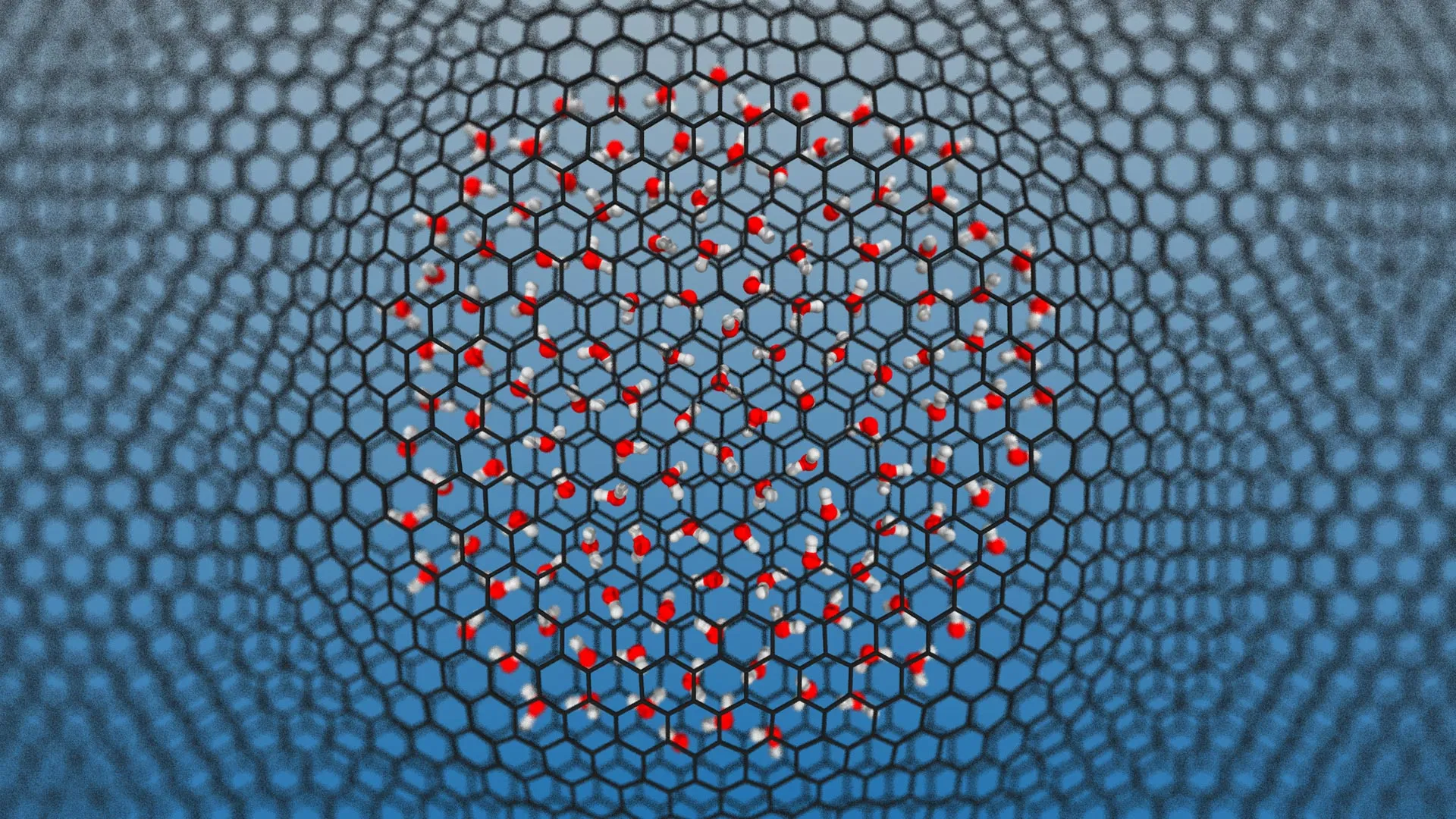
A decades-old mystery about one of the most familiar substances on Earth has finally been resolved: scientists have worked out why water behaves so strangely when it is squeezed into spaces only a few atoms wide.
Water confined at the nanoscale — trapped in the pores of rocks, inside biological cells, or between the sheets of engineered membranes — has long appeared to be chemically supercharged, seeming to drive reactions far more readily than ordinary bulk water. That apparent super-reactivity has puzzled researchers because it matters enormously in the real world, governing everything from how minerals weather and how catalysts work to the behavior of next-generation filtration and energy-storage devices. But no one could agree on whether confinement was fundamentally changing the nature of the water itself.
The new study, led by researchers at the University of Cambridge with collaborators at Harvard, Caltech, and the Max Planck Institute for Polymer Research and published in Science Advances, delivers a deflating but clarifying answer: confinement does not make water intrinsically more reactive. Instead, the apparent changes come almost entirely from extrinsic factors — chiefly the enormous pressures that build up inside those microscopic gaps, along with the density of the trapped water and the specific chemistry of the walls hemming it in.
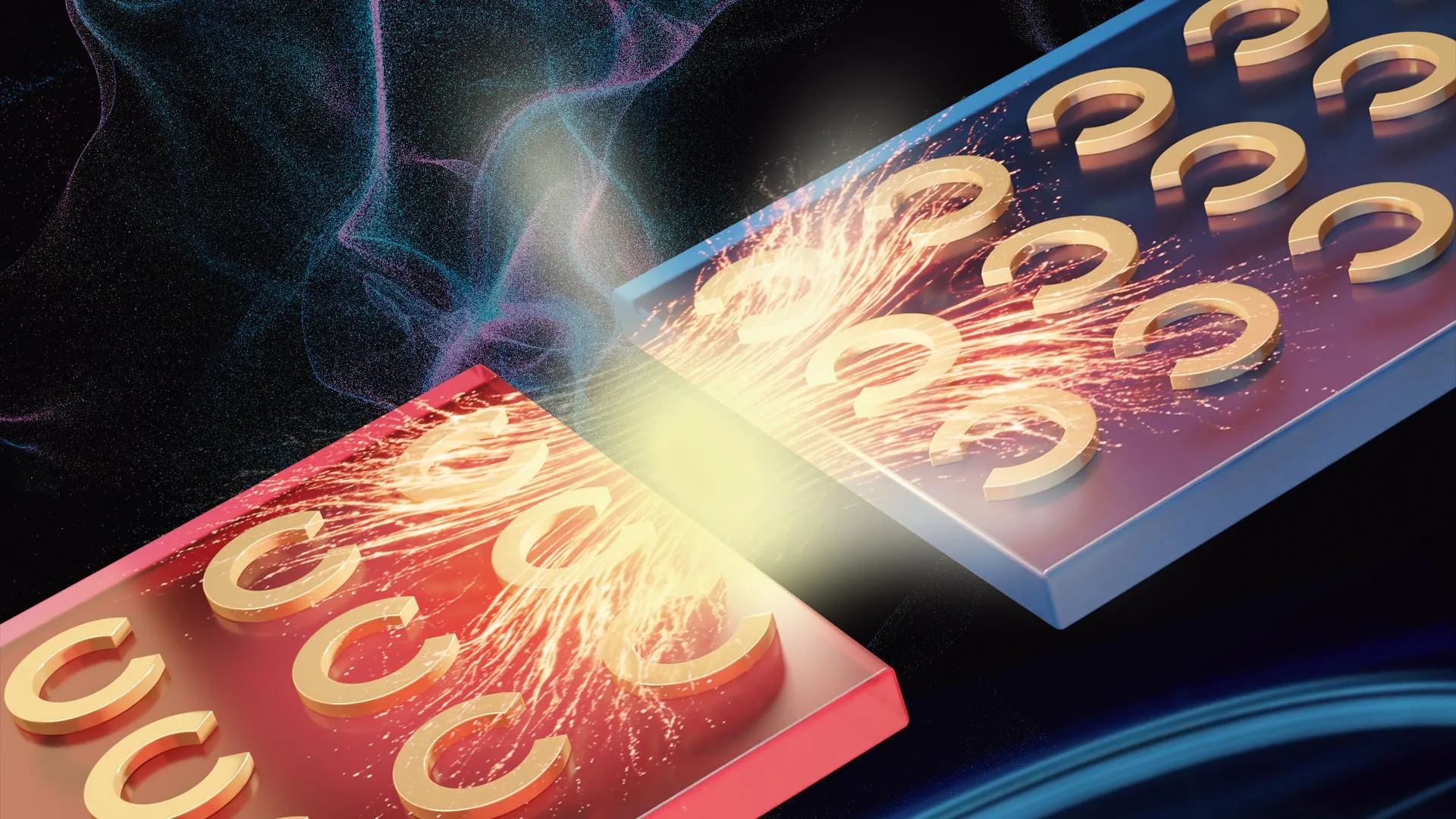
To pin that down, the team trapped nanoscale droplets of water between two-dimensional sheets of different materials. They used graphene and hexagonal boron nitride (hBN), a pair of atomically thin materials with nearly identical geometric structure but sharply contrasting surface chemistry. By holding the geometry fixed and varying only the surface, the researchers could separate the effect of being squeezed from the effect of what the water was being squeezed against — a controlled comparison that earlier experiments could not achieve.
The results showed that the confining material can, in fact, tilt the chemistry, but through a specific and identifiable mechanism rather than any general boost. Inside droplets encapsulated by hexagonal boron nitride, hydroxide ions forming at the droplet's edges chemically bonded to the surrounding surface. That bonding stabilized the ions and lowered the energetic cost of splitting water molecules — a targeted chemical effect tied to the wall, not evidence that confinement itself rewrites water's rules.
Untangling the two effects gives scientists a far cleaner picture of a process that underpins large swaths of geology, biology, and materials engineering. By showing that pressure and surface chemistry — not some mysterious intrinsic transformation — drive confined water's behavior, the work hands researchers a set of dials they can actually turn when designing membranes, catalysts, and devices that depend on water squeezed into the smallest of spaces.
In plain terms: water crammed into gaps just atoms wide seemed to become chemically hyperactive, and no one knew why. It turns out the water itself isn't special — the real drivers are the crushing pressure inside the gap and what the surrounding walls are made of. That clarity should help engineers design better filters, batteries, and catalysts.