A Sea Anemone Just Flipped the Rulebook on How Animals Fight Viruses
Researchers found the anemone uses a protein that suppresses — rather than switches on — its immune response, yet still defeats viruses, upending assumptions about how immunity evolved.
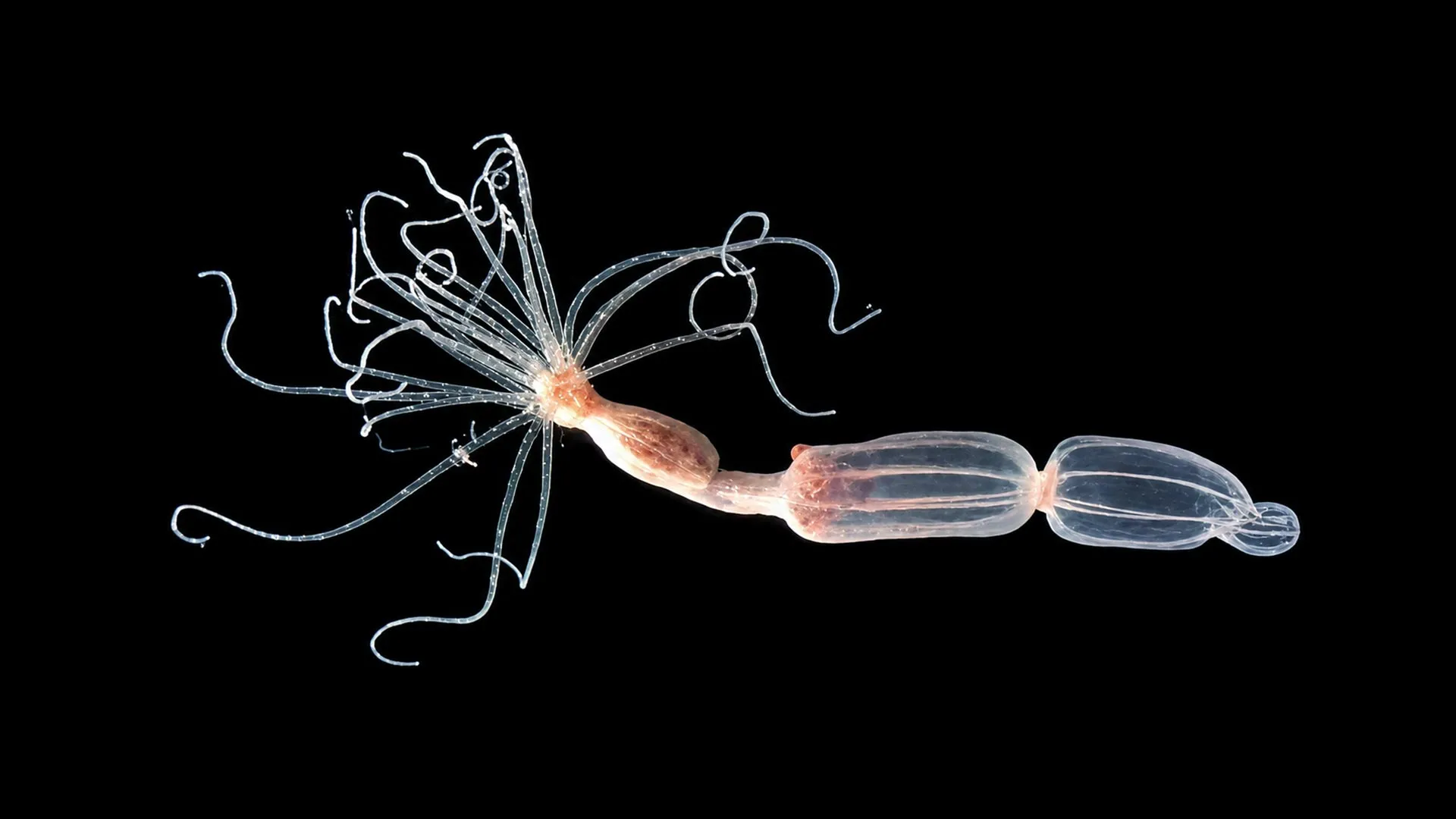
A humble sea anemone has revealed an antiviral defense system that works in almost exactly the opposite way to the one humans rely on, a discovery that challenges long-held assumptions about how immune systems evolved across the animal kingdom. The finding, from an international team of researchers, shows that nature has arrived at more than one fundamentally different solution to the universal problem of fighting off viruses.
In humans and other vertebrates, antiviral defense hinges on a protein called MAVS, which acts as an alarm: when the cell detects a viral invader, MAVS switches on a cascade of immune signals that mobilize the body's defenses. It is a system built around activation — sensing a threat and turning the response up. That template has long been assumed to be the standard blueprint for animal immunity.
The sea anemone Nematostella vectensis tells a different story. Researchers found that the anemone carries a MAVS-like protein they call CARDIB, but instead of flipping the immune system on, CARDIB normally keeps antiviral genes switched off. Counterintuitively, that suppression turned out to be essential: when scientists disabled CARDIB and its related genes, the animals fared worse, accumulating substantially more virus than normal anemones. In other words, an immune "brake" proved crucial for effective viral control.
The work was led by Ph.D. candidate Ton Sharoni and Prof. Yehu Moran of the Hebrew University of Jerusalem, in collaboration with researchers at the University of North Carolina at Charlotte, and was published in the journal Nature Ecology & Evolution. Sea anemones are cnidarians, an ancient lineage that split from the branch leading to humans hundreds of millions of years ago, making them a valuable window into the deep evolutionary roots of immunity.
The results suggest that the machinery underlying antiviral defense is far more flexible than textbooks imply, and that dramatically different strategies — one built on activation, another on suppression — can each succeed in keeping viruses at bay. Beyond rewriting part of the evolutionary story, the discovery could offer fresh insight into how immune signaling can be tuned up or down, a question with relevance to human conditions in which the immune system either underreacts to infection or overreacts and attacks the body's own tissues. For now, the anemone stands as a vivid reminder that some of biology's most basic rules have exceptions still waiting to be found.
The researchers said the next step is to work out precisely how CARDIB holds the antiviral genes in check and what conditions cause the anemone to release that brake when a real infection takes hold. Understanding that switch, they argued, could illuminate general principles about how organisms balance the need to respond to threats against the danger of an immune system that runs unchecked. Because Nematostella vectensis is easy to raise and study in the laboratory, it has become a favored model for probing the origins of biological systems, and the team expects it to keep yielding surprises about traits once thought to be uniquely vertebrate inventions.