Scientists Crack How Melanoma Cells Become 'Immortal'
University of Pittsburgh researchers identified a long-hidden genetic partner, TPP1, that teams up with a known mutation to give the deadly skin cancer its runaway lifespan.
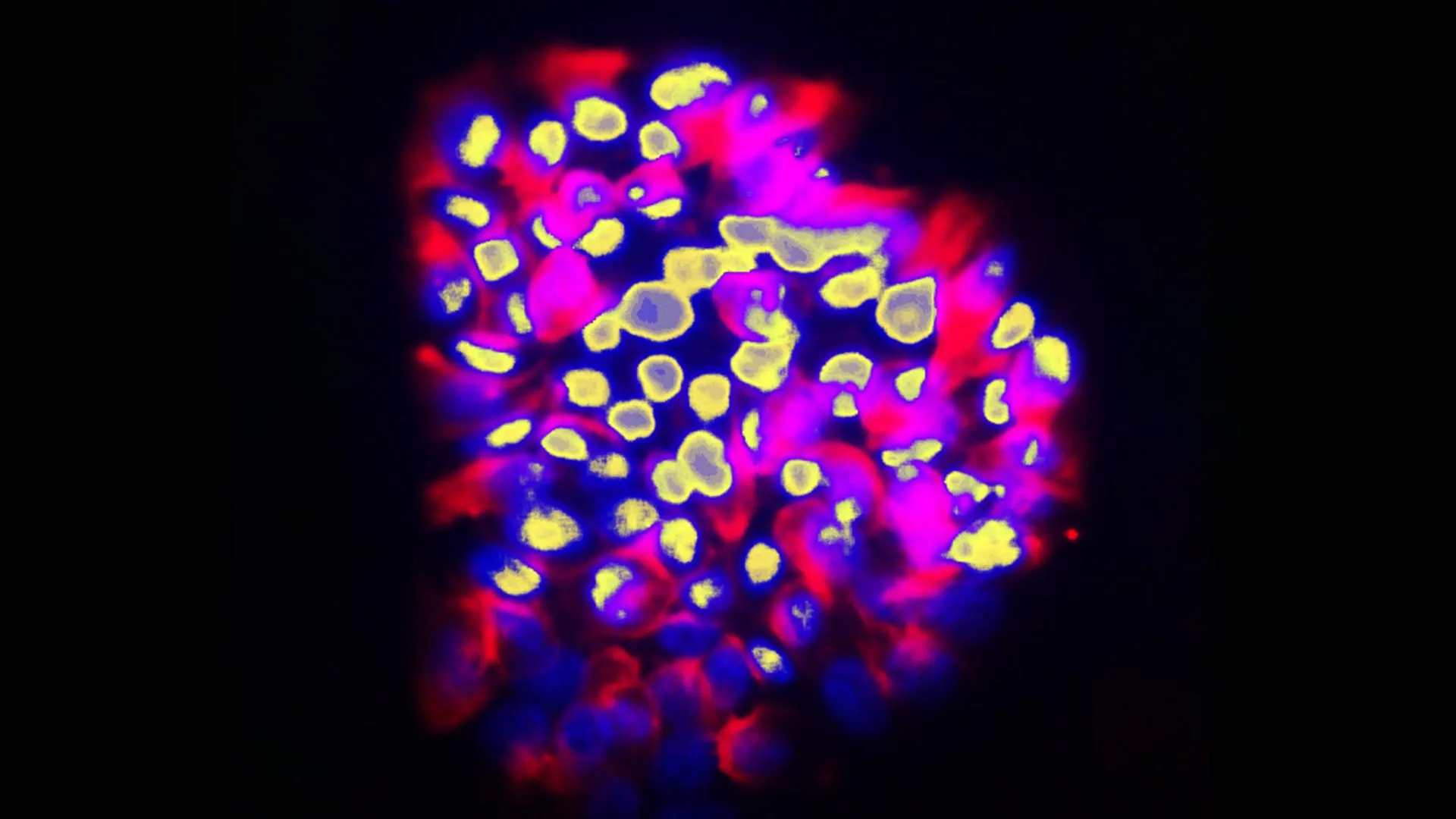
Scientists have solved a long-standing mystery in cancer biology, identifying the missing genetic ingredient that allows melanoma cells to become effectively immortal and grow without limit. Researchers at the University of Pittsburgh School of Medicine reported that a second, previously overlooked mutation works in tandem with a well-known one to let the deadly skin cancer sidestep the natural aging clock built into human cells. The findings were published in the journal Science.
At the heart of the discovery are telomeres, the protective caps at the ends of chromosomes that shorten each time a cell divides. Once telomeres wear down past a certain point, normal cells stop dividing and die — a built-in brake against runaway growth. Cancer cells evade that brake by keeping their telomeres artificially long, but exactly how melanoma pulls off this trick had never been fully explained.
About 75 percent of melanoma tumors carry mutations in a gene called TERT, which boosts the activity of telomerase, the enzyme that rebuilds telomeres. Yet when scientists recreated those TERT mutations in laboratory cells, the telomeres still did not reach the extraordinary lengths seen in actual patient tumors. Something else was clearly at work, and the TERT mutation alone could not account for the cancer's staying power.
The Pittsburgh team found that missing factor in a gene called TPP1. When mutated forms of both TERT and TPP1 were introduced into cells, the two proteins worked together to produce the exceptionally long telomeres that characterize melanoma — a synergy that neither mutation achieved on its own. TPP1, the researchers said, had been "hiding in plain sight" as the partner that completes the cancer's blueprint for immortality.
The insight could open new avenues for treatment. Because melanoma depends on this telomere-lengthening machinery to survive, drugs designed to disrupt the TERT-TPP1 partnership might strip the cancer of one of its most fundamental survival strategies, causing tumor cells to age and die as normal cells do. Melanoma is the most dangerous form of skin cancer, responsible for the majority of skin-cancer deaths, and researchers cautioned that translating the laboratory findings into therapies will take years of further work. Still, they said, understanding precisely how the cancer cheats death is a crucial first step toward turning that weakness against it.
The researchers added that the same TERT-TPP1 mechanism may extend well beyond melanoma, since telomere maintenance is a hallmark of nearly all cancers, and mutations in these genes appear in a range of other tumor types. If the partnership discovered in melanoma proves to be a broader theme, therapies aimed at it could have implications far beyond a single disease. The team is now working to map exactly how the two mutated proteins interact at the molecular level, in hopes of pinpointing a vulnerability that future drugs could exploit — an effort they described as painstaking but potentially transformative for how one of medicine's most stubborn adversaries is confronted.