An ISIS-K Scout Who Mapped the Route to Abbey Gate Got 20 Years, the Maximum. The Jury Couldn't Agree He Caused the 13 American Deaths, So He Won't Die in Prison.
Mohammad Sharifullah asked for 17 years and said nothing in court. Judge Anthony Trenga called him a 'dedicated terrorist' with no remorse. 'A bomb killed my son,' one father said. 'It did not kill what he stood for.'
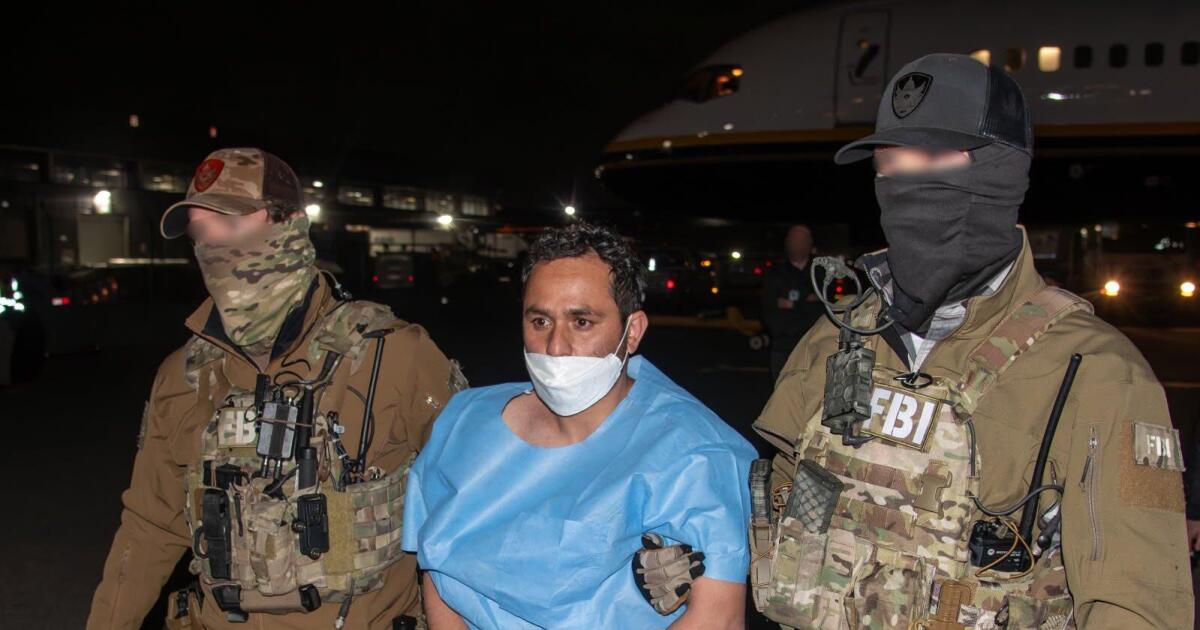
A federal judge in Alexandria, Virginia, sentenced an Afghan man to 20 years in prison on Wednesday for supporting the Islamic State affiliate that carried out the August 2021 suicide bombing at Kabul's airport, an attack that killed 13 U.S. service members and roughly 160 Afghans during the final days of the American withdrawal.
Mohammad Sharifullah, 28, received the maximum sentence available for his single conviction. A jury found him guilty in April of providing material support to ISIS-K, but it deadlocked on whether the deaths at the airport "resulted from" that conspiracy. Had the jurors agreed unanimously on that question, he could have faced life in prison. His lawyers had asked for 17 years; prosecutors sought the full 20. Sharifullah did not testify at trial and declined to address the court before sentencing.
U.S. District Judge Anthony Trenga called him a "dedicated terrorist" who has shown no remorse for suffering the judge described as "unfathomable." Prosecutors said Sharifullah scouted the route to Hamid Karzai International Airport ahead of the Aug. 26, 2021, blast at Abbey Gate, where a lone bomber detonated an improvised explosive device in a crowd of Afghans pressing to get onto evacuation flights. According to an FBI affidavit, Sharifullah recognized the bomber, identified by a U.S. Central Command review as Abdul Rahman al-Logari, as an operative he had been jailed with. Prosecutors also alleged he told agents he wanted to "catch and kill the crusaders" from America over the post-9/11 invasion, and they tied him to dozens of other attacks, including the March 2024 assault on a Moscow concert hall that killed about 140 people and a 2016 suicide bombing at the Canadian embassy in Kabul.
Pakistani intelligence and the CIA captured Sharifullah in early 2025 near Pakistan's border with Afghanistan, and he was flown to the United States. President Trump announced the arrest during his address to a joint session of Congress that March. His defense team argued at trial that prosecutors had no direct evidence linking him to the airport attack beyond his own statements to the FBI, and that he may have told agents what they wanted to hear because he feared torture in Pakistani custody.
Parents of the fallen filled the courtroom. Mark Schmitz, whose 20-year-old son, Marine Lance Cpl. Jared Schmitz, died at Abbey Gate, told the court, "A bomb killed my son. It did not kill what he stood for." He added: "They may have taken his life, but they'll never take his legacy." Paula Knauss-Selph, mother of Army Staff Sgt. Ryan Knauss, said, "No justice will ever be enough to mend my broken heart."
The Abbey Gate bombing became the defining image of the chaotic U.S. exit from Afghanistan and a political weapon in the years since, with Republicans blaming the Biden administration's planning and Democrats pointing to the withdrawal deal the first Trump administration struck with the Taliban. Sharifullah's sentence is the first time anyone has been punished in an American courtroom in connection with the attack. The bomber died in the blast, and the ISIS-K leadership that ordered it remains beyond the reach of U.S. prosecutors.
Originally reported by CBS News.