Supreme Court Unanimously Narrows Federal Gun Ban for Marijuana Users
In United States v. Hemani, the justices ruled that occasional drug users cannot be automatically stripped of their Second Amendment rights, while leaving the broader federal statute intact.
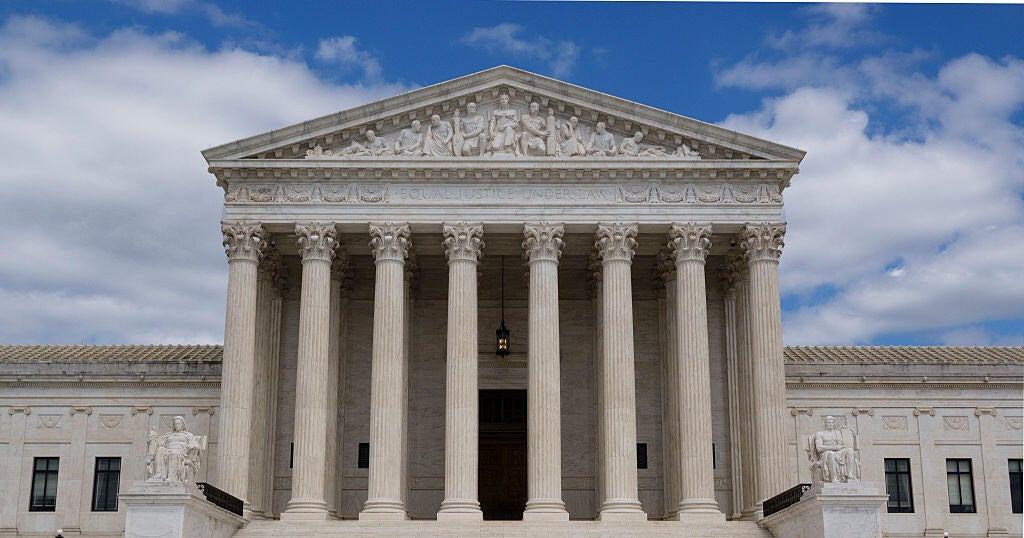
The Supreme Court on Thursday unanimously narrowed a federal law that bars unlawful drug users from possessing firearms, ruling that the government cannot automatically strip occasional marijuana users of their Second Amendment rights without evidence that a particular person is dangerous. The decision in United States v. Hemani leaves the underlying statute standing but sharply limits how broadly prosecutors may apply it, and it lands at a moment when courts across the country have been struggling to reconcile decades-old gun statutes with a more expansive reading of the constitutional right.
Justice Neil Gorsuch wrote the majority opinion. The government, he said, cannot simply assume that all regular marijuana users are "categorically violent and dangerous" without individualized evidence, warning that such sweeping categorical disqualifications would risk "quickly swallow[ing]" the Second Amendment. Justice Samuel Alito wrote a concurring opinion joined by Justice Elena Kagan, underscoring the unusual ideological breadth of the agreement.
The case arose from the prosecution of Ali Hemani, a Texas man and occasional marijuana user. The FBI discovered a handgun at his home in 2022, and he was charged under a provision that carries a penalty of up to 15 years in prison. The justices concluded that applying the ban to someone like Hemani — absent any showing that his drug use made him a genuine threat — was inconsistent with the constitutional right to keep and bear arms.
Crucially, the ruling is narrow. The court did not strike down the statute in its entirety. It preserved the government's ability to disarm drug addicts, people who are actively intoxicated, and those whose drug use genuinely renders them dangerous. What it forbids is the automatic, evidence-free disarmament of casual users — a distinction the justices framed as the difference between targeting dangerous individuals and sweeping in broad classes of people.
The decision is the latest in a string of cases reshaping gun jurisprudence after the court's 2022 ruling in New York State Rifle & Pistol Association v. Bruen, which requires modern firearm restrictions to be consistent with the nation's historical tradition of gun regulation. Lower courts had splintered over how that test applies to the drug-user ban, and Thursday's opinion supplies a clearer rule: the focus must be on the individual, not the category.
For the millions of Americans who use marijuana in states where it is legal but who remain subject to the federal prohibition on gun ownership, the ruling resolves a long-standing legal contradiction — though only partially, leaving Congress and the lower courts to work out exactly where dangerousness begins. Gun-rights groups hailed the outcome as a vindication of individualized review, while gun-safety advocates warned that requiring case-by-case proof of dangerousness could complicate enforcement. Both sides agreed the opinion will reverberate through the dozens of pending challenges to firearm restrictions now working their way through the federal courts.
Originally reported by CBS News.