Supreme Court Reinstates Alabama's Contested Congressional Map for 2026
The justices' unsigned emergency order lets Alabama use a map a lower court found intentionally diluted Black votes, drawing a sharp dissent from the court's three liberals.
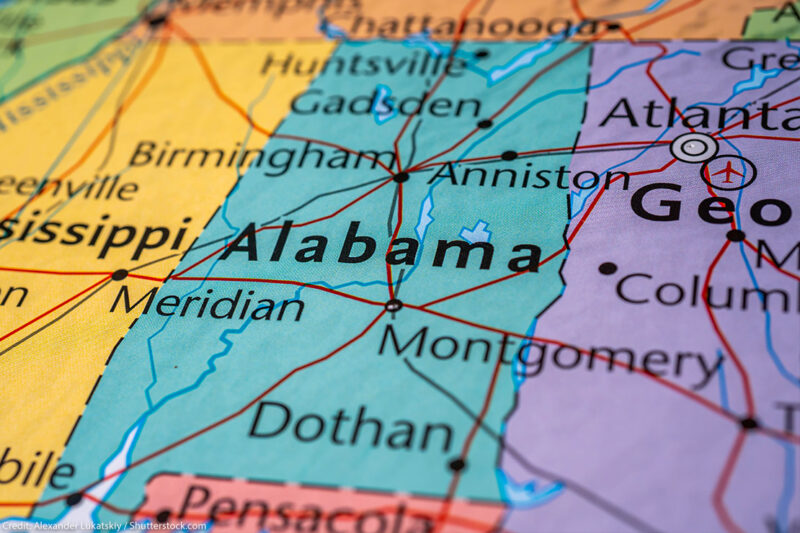
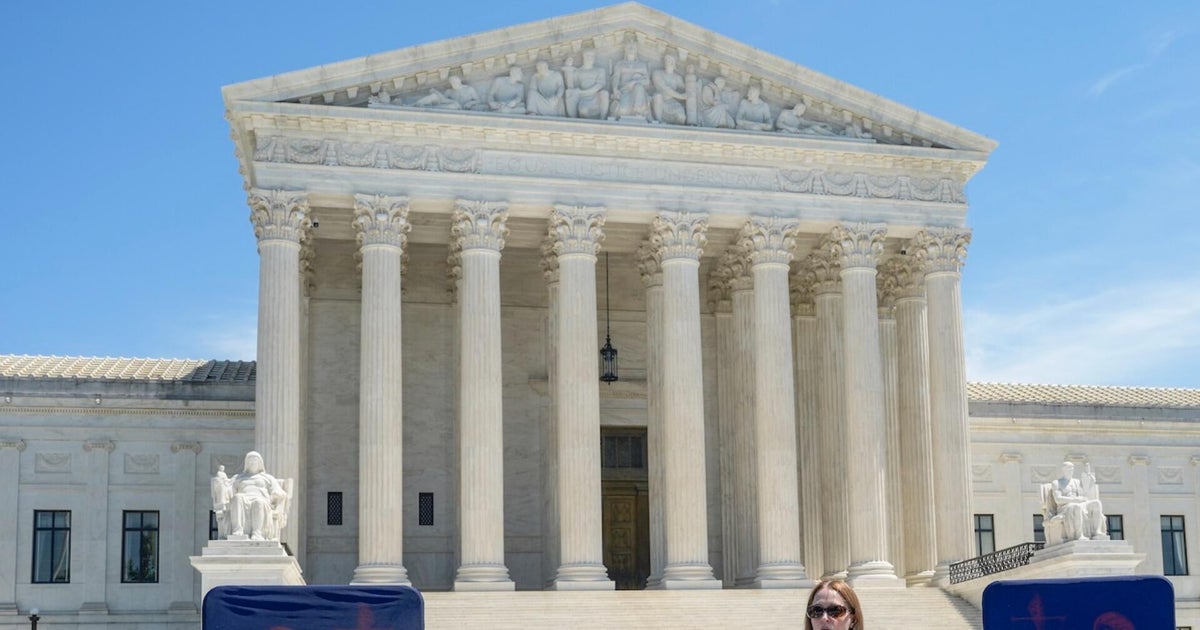
The Supreme Court on June 2 reinstated Alabama's 2023 congressional map for this year's elections, granting the state an emergency stay over the objections of a lower court that had found the map intentionally discriminated against Black voters.
The unsigned order allows Alabama to proceed with district lines that a three-judge federal panel had blocked. That panel concluded the Alabama Legislature deliberately diluted the strength of Black voters when it drew the 2023 map, which includes only one district — out of seven — where Black voters have a realistic opportunity to elect their preferred candidate, in a state where roughly one in four residents is Black. The court had ordered Alabama to instead use a race-neutral map drawn by an independent special master.
The justices granted the stay over dissents from Justices Sonia Sotomayor, Elena Kagan and Ketanji Brown Jackson. The brief order suggested the lower court had failed to fully account for the Supreme Court's recent decision in Louisiana v. Callais, which significantly reshaped the test for vote-dilution claims under Section 2 of the Voting Rights Act, and indicated the panel had acted too close to the election under the so-called Purcell principle, which cautions courts against changing election rules as voting nears.
In a pointed dissent, Sotomayor argued the majority had it backward. The district court, she wrote, found that Alabama violated the Fourteenth Amendment by intentionally diluting the votes of Black residents — a constitutional finding of purposeful discrimination that is "independent of, and unaffected by," the statutory questions at issue in Callais. By staying that ruling, she contended, the court was allowing a map a federal court deemed intentionally discriminatory to govern a federal election.
Voting rights advocates reacted with alarm. The American Civil Liberties Union, which has litigated the case for years, said the order "reinstates a racially discriminatory map" for Alabama's 2026 congressional elections and warned it would deny Black Alabamians a fair chance to elect candidates of their choice. The case has been a long-running flashpoint: the same dispute produced a landmark 2023 ruling, Allen v. Milligan, in which the court unexpectedly upheld Section 2 of the Voting Rights Act.
The practical effect is immediate. Barring further action, Alabama's 2026 House races will be run under the contested lines, likely preserving the state's current partisan and racial balance of representation. The deeper legal fight over whether the map can stand permanently remains unresolved, leaving the question to wind through the courts even as voters head to the polls under the very districts at the center of the dispute.