Supreme Court Clears Alabama to Use GOP Map That Erases a Black-Majority District
In a 6-3 ruling, the justices let Alabama deploy a congressional map with only one majority-Black district for the 2026 midterms, likely costing Democratic Rep. Shomari Figures his seat.

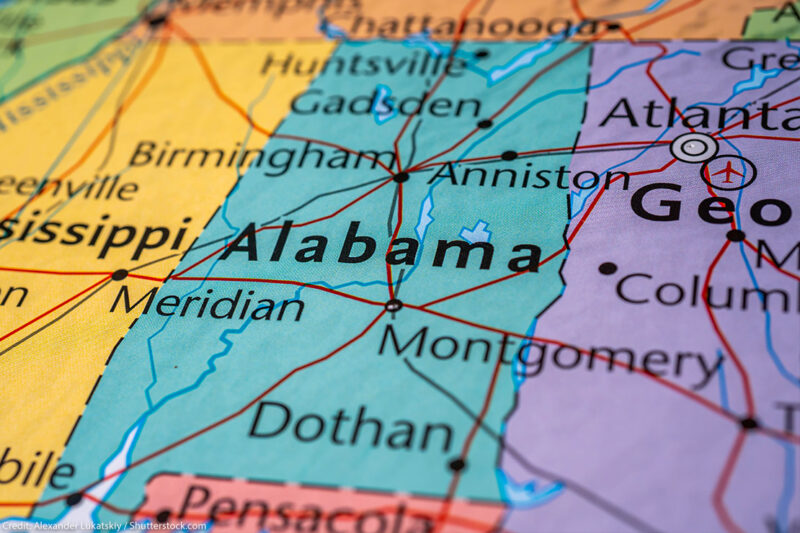
The Supreme Court on Tuesday cleared the way for Alabama to use a congressional map with just one majority-Black district in this year's midterm elections, a 6-3 decision that lower courts had repeatedly found to be an unlawful racial gerrymander. The order lifts an injunction imposed by a three-judge panel and all but guarantees Republicans pick up a House seat in a state where roughly one in four residents is Black.
The map at the center of the case carves the state into seven congressional districts, only one of which gives Black voters a realistic chance to elect their candidate of choice. A federal panel had ruled the 2023 map intentionally discriminatory under Section 2 of the Voting Rights Act, the same statute the Supreme Court appeared to reaffirm just two years ago when it ordered Alabama to draw a second opportunity district. The justices this term took a sharply different turn, citing their recent decision in Louisiana v. Callais, which raised the legal bar for proving that lawmakers acted with racial intent when drawing district lines.
The most immediate political casualty is Representative Shomari Figures, the Democrat who won Alabama's reconfigured 2nd Congressional District in 2024. Under the reinstated map, his district reverts to a Republican-leaning configuration, and he is widely expected to lose his seat in November. National Democrats, already defending a narrow path back to a House majority, now confront one fewer winnable district in the Deep South and a precedent that could ripple through redistricting fights in Louisiana, Georgia and South Carolina.
Justice Sonia Sotomayor delivered a blistering dissent, joined by Justices Elena Kagan and Ketanji Brown Jackson. "Just as Alabama doubled down on racial discrimination, the Court today doubles down on chaos," she wrote, accusing the majority of gutting the core protections of the Voting Rights Act and rewarding a state that defied a direct order from the justices themselves. Civil rights groups including the NAACP Legal Defense Fund condemned the ruling as a green light for states to dilute Black voting power with little fear of judicial reversal.
Alabama Republican officials hailed the decision as a vindication of the state's sovereign authority to draw its own districts. "Alabama will conduct its 2026 elections under a lawful map enacted by its elected representatives," state Attorney General Steve Marshall said in a statement. The practical effect is now locked in for the cycle: with the primary calendar already underway and ballots set to print, the contested map will govern who represents Alabama in Washington for at least the next two years, and the broader question of how much remains of Section 2's protections heads back to the lower courts on a far more hostile legal footing.