Scientists Crack the Molecular 'Docking' Trick Bacteria Use to Build Cancer Drugs
A Warwick–Monash team decoded how bacterial enzymes snap together to churn out variants of drugs like the approved lymphoma treatment romidepsin — a blueprint for engineering better ones.
Some of medicine's most powerful cancer drugs were first discovered not in a laboratory but inside bacteria, which have spent billions of years evolving intricate chemical assembly lines to produce them. Now scientists say they have finally cracked the molecular trick that lets those microbes build not just one drug but a whole family of closely related ones — a discovery that could make it far easier to engineer improved treatments.
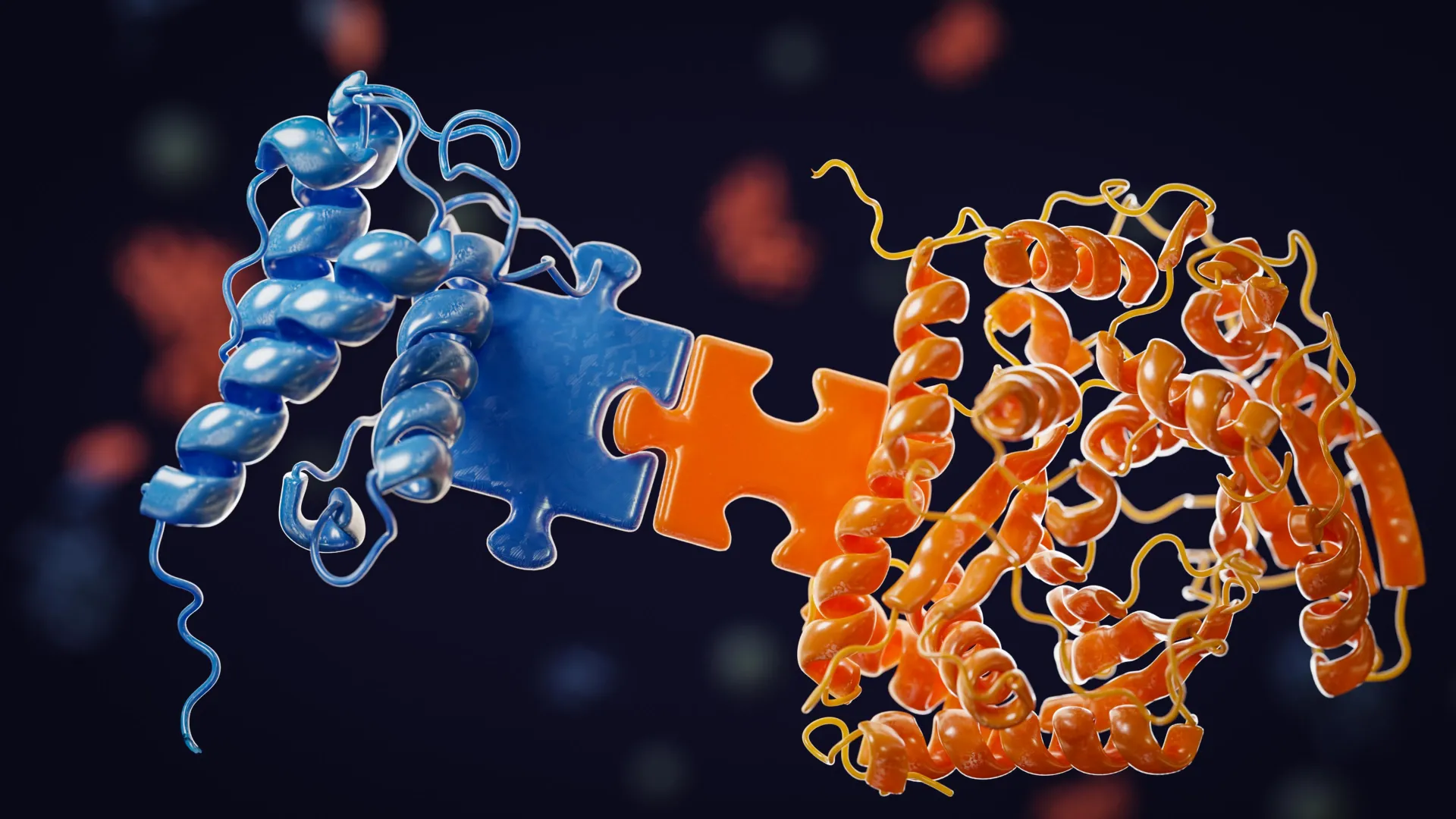
The research, led by a team at the University of Warwick in collaboration with Monash University in Australia, was published in the journal Nature Communications. It focuses on tiny molecular regions called "docking domains," which act as connectors between two separate enzyme systems inside the bacteria. One system builds the core scaffold of the drug; the other adds a variable "cap" that helps determine which cancers the finished compound can attack.
The key insight is that these docking domains share conserved connection points, allowing the two enzyme systems to snap together in different combinations. That modularity is what enables a single bacterium to reliably manufacture multiple versions of an anti-cancer compound, mixing and matching parts like an assembly line that can swap components without breaking down. "This work finally cracks that code," said Dr. Munro Passmore of Warwick's Department of Chemistry, marveling that "the system is so elegantly economical."
The family of drugs at the center of the study includes romidepsin, sold as Istodax, an FDA-approved treatment for certain T-cell lymphomas that works by blocking enzymes called histone deacetylases, which help regulate how genes are switched on and off. Understanding how bacteria naturally generate variants of such molecules opens the door to producing new ones deliberately, rather than stumbling upon them by chance.
For the researchers, the practical payoff lies in imitation. By reverse-engineering the evolutionary logic the bacteria use, chemists can now design synthetic pathways that generate entirely new drug candidates with properties optimized for the clinic — greater potency, better selectivity for tumor cells and fewer side effects. "This research gives us a blueprint to do what nature does, but better and faster," said Prof. Greg Challis, who holds a joint appointment between Monash and Warwick.
The work is part of a broader push in drug discovery to treat nature's own chemistry as a programmable toolkit. Rather than screening thousands of random compounds in the hope one proves useful, scientists increasingly want to understand the rules bacteria follow so they can rewrite them. If that approach holds, the humble soil microbe could become a design platform for the next generation of cancer therapies, each one a tailored variation on a theme that evolution worked out long ago.