McGill Team Identifies the 'Glycerol Pocket' on TNAP — a Hidden Molecular Switch That Turns Brown Fat Into a Calorie-Burning Furnace
Lawrence Kazak's group at the Goodman Cancer Institute showed that when glycerol docks into a single binding site on the enzyme, the body's futile creatine cycle ignites and turns up the heat — a finding Nature this week called a roadmap to next-generation obesity drugs.

Researchers at McGill University in Montreal have identified a hidden molecular "switch" that turns on the body's most powerful calorie-burning system, a finding that could open a fundamentally new pharmacological route for obesity, type 2 diabetes and even bone-loss disorders. The team, led by associate professor Lawrence Kazak at the Rosalind and Morris Goodman Cancer Institute, reported in Nature that a small molecule called glycerol must bind to a specific pocket on an enzyme called TNAP — tissue-nonspecific alkaline phosphatase — in order to ignite the "futile creatine cycle," brown fat's parallel and largely independent way of producing heat.
Brown fat, unlike the white fat that stores energy, exists to burn it. Adults retain small but metabolically potent deposits along the spine and around the collarbone, and when exposed to cold the tissue can dissipate as much as 10 percent of resting energy expenditure as heat. For decades, biomedical researchers believed that brown fat's heat-generating power came primarily from a protein called UCP1, which short-circuits the mitochondrial proton gradient. But UCP1-knockout mice can still burn calories almost normally in the cold, and the alternative pathway — driven by repeated, ATP-consuming cycles of creatine and phosphocreatine — has remained mostly a black box.
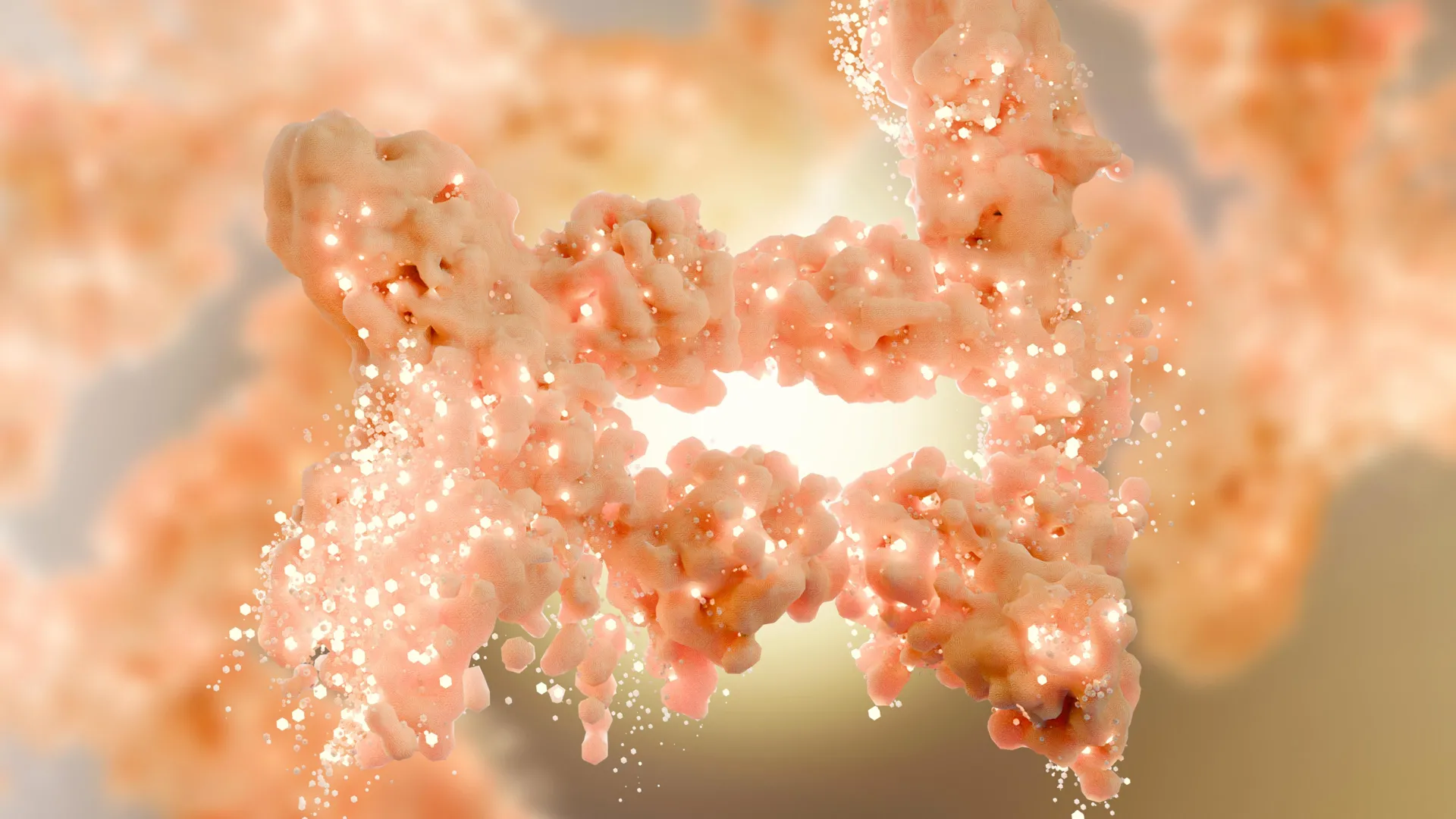
"We knew the futile creatine cycle was there. What we didn't know was how the body actually turns it on," Kazak said in a statement accompanying the paper. Using a combination of cryo-electron microscopy at the McGill Centre for Structural Biology and metabolic-flux measurements in brown-fat mitochondria isolated from mice, Kazak's team showed that cold exposure breaks down stored triglycerides and releases glycerol, which then docks into a previously uncharacterized region of TNAP the authors named "the glycerol pocket." That binding event is sufficient to flip TNAP into an active configuration, dephosphorylate creatine and start the cycle running. Mice engineered to lack a functional glycerol pocket gained weight on a high-fat diet at twice the rate of their wild-type littermates.
The discovery resolves what had been one of metabolism research's most stubborn puzzles, and immediately invites a new class of drug candidates. "If you can find a small molecule that locks TNAP into the on-position, you essentially have a thermogenic without the cardiovascular side effects of older drugs like DNP," said Bruce Spiegelman, a Harvard Medical School metabolism researcher who was not involved in the work but reviewed the findings. Spiegelman cautioned that TNAP is also crucial for bone mineralization and that any drug would have to be designed with exquisite tissue selectivity, but added that the McGill paper provides "the structural map you need to even try."
Several biotechnology companies, including Eli Lilly's metabolism unit and the Boston-based startup Stoke Therapeutics, have already requested licensing discussions with McGill's technology-transfer office, according to a person familiar with the matter. The paper also has implications for osteoporosis research, because TNAP's role in bone formation means that pharmacologically activating its glycerol pocket might simultaneously strengthen the skeleton — a possibility that earned the paper a companion News & Views piece in Nature titled "One Switch, Two Diseases." Kazak's group has now begun a screening campaign with the Structural Genomics Consortium to identify the first generation of glycerol-pocket-targeted compounds, with preclinical results expected by late 2027.