Iowa Republicans Pick a Governor Nominee in a Crowded Primary to Replace Kim Reynolds
With Gov. Kim Reynolds stepping aside, a five-way Republican field led by Trump-endorsed Rep. Randy Feenstra battled for the nomination as six states held primaries on Tuesday.
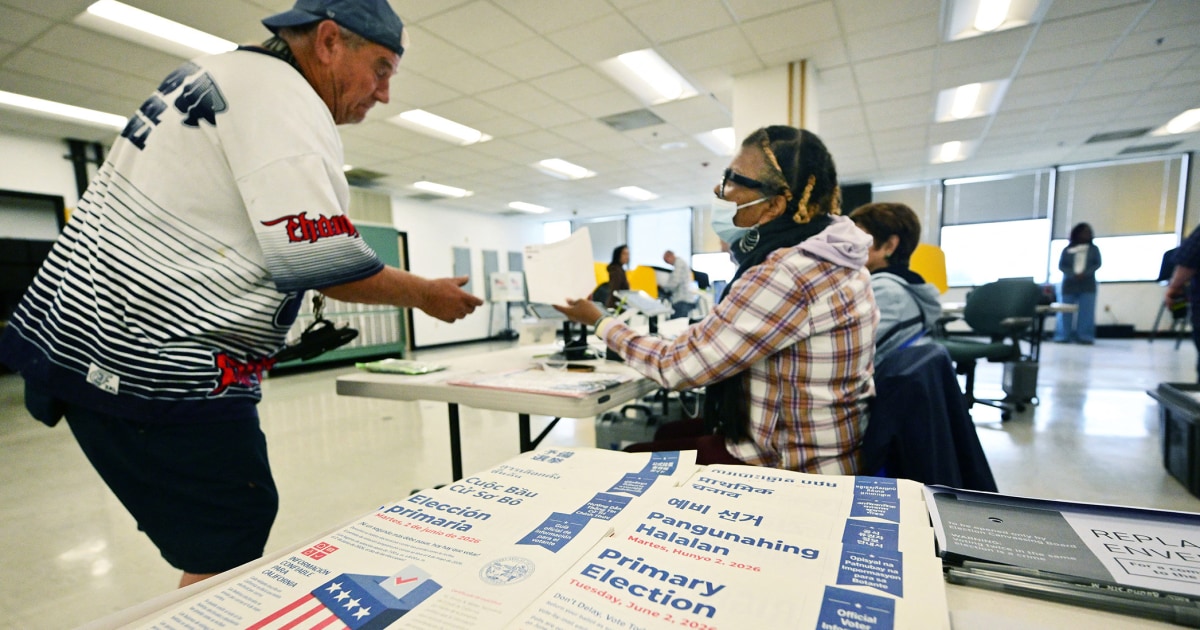
Iowa Republicans went to the polls Tuesday to choose a nominee for governor in a raucous, wide-open primary, the marquee contest of a six-state primary night that also included races in California, Montana, New Jersey, New Mexico and South Dakota.
The Iowa race was thrown open when Gov. Kim Reynolds announced she would not seek another term, setting off a scramble in a state that has trended sharply Republican but where the party's voters are far from unified. Five candidates competed for the nomination: Eddie Andrews, Rep. Randy Feenstra, Zach Lahn, Brad Sherman and Adam Steen.
Feenstra entered the contest with the most prized asset in a Republican primary — President Donald Trump's endorsement. A congressman from the state's northwest corner, Feenstra leaned on his Washington record and the president's backing to position himself as the front-runner. But the field reflected the competing currents inside the modern GOP, with Lahn running as a champion of the "Make America Healthy Again" movement and others appealing to grassroots activists wary of establishment favorites.
On the Democratic side, the path was far smoother. State Auditor Rob Sand ran unopposed for his party's nomination, allowing Democrats to consolidate behind a single candidate while Republicans spent the spring fighting among themselves. Sand, one of the few Democrats to win statewide office in Iowa in recent cycles, has cast himself as a pragmatic watchdog, and his uncontested primary gives him a head start on the general election.
The stakes extend well beyond Des Moines. Governorships carry enormous influence over education, abortion policy, election administration and budgets, and an open seat in a competitive cycle has drawn national attention and money. Republicans are eager to hold a state they have dominated in recent years, while Democrats see Reynolds's departure as an opening to reset the playing field.
Tuesday's voting unfolded against a turbulent national backdrop, with the war in the Middle East, a contentious Justice Department controversy and a packed Supreme Court docket all competing for voters' attention. In some of the night's other contests, results were expected to take time: California's top-two primary system and its flood of mail ballots can leave races uncalled for days, with ballots postmarked by Tuesday still eligible to be counted if they arrive later in the week.
For Iowa Republicans, however, the immediate task was simpler — settling on a standard-bearer. The winner emerges from the primary with the burden of uniting a fractured field and the opportunity to defend a governorship that has become a symbol of the party's grip on the state. Whoever prevails will face Sand in November in a race that could help define the contours of the 2026 midterms.