DHS Hands BI2 Technologies a $25 Million No-Bid Contract to Field 1,500 Iris Scanners for ICE Enforcement Operations
The agreement — more than five times the size of the company's last DHS deal — gives ICE officers cloud access to BI2's 4.2-million-record biometric database, drawing alarm from the ACLU and Sen. Ron Wyden, who warn the rollout amounts to construction of the largest civilian iris-recognition system in U.S. history.

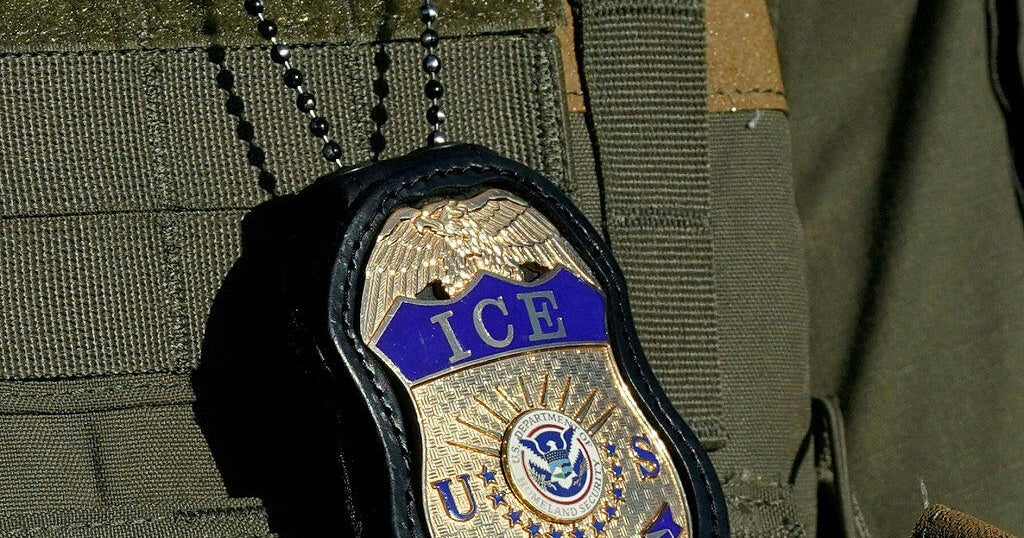
Immigration and Customs Enforcement is dramatically expanding its use of iris recognition technology under a $25 million no-bid contract awarded to Massachusetts-based BI2 Technologies, an arrangement that will put more than 1,500 handheld iris scanners into the hands of ICE officers and grow what privacy advocates warn is fast becoming the largest civilian biometric database in U.S. history. The contract, posted quietly on a federal procurement website this month and first reported by NPR on Tuesday, is more than five times the size of BI2's last Department of Homeland Security deal, awarded in September 2025.
The new agreement provides ICE with access to BI2's mobile application and the company's proprietary cloud database, into which scanned iris patterns are uploaded and indexed for instant matching against a growing repository of more than 4.2 million biometric records. According to procurement documents reviewed by NPR, ICE officers will use the scanners "to assist in accurately identifying individuals encountered during immigration enforcement and removal operations, including confirming identities and backgrounds of individuals who may be subject to enforcement actions." An ICE spokesperson, Lindsay Williams, confirmed the deployment Tuesday and said the technology "reduces the risk of misidentification and increases officer safety in field encounters."
Iris scans are considered more precise than fingerprints and significantly more reliable than facial recognition at distance, with BI2 claiming an error rate of one in 1.2 million. The technology was pioneered by jails and prisons — BI2's first major customer was the Plymouth County Sheriff's Department in 1995 — and migrated into federal use during the second Obama administration. But the scale of the new ICE deployment dwarfs anything previously seen in domestic law enforcement. "We are watching the construction, in real time, of a biometric surveillance system that the Fourth Amendment was never designed to contemplate," said Nathan Wessler, deputy director of the ACLU's Speech, Privacy, and Technology Project. "The Supreme Court has never ruled on whether the government can take your iris without a warrant. Now it doesn't have to, because ICE is taking millions of them."
The contract comes amid an unprecedented expansion of ICE's technological arsenal in the second Trump administration. Since January, the agency has signed deals worth more than $470 million for surveillance drones, license-plate reader networks, social-media monitoring tools and an upgraded version of the Palantir-built Investigative Case Management platform that knits together data from at least 17 federal databases. Acting ICE Director Caleb Vitello, in testimony before the Senate Homeland Security Committee last week, said the agency has set a goal of identifying 8.4 million removable migrants by the end of fiscal year 2027 and has been ordered by the White House to triple the daily arrest rate in major sanctuary jurisdictions. "Technology is how we get to scale," Vitello told senators. "Without iris and facial recognition, we cannot meet the president's mandate."
Democrats have demanded the contract be paused pending a Privacy Impact Assessment, which the Department of Homeland Security has not yet released. Sen. Ron Wyden, D-Ore., who chairs the Senate Finance Committee, told NPR that ICE has not disclosed how long iris records of U.S. citizens captured incidentally during enforcement encounters will be retained, nor whether they will be shared with the FBI's Next Generation Identification system. "This is the camel's nose under the tent," Wyden said. "You scan a million immigrants today, you scan a million American citizens at protests tomorrow." BI2 founder Sean Mullin defended the company's record in a statement to NPR: "Iris recognition is the most accurate biometric ever deployed at scale. We have processed more than 50 million scans worldwide without a single confirmed false positive leading to a wrongful detention. The technology is a civil-rights protection, not a threat."