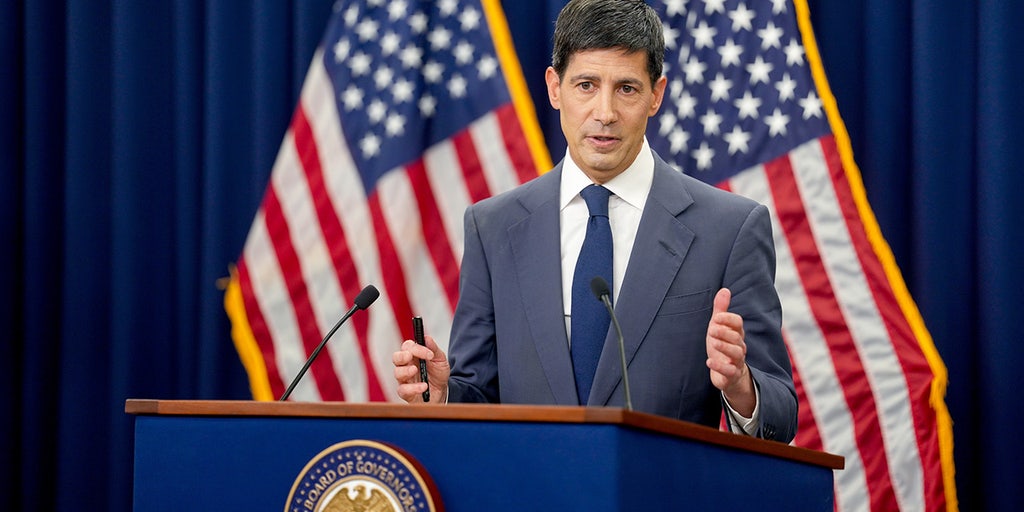
New Fed Chair Kevin Warsh Faces His First Rate Decision With Inflation at a Three-Year High
Hand-picked by Trump to slash borrowing costs, Warsh chairs his debut FOMC meeting next week as markets bet on no cut and consumer prices climb to 3.8%.

Kevin Warsh will gavel in his first policy meeting as chair of the Federal Reserve next week, walking straight into the central tension of his tenure: a president who appointed him to drive interest rates sharply lower, and an inflation rate sitting at a three-year high. The Federal Open Market Committee meets June 16 and 17, and Warsh's debut will be scrutinized by markets and the White House alike for any sign of where he intends to take monetary policy.
Warsh, a former Fed governor during the 2008 financial crisis, was nominated by President Donald Trump in January and sworn in last month as the 17th chair of the central bank. Trump has made no secret of what he wants from him, repeatedly demanding the Fed cut its benchmark rate to "1% or lower" regardless of economic conditions. The current target range stands at 3.50% to 3.75%, where policymakers have held it for three consecutive meetings amid stubbornly sticky prices.
The data give Warsh little room to deliver the cuts Trump is demanding. The consumer price index rose to 3.8% in April, and the Fed's preferred gauge, the personal consumption expenditures index, also showed headline inflation at 3.8%, with core PCE at 3.3%. So-called supercore services inflation has remained elevated for two years. Futures markets place virtually no odds on a rate cut at the June meeting and broadly expect the Fed to hold through most of 2026, with some traders even pricing in a possible hike in early 2027.
That sets up an early test of Warsh's independence. Pressed during his confirmation hearings on whether Trump had leaned on him to commit to rate cuts, Warsh was unequivocal. "The president never asked me to predetermine, commit, fix, decide on any interest rate decision in any of our discussions, nor would I ever agree to do so," he told senators. Analysts at Bloomberg and elsewhere have warned that Warsh is "bound to disappoint" the president if he follows the data rather than the politics.
The economic backdrop only sharpens the dilemma. U.S. growth slowed to a 1.6% annualized pace in the first quarter, below trend, with business investment in artificial-intelligence infrastructure doing much of the heavy lifting. A Fed that cuts too soon risks unanchoring inflation expectations; one that holds firm risks an open clash with a president who has shown willingness to attack the central bank publicly. Warsh's first meeting is unlikely to produce a rate move, but the tone he sets in his post-meeting remarks will signal whether the Powell-era framework survives or whether a new, more politically fraught chapter for the Fed has begun.