Galway-ETH Team Reconstructs 645 New Microbe Genomes From Pacific Coral Reefs, 99% Never Described Before
A Nature paper drawn from the Tara Pacific Expedition catalogs the largest unexplored chemical reservoir in the marine environment — and identifies a new bacterial peptide that inhibits human neutrophil elastase.
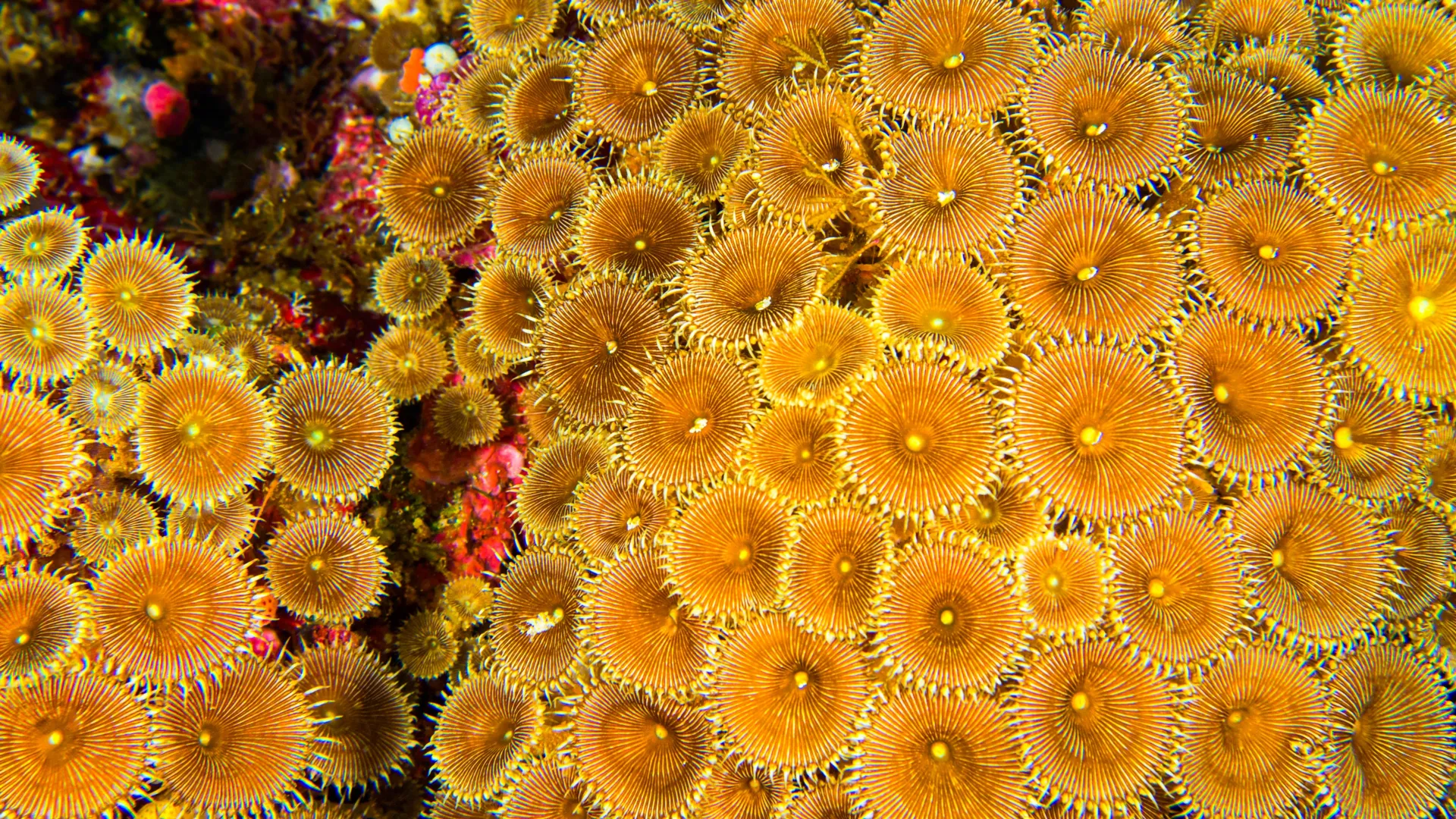
GALWAY, Ireland — A team of marine biologists has reconstructed the genomes of 645 microbial species living inside Pacific coral reefs — and found that more than 99% of them have never been described by science before. The work, published Friday in Nature, more than doubles humanity's catalog of known reef microbes in a single paper and identifies what the authors call a "molecular library" of unstudied chemical compounds with apparent potential as drugs against cancer, inflammation and bacterial infection.
The study, led by Dr. Maggie Reddy and Professor Olivier Thomas of the University of Galway's Ryan Institute, in collaboration with researchers at ETH Zurich, drew on samples collected during the 2016–2018 Tara Pacific Expedition, a two-and-a-half-year voyage that visited 99 reefs across 32 island groups, from Panama to the Great Barrier Reef. Each coral species turns out to host a tightly bound community — what microbiologists call a holobiont — of bacteria, archaea, fungi, viruses and algae. Coral can no more live without that community than a human gut can.
When the Galway-Zurich team reconstructed full genomes from the metagenomic soup, they found that coral-associated bacteria carry, per gigabase of DNA, a wider range of biosynthetic gene clusters — the genetic instructions for making complex chemicals — than any other ocean microbiome that has been catalogued. Of the 4,000-plus microbial species identified across the holobiont, only about 10% had any genetic information available before the Nature paper. "We are looking at, by far, the largest reservoir of unexplored chemistry in the marine environment," Reddy said in a video statement released by the university.
In a series of follow-up assays, the authors confirmed that one of those new compounds — a peptide produced by an Acidobacteriota species novel to this study — inhibits human neutrophil elastase, an enzyme implicated in chronic obstructive pulmonary disease, cystic fibrosis and acute lung injury, at low micromolar concentrations. That result alone is unlikely to yield a drug; but the technique used to find it can be applied to thousands of other clusters in the dataset, and the authors estimate that as many as 30 to 50 of the genes they catalog encode compounds with structural features known to be biologically active.
The finding lands at a fraught moment for reef science. The world's reefs are in the worst bleaching event ever recorded, with the U.S. National Oceanic and Atmospheric Administration reporting in March that more than 84% of reef areas worldwide had experienced bleaching-level heat stress since January 2023. Reddy and Thomas argue that their data sharpen the case for protection by reframing reefs as repositories of pharmaceutical raw material, not just biodiversity — "every reef we lose," Thomas said, "is a library that burns before we have read its books."
The paper has prompted immediate interest from drug-discovery firms. Both Novartis and the Boston-based startup Reefgen Therapeutics confirmed to Reuters this week that they are negotiating data-access agreements with the Galway team. Two large U.K. and German biotech investors have begun "due diligence" on a possible spin-out, according to a person familiar with the discussions who spoke on condition of anonymity. Reddy and Thomas are also preparing a successor expedition, the Tara Coral mission, scheduled to depart for Papua New Guinea in June 2026 to collect samples from a portion of the western Pacific not visited on the first cruise.