Warwick AI System 'RAVEN' Finds 100+ Hidden Exoplanets in NASA TESS Data
The University of Warwick's Rapid Automated Vetting of Exoplanet Candidate Networks confirmed 31 brand-new worlds and flagged 2,000 more, slashing planet-vetting time from months to ninety seconds.

A team of astronomers at the University of Warwick has used a custom artificial intelligence pipeline to confirm more than 100 new exoplanets and identify over 2,000 additional candidates hiding inside four years of observations from NASA's Transiting Exoplanet Survey Satellite (TESS), one of the largest haul of newly validated worlds announced in a single project since the Kepler mission ended in 2018. The work, published this week in the Monthly Notices of the Royal Astronomical Society, includes 31 entirely new confirmed planets and refines the masses and radii of dozens of previously known systems.
The AI engine driving the discovery is called RAVEN — Rapid Automated Vetting of Exoplanet Candidate Networks — and was developed by Andreas Hadjigeorghiou, a postdoctoral researcher at Warwick's Astronomy and Astrophysics Group. Trained on millions of simulated planetary and false-positive light curves, RAVEN evaluates a flagged TESS signal across more than 30 features simultaneously, distinguishing real transiting planets from the eclipsing binaries and starspot crossings that have dogged ground-based vetting for the better part of a decade. "What used to take a graduate student six months to vet by hand now takes RAVEN about ninety seconds," Hadjigeorghiou said in a Warwick news release.
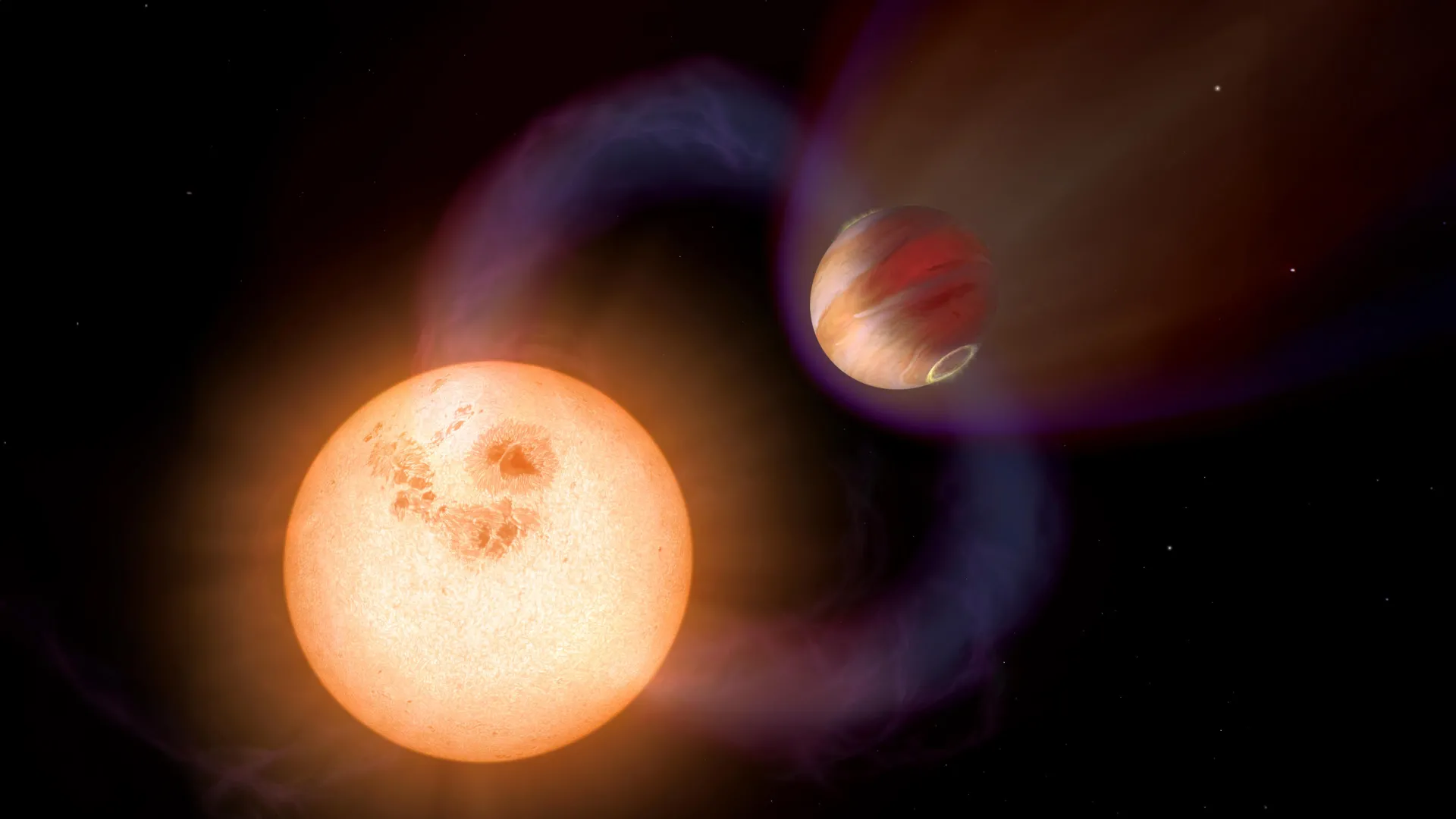
The project's first author, Marina Lafarga Magro, said the team focused deliberately on planets in tight orbits — anything circling its star in fewer than 16 days — because TESS observes most patches of sky for only 27 days at a time, and short-period worlds therefore yield multiple transits within a single observing window. The catalog includes ultra-short-period planets that complete an orbit in less than 24 hours, several of which fall inside the so-called "Neptunian desert," a poorly populated region of parameter space where Neptune-sized worlds are rarely found. According to the population study led by Warwick postdoctoral researcher Kaiming Cui, these close-in worlds appear around just 0.08 percent of Sun-like stars surveyed.
The scale of the dataset is what makes the work distinctive. The Warwick team analyzed light curves for more than 2.2 million stars observed over four years of TESS primary and extended mission operations. Senior co-author David Armstrong, an associate professor at Warwick, said the project reduced measurement uncertainties on planetary radii by up to a factor of ten compared to earlier vetting pipelines, a step-change that lets observational astronomers compare model predictions to real systems with unprecedented precision. "For the first time we can ask the demographics question — how common is a hot Neptune around a quiet G-dwarf? — and get an answer that isn't dominated by selection bias."
The practical payoff begins immediately. Several of the newly confirmed worlds are bright enough that JWST or the European Southern Observatory's Extremely Large Telescope, scheduled to see first light next year, can probe their atmospheres directly. NASA Exoplanet Science Institute director David Ciardi said the agency is already incorporating the RAVEN catalog into the Atmosphere Observation Reservation List for JWST Cycle 4, due to open for proposals in July. Warwick has released the full RAVEN code and trained model under an open-source license on GitHub, and several other survey teams — including those operating PLATO, the European Space Agency's planet-hunter scheduled for launch in 2026 — have already begun adapting the pipeline for their own data.