The Secret to Homing Pigeons' Uncanny Navigation Was Hiding in Their Liver
Scientists report that iron-loaded immune cells in the pigeon liver may act as tiny magnetic sensors, helping the birds read Earth's magnetic field — a finding one researcher called 'mind-blowing.'
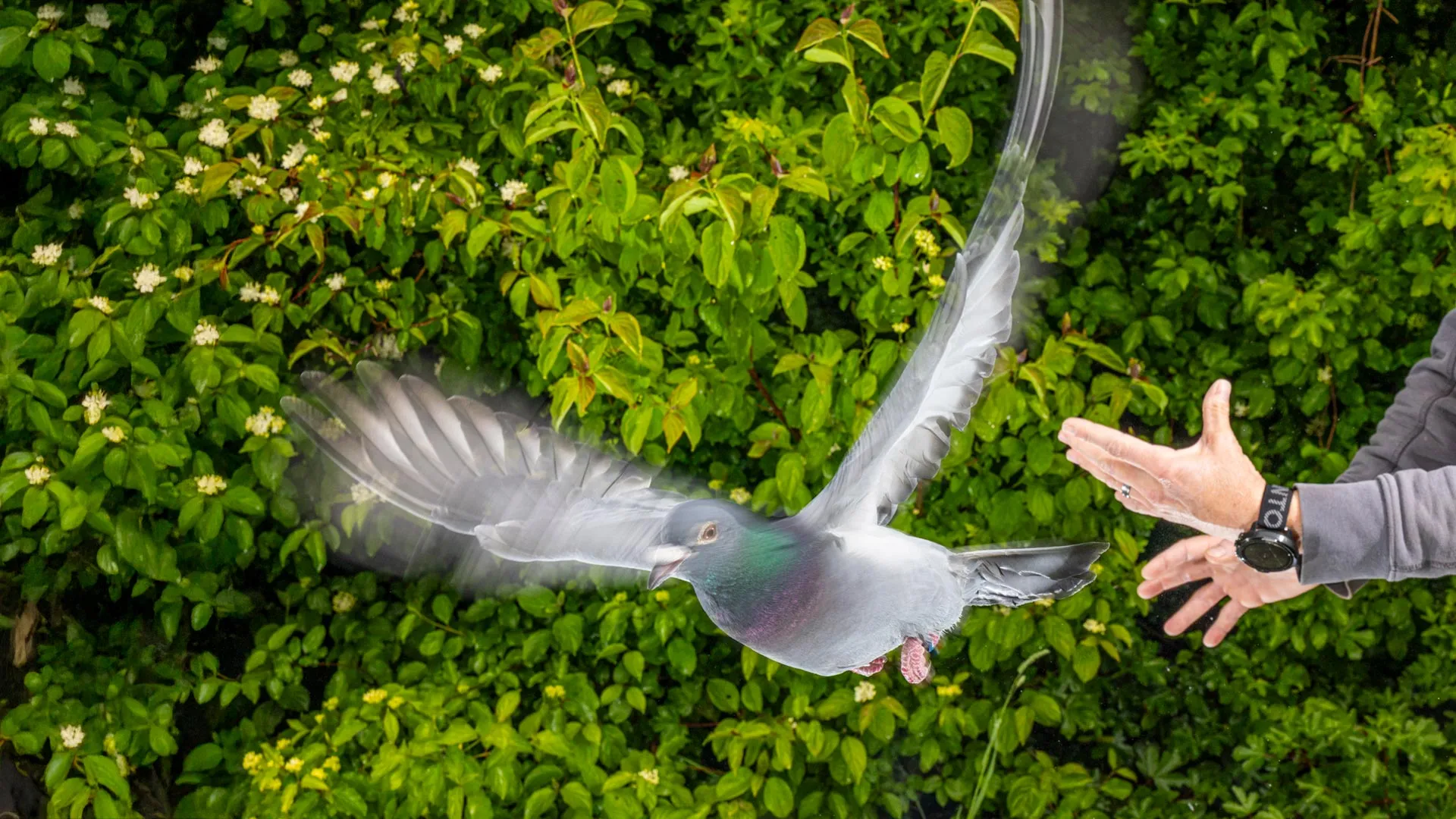
Homing pigeons have astonished humans for millennia with their ability to find their way home across hundreds of miles of unfamiliar terrain. Now scientists believe they have located the long-sought biological compass behind that feat in an unexpected place: the bird's liver.
According to a study published in the journal Science, pigeons may navigate using specialized immune cells in their livers that are packed with iron and behave like microscopic magnetic sensors. The cells, called macrophages, normally accumulate iron as they break down old red blood cells. That stockpiled iron, the researchers found, gives the cells unusual magnetic properties — enough that they could plausibly respond to the planet's magnetic field and feed directional information to the brain.
The crucial evidence came from experiments in which birds were deprived of these iron-rich liver cells. Under clear skies, the pigeons could still rely on the sun for direction. But on overcast days, when the sun was hidden, the affected birds struggled to find their way home, suggesting they had lost access to the magnetic sense that normally serves as a backup compass.
The discovery is the product of an unusual interdisciplinary collaboration. Immunologists from the University of Bonn and the University Hospital Bonn teamed up with physicists from the University of Duisburg-Essen and ornithologists at the Max Planck Institute of Animal Behavior to connect the dots between an organ associated with metabolism and immunity and a behavior associated with the brain and senses.
For decades, researchers hunting for the seat of magnetoreception in animals focused on the beak, the eyes and the inner ear, with inconclusive and often contradictory results. The idea that the liver — and specifically the immune cells within it — might house the sensor upends those assumptions and could finally explain why earlier searches kept coming up empty.
The hunt for a magnetic sense has been one of biology's most frustrating quests. Two leading hypotheses have dominated: that specialized cells contain crystals of the iron mineral magnetite that physically twist in response to magnetic fields, or that light-sensitive proteins called cryptochromes in the eye allow birds to "see" magnetic lines through quantum effects. Decades of searching for a concrete magnetite-based sensor, however, repeatedly came up empty, with promising candidates in the beak later debunked.
One scientist not involved in the work called the result "mind-blowing," and for good reason: it hints at a deep and previously unsuspected link between the immune system and the ability to sense the environment. If confirmed and extended to other species, the finding could reshape how biologists think about animal migration, the evolution of the senses, and the surprising double duty that ordinary cells may perform inside the body. The authors caution that more work is needed to trace exactly how a signal from the liver would reach the brain, but the experiments offer the most concrete lead yet in a search that has stumped researchers for generations.