Streetlights Are Trapping Thousands of Pill Bugs in Eerie 'Death Spirals'
In Israel, scientists documented swirling rings of more than 5,000 woodlice circling endlessly under artificial light — a collective behavior never before seen in the species.
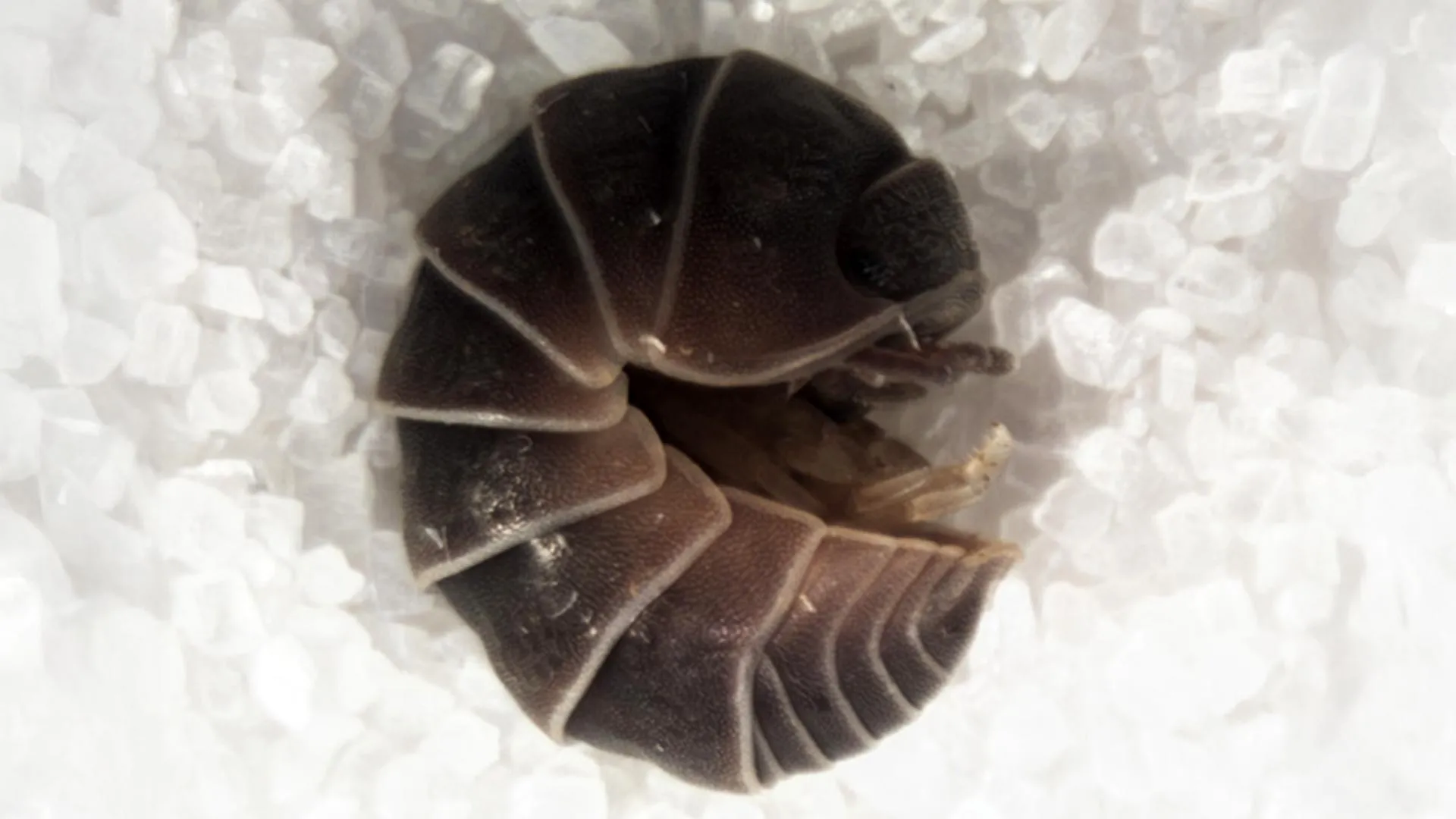
Under the glow of streetlights in northern Israel, scientists have documented something no one had recorded before: thousands of woodlice locked into vast, swirling "death spirals," circling endlessly along rings of illuminated ground until exhaustion sets in. Some of the formations contained more than 5,000 individuals, a scale of coordinated movement never seen in these humble creatures.
The animals belong to the species Armadillo sordidus, a little-studied isopod and a terrestrial relative of crabs and shrimp, commonly known as woodlice or pill bugs. Ordinarily they lead solitary lives hidden beneath rocks and damp leaf litter, where moisture keeps their bodies from drying out. They will sometimes huddle together to conserve water, but the sweeping, self-organizing "mills" observed here were something else entirely — and entirely unexpected.
The behavior was recorded in the Golan Heights and the Jezreel Valley by PhD student Idan Sheizaf, working under Professor Ariel Chipman at the Hebrew University of Jerusalem, and published in the journal Ecology and Evolution. The researchers traced the cause to the way artificial white light falls on the ground: streetlights cast circular pools of illumination, and the isopods, following the bright boundary, begin to move along its perimeter. Once enough of them fall into step, the circular motion becomes self-sustaining, feeding on itself like a whirlpool.
"While collective movement is common in the animal kingdom, seeing it in this form in isopods was entirely unexpected," Sheizaf said. "It appears that the geometry of our modern world — specifically the circular pools of light created by streetlights — is interacting with the natural instincts of these creatures to create a mesmerizing, yet potentially harmful, emergent phenomenon."
The spirals echo a grim behavior known from other species, most famously the "ant mills" in which columns of army ants, cut off from their trail, march in a circle until they die. For the woodlice, the endless looping can lead to exhaustion, dehydration and easy pickings for predators. The finding adds a strange new entry to the growing catalog of ways that light pollution scrambles animal behavior — from moths spiraling into bulbs to hatchling turtles crawling the wrong way — and hints that even the most overlooked creatures underfoot are being reshaped by the artificial night.