20,000-Year-Old Bees Turned a Dead Beast's Teeth Into Their Nursery
On the island of Hispaniola, scientists found the first known evidence of ancient bees nesting inside the empty tooth sockets of mammal jawbones scattered across a cave floor by owls.
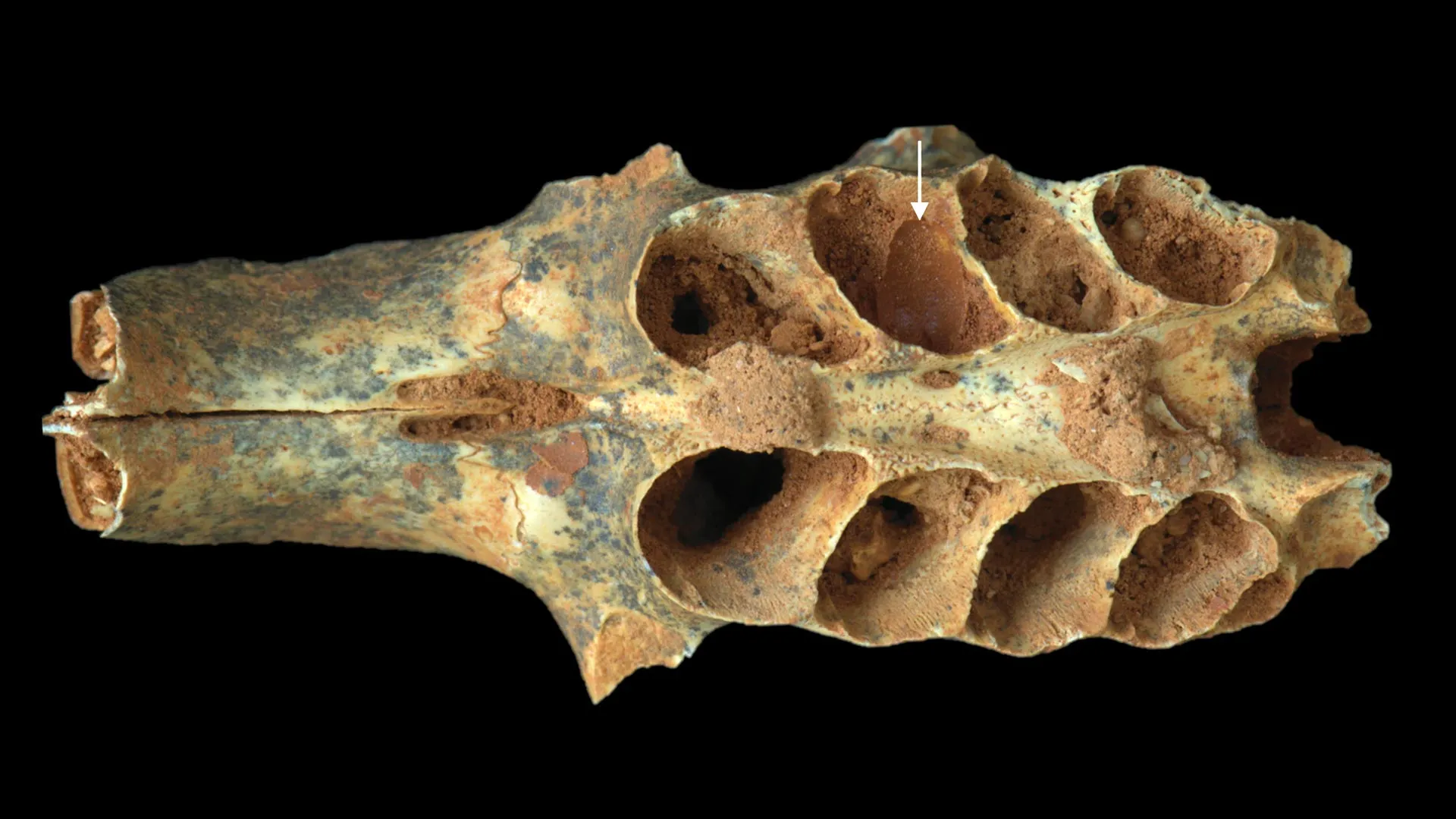
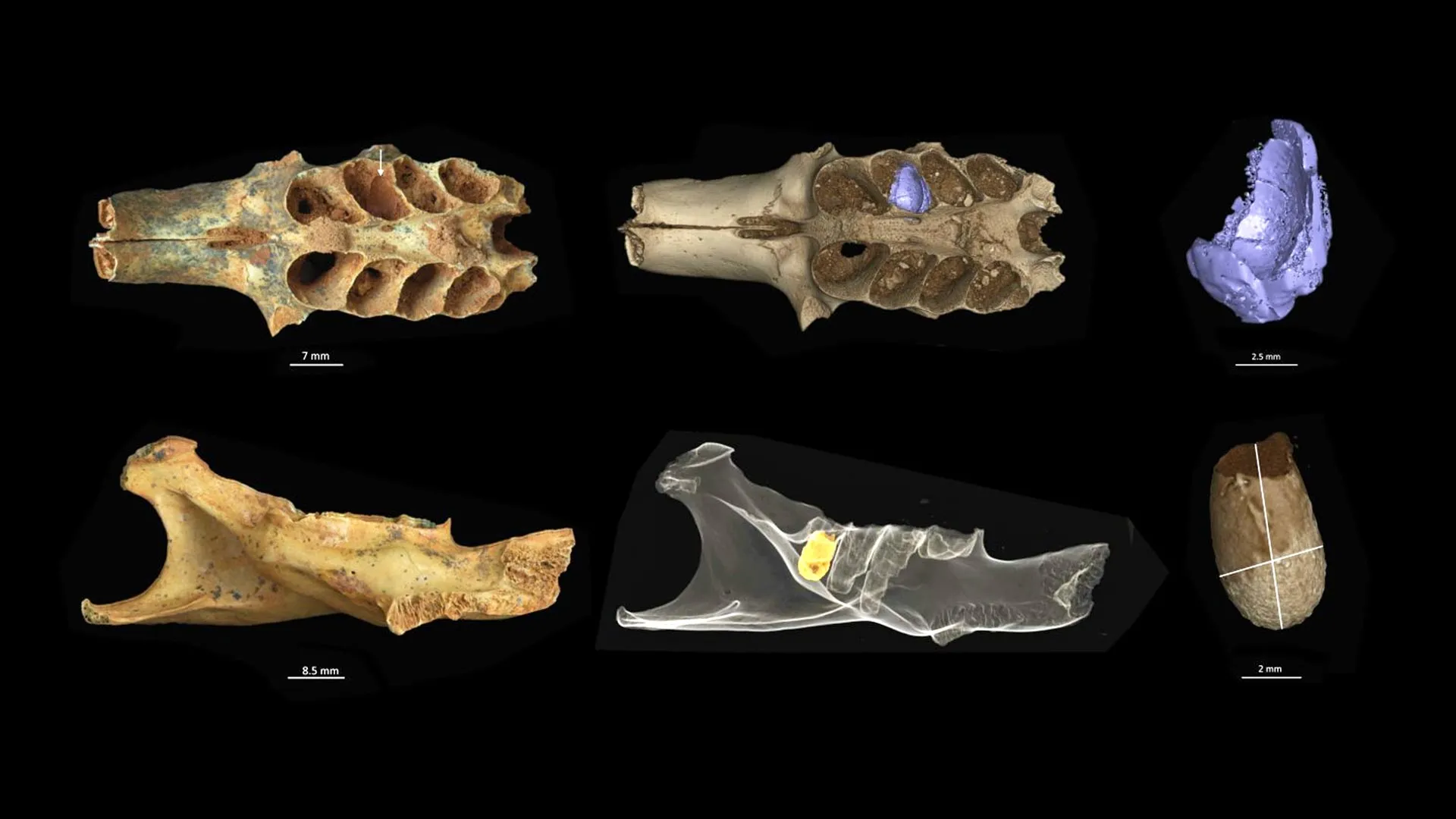
In a limestone cave on the island of Hispaniola, shared by Haiti and the Dominican Republic, scientists have uncovered a startlingly intimate glimpse of Ice Age life: ancient bees that made their nurseries inside the empty tooth sockets of mammal jawbones. It is the first known evidence in the fossil record of bees nesting inside animal bones, and it stitches together an unlikely chain of predators, prey and pollinators from roughly 20,000 years ago.
The story begins with owls. For generations, the birds roosted in the cave and dropped the bones of the small mammals they hunted onto the floor below, building up a scattered graveyard of skulls and jaws. Long after the owls were gone, solitary bees moved in and colonized the hollow sockets left behind when the animals' teeth fell away, using the smooth, sheltered cavities as ready-made chambers to raise their young.
The discovery was made by researchers at the Field Museum in Chicago, led by postdoctoral scientist Lazaro W. Vinola-Lopez, who noticed something odd about the material packed into the tiny sockets. "It was a smooth surface, and almost concave," he said. "That's not how sediment normally fills in." That subtle wrongness was the tell: the cavities had been shaped and lined by living insects, not passively filled by mud and dust over the millennia.
Because no fossilized bee bodies survived, the researchers cannot say exactly which species built the nests, and it remains unknown whether the bee is extinct or still buzzing around the Caribbean today. Instead of naming a new animal, the team named the trace fossil itself, the nest structure, calling it Osnidum almontei in honor of Juan Almonte Milan, curator of paleobiology at the Dominican Republic's Museo Nacional de Historia Natural. The findings were published in December 2025 in the journal Royal Society Open Science.
Trace fossils like these, which record behavior rather than bodies, are rare and precious because they capture how ancient creatures actually lived rather than simply what they looked like. Naming the nest structure, instead of the animal that built it, is the paleontologist's way of cataloguing that behavior so it can be compared with other finds around the world. The Hispaniola nests reveal a small but vivid ecological drama: owls hunting through the night, their leftovers accumulating in the dark, and enterprising bees repurposing the bones of the dead into cradles for a new generation. It is a reminder that even 20,000 years ago, life was busy finding clever ways to make use of whatever the world left lying around.