A Surprise in the Brain's Movement Center Could Upend How We Study Tremor and Dystonia
Two types of cerebellar cells long assumed to move in lockstep often don't, a Virginia Tech study finds — suggesting scientists have been watching the wrong signals in disorders like ataxia and dystonia.
A new study is forcing neuroscientists to rethink how they study some of the most common movement disorders, after researchers discovered that two types of brain cells long assumed to work in lockstep frequently do not. The finding, from the Fralin Biomedical Research Institute at Virginia Tech, suggests that decades of research may have been reading the wrong signals.
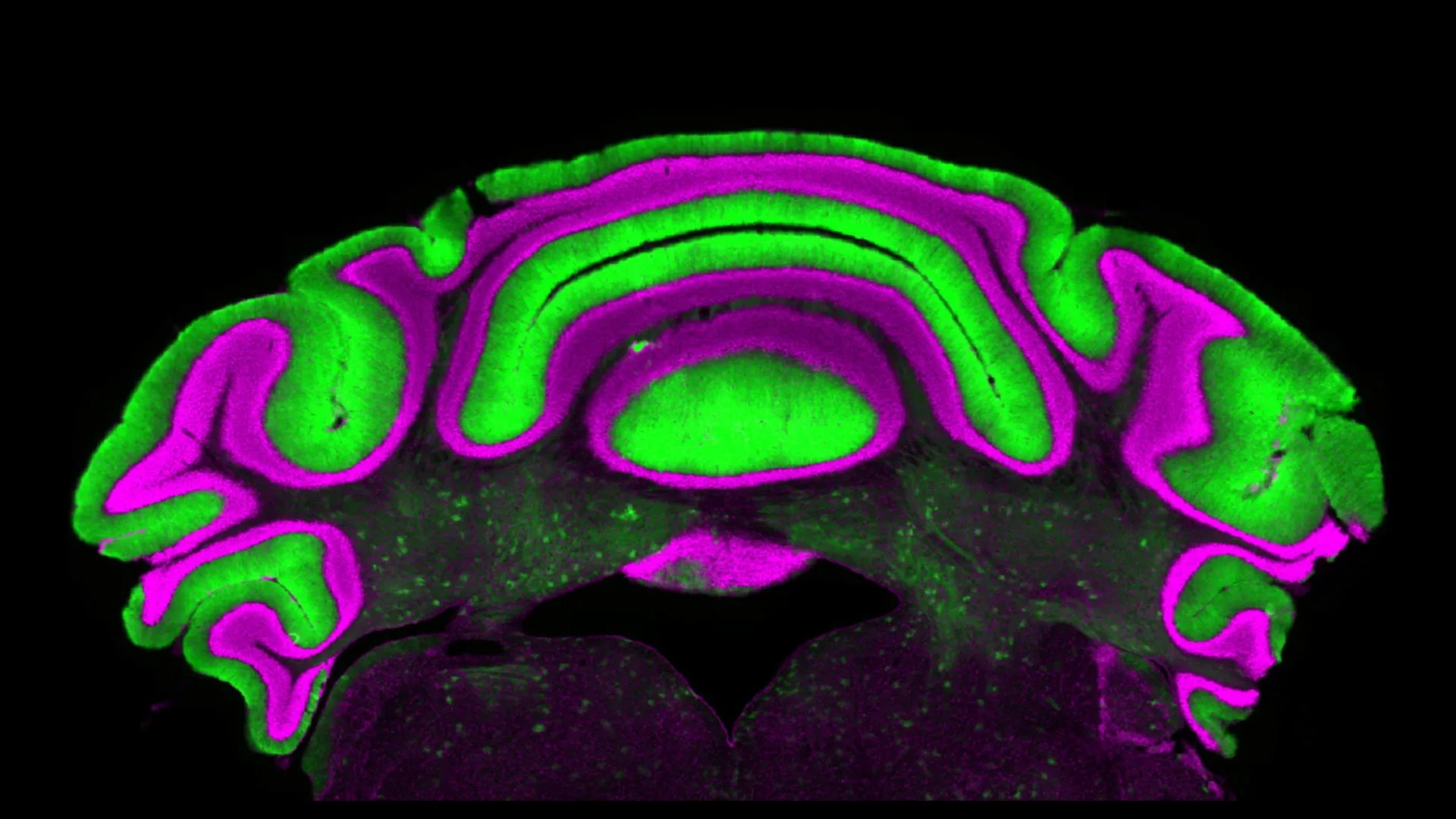
The work centers on the cerebellum, a dense region at the back of the brain that coordinates movement and balance. For years, neuroscientists have focused on two cell types there: Purkinje cells, which sit in the cerebellum's outer layer and are relatively easy to record from, and the deep cerebellar nuclei cells buried beneath them. Because the two are directly wired together, researchers generally assumed that watching a Purkinje cell would give a faithful picture of what the deeper cells were doing.
That assumption did not hold up. "We see that there's not a clear linear relationship between activity in the Purkinje cells and in the deep nuclei cells," said Meike van der Heijden, an assistant professor at the institute who led the research. In other words, monitoring one cell type tells you surprisingly little about the other, despite their direct anatomical connection — leaving very limited predictive power in a shortcut scientists have relied on for years. The results were published in The Journal of Physiology, with graduate researcher Alyssa Lyon as first author.
The implications land squarely on chronic, disabling conditions. Dystonia, which twists the body into abnormal postures; ataxia, which robs people of coordination; and tremor, the involuntary shaking familiar from Parkinson's and essential tremor, all trace at least in part to problems in the cerebellum. If researchers have been using Purkinje-cell activity as a stand-in biomarker for what is happening deeper in the circuit, they may have been building models — and testing potential therapies — on a faulty premise.
Van der Heijden's team argues that studies of cerebellar disorders will need to record directly from the deep nuclei cells, rather than inferring their behavior from the more accessible Purkinje cells above. That is harder to do experimentally, but the payoff could be a clearer map of what actually goes wrong in the brain's movement center — and, eventually, better-targeted treatments for millions of people whose lives are shaped by tremor, dystonia and ataxia.