Scientists Discover a Dedicated Nerve Network Behind the 'Peach Fuzz' Itch
University of Michigan researchers identified specialized neurons wired to the body's finest hairs that trigger mechanical itch — a finding that could unlock new treatments for eczema and chronic itching.
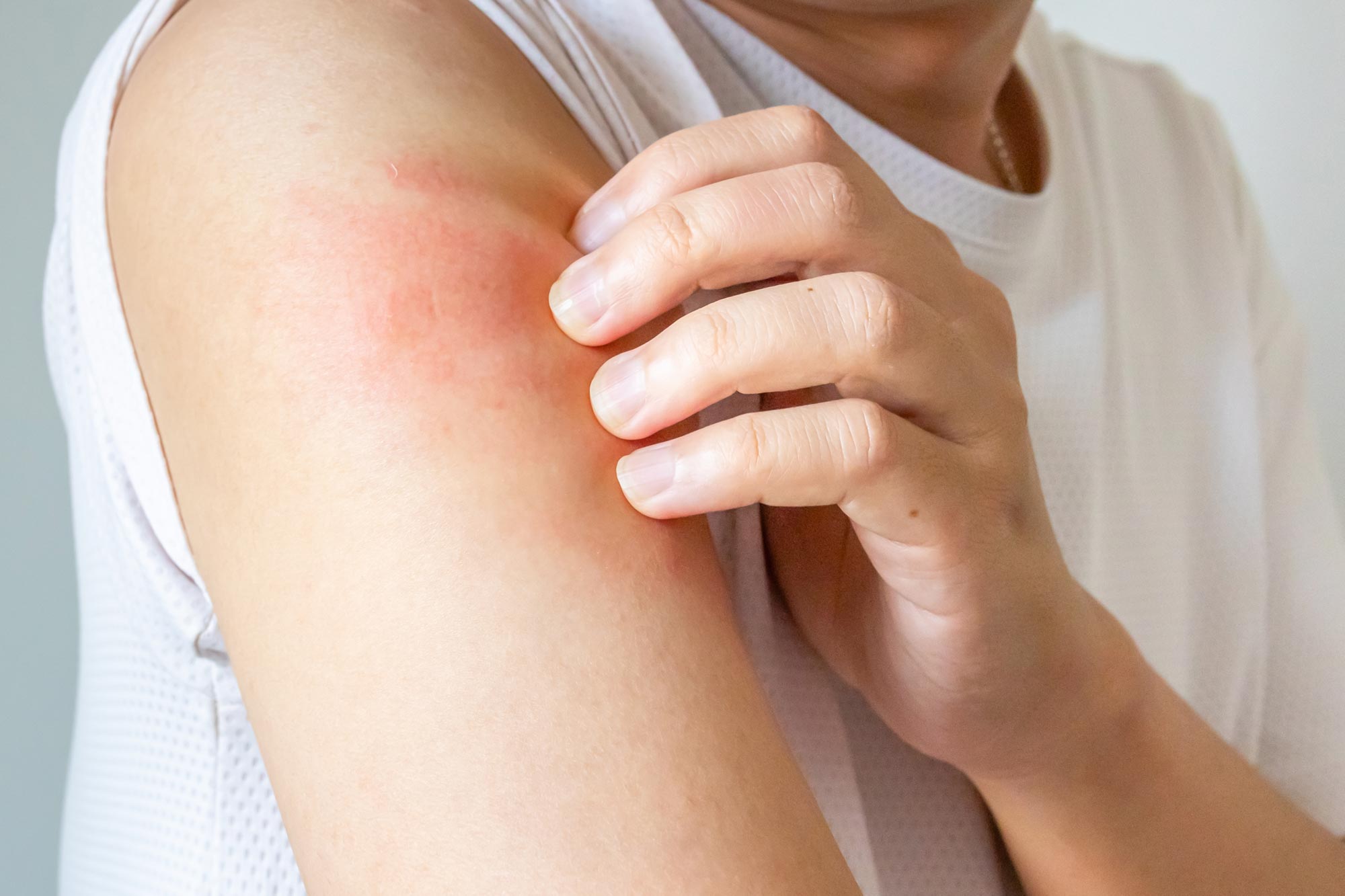
The maddening itch that erupts when a wool sweater brushes your skin or an insect crawls across your arm has its own dedicated wiring in the nervous system, according to new research from the University of Michigan. Scientists have identified a specialized population of sensory neurons devoted entirely to "mechanical itch," a discovery that could point the way to new treatments for chronic conditions such as eczema.
The study, titled "A specialized population of hair afferents dedicated to transmitting mechanical itch," was published in the journal Neuron. Researchers found that the sensation is triggered not by the coarse hairs most people notice but by vellus hairs — the fine, light-colored "peach fuzz" that covers much of the human body. In mice, the team identified a matching class of vellus-like hairs and traced them to a distinct set of nerve cells.
Those neurons, which the researchers describe as Piezo2-expressing touch fibers, respond to the gentlest mechanical stimulation of the tiny hairs. When the scientists genetically silenced or eliminated the cells, the mice stopped scratching in response to light stroking or indentation of the vellus hairs — under both normal conditions and in models of chronic, pathological itch. In other words, switching off this single pathway abolished mechanical itch without appearing to disrupt ordinary touch.
The finding sharpens a long-blurry distinction in sensory biology. Itch comes in at least two flavors: chemical itch, provoked by substances like histamine during an allergic reaction, and mechanical itch, set off by light physical contact. Chemical itch has been studied in detail, but the machinery of mechanical itch has remained poorly understood. The new work shows it has its own dedicated sensory channel, separate from the neurons that convey pain or gentle pleasant touch.
Because humans possess the same type of vellus hairs and appear to share the underlying circuitry, the researchers believe the pathway they mapped in mice is likely present in people. That raises the tantalizing prospect of drugs that selectively dial down mechanical itch without deadening normal sensation — a precision that current antihistamines and steroid creams cannot offer, especially for patients whose itching is driven by touch rather than chemicals.
Chronic itch is a debilitating symptom of eczema, psoriasis and other skin and nerve disorders, and it can be notoriously resistant to treatment, robbing patients of sleep and quality of life. By pinpointing the exact neurons that generate the sensation, the Michigan team has handed drug developers a concrete target. The next step, the researchers say, is to determine whether blocking these fibers in humans can quiet the itch-scratch cycle that makes so many skin conditions unbearable.