Record-Shattering Heat Bakes 185 Million Americans, Upending July 4th and America's 250th
An extreme heat dome pushed heat-index readings toward 115 degrees from the Midwest to the East Coast, forcing cities to cancel parades and Amtrak to scrap trains as the nation marked its Semiquincentennial.
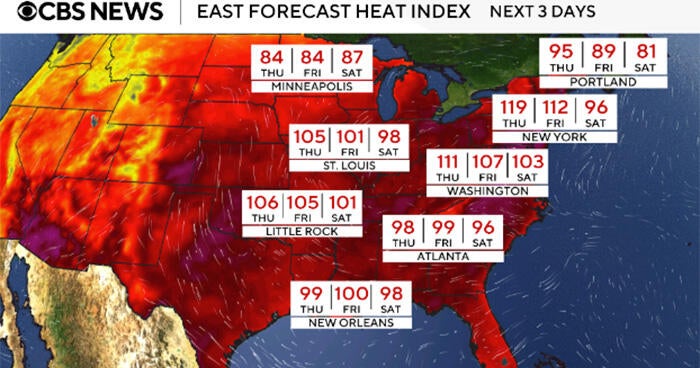
A brutal heat dome smothered the eastern half of the United States over the Fourth of July weekend, placing more than 185 million people under heat alerts and threatening to make the holiday the hottest Independence Day on record across much of the country just as the nation celebrated its 250th birthday.
Forecasters warned that more than 300 temperature records could fall by Saturday, with heat-index values — a measure of how hot it feels when humidity is factored in — climbing to between 100 and 115 degrees from the Midwest to the East Coast. Actual temperatures ran 20 to 30 degrees above average, and at least 10 states saw the mercury top 100 degrees on Friday alone.
The records piled up in the nation's biggest cities. New York City tied its 100-degree mark, last set in 1966, and remained under an extreme heat warning through 9 p.m. Saturday. Boston hit 100 degrees for just the 29th time in its recorded history, setting a new daily record. Washington, D.C., was forecast to reach 102 degrees, which would break the capital's Fourth of July record of 100 set in 1919. Philadelphia sat under an extreme heat warning through Saturday evening.
The dangerous conditions collided head-on with the holiday and the country's Semiquincentennial festivities. Philadelphia postponed its Salute to Independence parade, Washington canceled its Independence Day parade, and Amtrak scrapped a slate of trains along the busy Northeast Corridor as heat threatened to buckle rails and overhead wires. Organizers of concerts and fireworks displays scrambled to open gates later and add cooling stations.
'These are extremely dangerous conditions,' New York Mayor Zohran Mamdani said, urging residents to 'stay inside and stay cool' and warning that heat is the deadliest form of extreme weather in the United States. City officials opened cooling centers and extended pool hours, while utilities across the Northeast braced for record electricity demand as air conditioners ran flat out.
Meteorologists said the heat was expected to persist into the start of the week before a cold front finally pushes the worst of it offshore. Public-health officials cautioned that overnight lows offering little relief — with more than 200 record-warm nighttime temperatures possible — pose a particular danger to older adults, young children and people without air conditioning, who never get the chance to cool down.
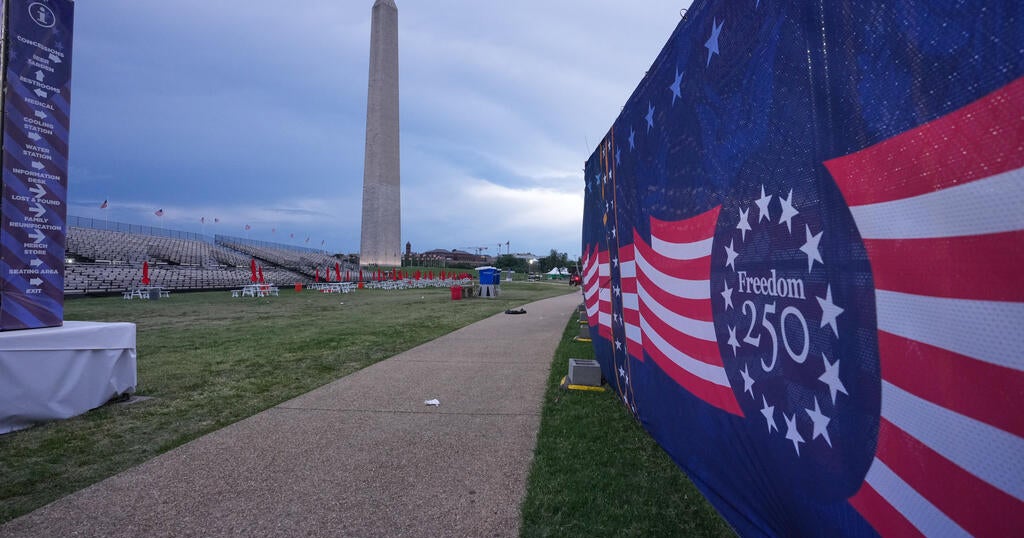
In Washington, organizers pressed ahead with the traditional Capitol Fourth concert but pushed back gate times and added water stations and medical tents, while the National Park Service urged the crowds expected on the National Mall to arrive hydrated and to watch for signs of heat exhaustion. Forecasters noted that such prolonged, humid heat so early in the season fits a broader warming pattern that has made extreme-heat events more frequent and more intense across the eastern United States in recent years.