NASA's X-59 Prepares to Break the Sound Barrier for the First Time — Quietly
The experimental jet, built to replace the sonic boom with a soft 'thump,' is set to go supersonic in early June, a milestone that could one day return high-speed passenger flight to the skies over land.
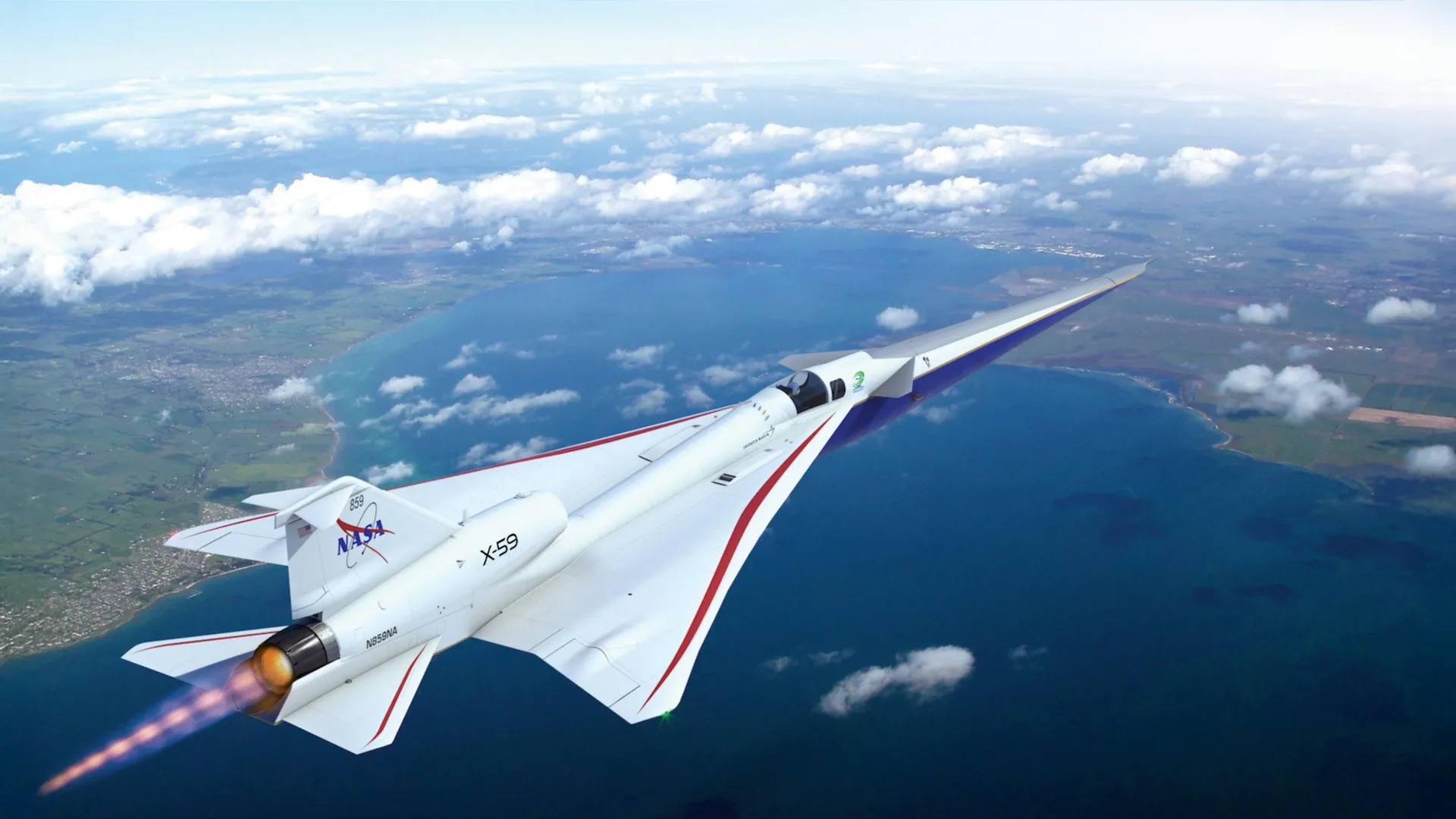
NASA is preparing to push its sleek, needle-nosed X-59 past the speed of sound for the first time, a long-anticipated milestone for an aircraft designed to do something no supersonic jet has managed before: fly faster than sound without unleashing a thunderous boom.
The X-59, built by Lockheed Martin, is the centerpiece of NASA's effort to crack one of aviation's most stubborn problems. Conventional supersonic aircraft generate sonic booms so jarring that the United States banned civilian supersonic flight over land in 1973. The X-59 is engineered to soften that shockwave into a muffled "thump," a sound NASA hopes will be quiet enough to make overland supersonic travel acceptable again.
NASA expects the aircraft to exceed Mach 1 for the first time during test flights scheduled for early June 2026, flying at more than 630 mph at roughly 43,000 feet. "What comes next is the first time this one-of-a-kind aircraft will fly supersonic," said project manager Cathy Bahm, marking the transition from cautious early flights to the speeds the plane was built to achieve.
The jet's design is unusual by necessity. Its elongated, slender shape and carefully sculpted contours are meant to spread out the shockwaves that normally coalesce into a sharp boom, dispersing them so they reach the ground as a gentle thump rather than a startling crack. The cockpit lacks a traditional forward-facing window; instead, the pilot relies on an external vision system that stitches together camera feeds onto a display.
NASA's broader goals push well beyond this first supersonic run. The agency aims to fly the X-59 at Mach 1.4, about 925 mph, at 55,000 feet during its mission profile, with a maximum planned speed of Mach 1.6, or 1,218 mph, and a ceiling of 60,000 feet. Reaching those numbers will test whether the aircraft can sustain quiet supersonic flight under real operating conditions.
The work is organized under NASA's QueSST, or Quiet SuperSonic Technology, effort, also known as the Low Boom Flight Demonstrator mission. The program is divided into two phases. Phase 1 is focused on proving the aircraft's performance and airworthiness. Phase 2, set to begin later in 2026, will directly measure the X-59's acoustic signature to confirm whether its boom-softening design actually delivers the quiet thump engineers have promised.
If it succeeds, the implications could be far-reaching. Data gathered from the X-59 is intended to help regulators craft new noise-based standards that could lift the decades-old ban on overland supersonic flight, potentially opening the door to a new generation of commercial jets that slash travel times without rattling the communities below.