Humans Were Living in African Rainforests 150,000 Years Ago, a Find That Rewrites Our Origin Story
Stone tools and ancient plant traces from a now-destroyed site in Côte d'Ivoire push back the oldest known rainforest habitation by more than double — and undercut the idea that our species was born only on the savanna.
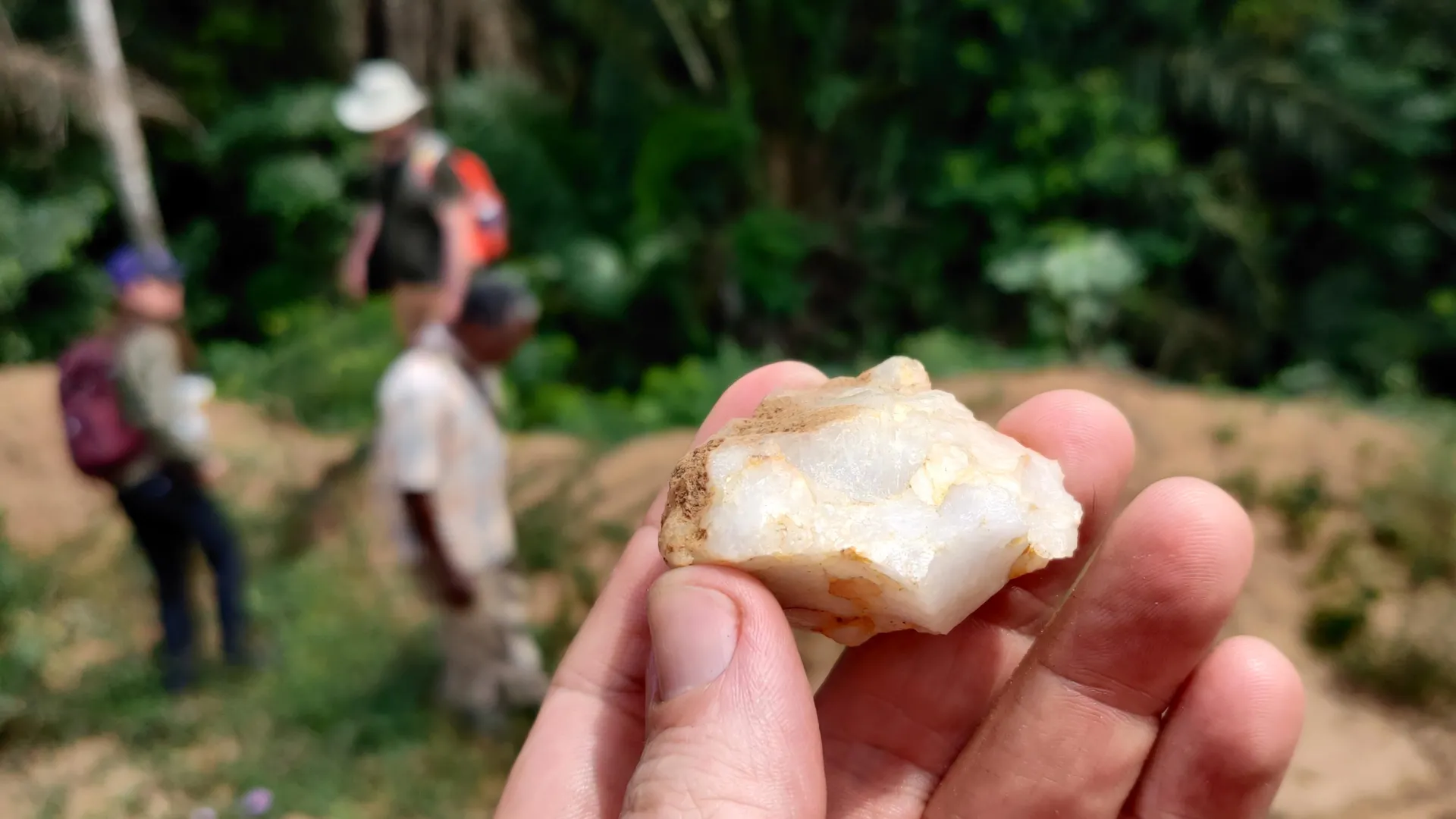
Early humans were living deep in the wet tropical rainforests of West Africa around 150,000 years ago, according to new research that pushes back the oldest known evidence of rainforest habitation by more than double — and challenges the long-held notion that our species emerged in open grasslands alone.
The findings, from a team led by the Max Planck Institute of Geoanthropology, center on a site called Bété I in present-day Côte d'Ivoire. The location was originally excavated in the 1980s during an Ivorian-Soviet research mission, but its full significance went unrecognized for decades. In a poignant twist, the site has since been destroyed by mining activity, making the preserved samples and records the only remaining window onto what it once held.
To establish the age and environment of the deposits, the researchers combined a battery of techniques: optically stimulated luminescence and electron-spin resonance dating to pin down the timeline, alongside pollen analysis, the study of microscopic plant-silica structures called phytoliths, chemical analysis of the sediments, and an examination of preserved plant waxes. Together, the lines of evidence painted a consistent picture of a genuinely humid, forested setting — not a patch of woodland on the edge of a savanna — inhabited by toolmaking humans.
The implications reach to the heart of how scientists understand human evolution. For generations, the dominant narrative cast early Homo sapiens as creatures of the open plains, with dense rainforests seen as barriers rather than homes. The Bété I evidence, by contrast, suggests our ancestors were remarkably flexible, capable of thriving across a wide range of habitats far earlier than assumed. The previous oldest secure evidence of humans in African rainforests dated to roughly 18,000 years ago.
Living in a rainforest would have demanded a distinct set of skills and knowledge: navigating dense vegetation, finding food among unfamiliar plants and animals, and coping with a humid, disease-prone environment very different from the savanna. That early humans managed it, and left stone tools behind to prove it, hints at a depth of behavioral adaptability that researchers are only beginning to appreciate. It also raises the prospect that other, still-undiscovered sites across Africa's forest belt could hold even older traces of human presence.
"Convergent evidence shows beyond doubt that ecological diversity sits at the heart of our species," said Professor Eleanor Scerri, a senior author of the study. The research, which involved scientists including lead author Dr. Eslem Ben Arous, Dr. James Blinkhorn and Professor Yodé Guédé of l'Université Félix Houphouët-Boigny, was published in the journal Nature. Its authors argue that the adaptability on display in that ancient forest may be one of the defining traits that allowed Homo sapiens to spread across, and ultimately dominate, an astonishing variety of the planet's environments.