Scientists Discover Why Some DNA-Doubled Cells Survive — a Clue to How Cancers Persist
A Hokkaido University team found that whether a cell with a doubled genome lives or dies depends on how the division error occurred, pointing to a possible vulnerability in recurring tumors.
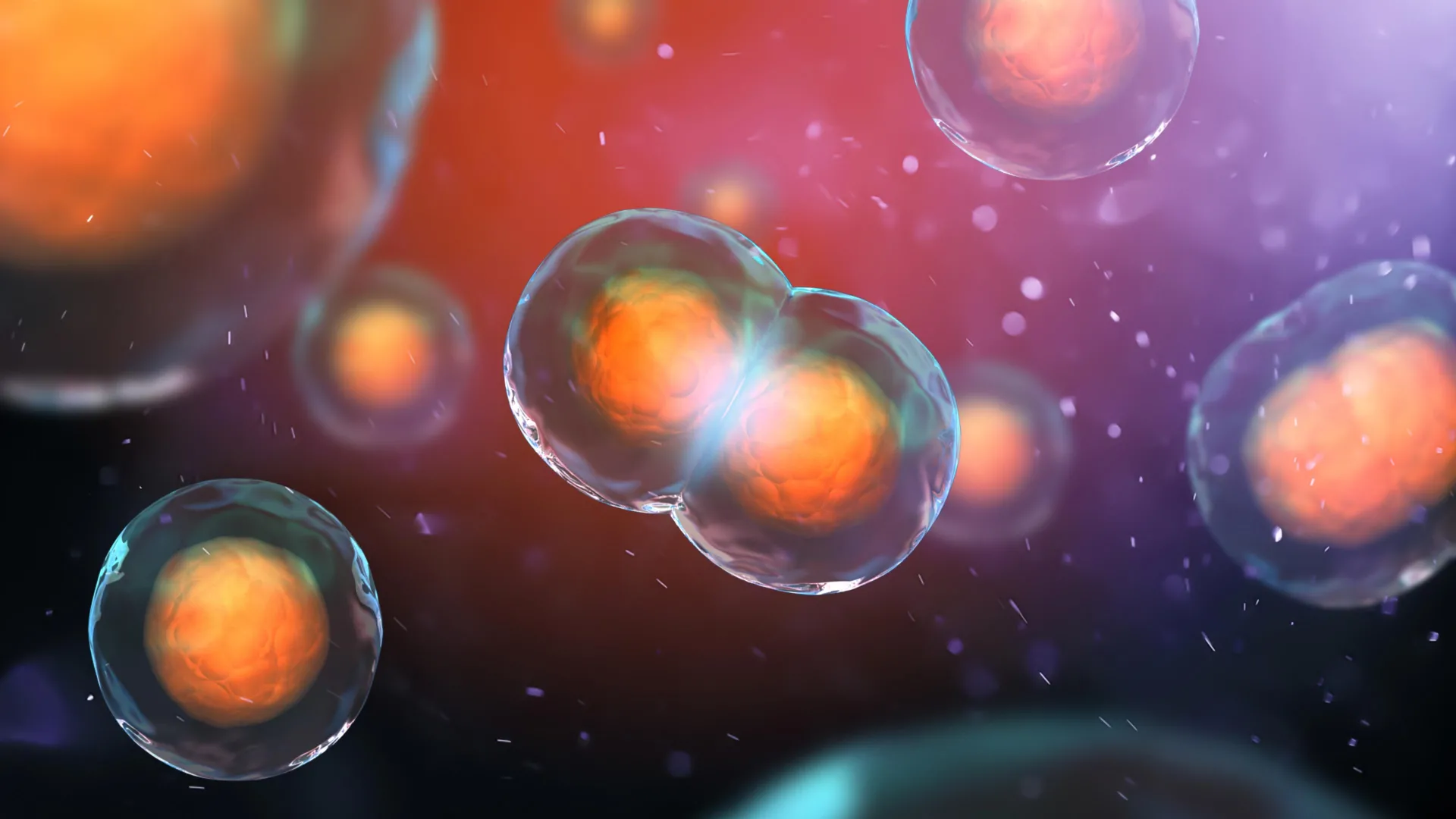
Scientists in Japan have discovered why some cells that accidentally double their DNA manage to survive and keep dividing while others die off — a distinction that could help explain how certain cancers persist, return after treatment and drive the genetic chaos behind aging. The key, the researchers found, is not whether a cell ends up with too much DNA, but precisely how the error happened in the first place.
The study, published May 25 in the Proceedings of the National Academy of Sciences, was led by Associate Professor Ryota Uehara of Hokkaido University, working with colleagues Masaya Inoko, Guang Yang and Yuki Tsukada. The team examined whole genome duplication, or WGD, a mistake in which a cell copies all of its chromosomes but then fails to split cleanly into two daughter cells, leaving a single cell carrying double the normal genetic load. WGD is a hallmark of many cancers and has long been linked to disease and aging.
Until now, scientists had largely treated all WGD events as equivalent. Uehara's group challenged that assumption by comparing two distinct ways the error can occur. In the first, called cytokinesis failure, a cell goes through nearly the entire division process and only stumbles at the final step of physically pinching apart. In the second, mitotic slippage, the cell exits division too early, before its chromosomes have been properly separated and organized.
The outcomes diverged sharply. Cells that doubled their DNA through cytokinesis failure ended up with a balanced, well-organized set of chromosomes and survived at far higher rates. Cells that doubled through mitotic slippage inherited an uneven, disordered distribution of chromosomes, leaving them genetically unstable and far less likely to survive. "While whole genome duplication occurs through multiple cellular processes, it has been unclear whether differences in the route affect the characteristics" of the resulting cells, Uehara said. The team concluded that chromosome organization itself was the decisive factor.
The findings carry direct implications for cancer. Tumor cells frequently carry doubled genomes, and the abnormal cells that manage to remain stable can keep multiplying — a possible engine of tumor growth and recurrence after therapy. By pinpointing the orderly separation of chromosomes as the trait that lets these dangerous cells endure, the research suggests a potential vulnerability: drugs that disrupt chromosome organization in WGD cells might selectively block the survival of the very cells that fuel relapse, while sparing healthy tissue. The work also sharpens scientists' understanding of how genomic instability accumulates over a lifetime, a process tightly bound up with both cancer and aging.