Cambridge Scientists Use Lab-Grown 'Connectoids' to Reverse Nerve Damage Once Thought Permanent
By switching off a genetic brake on nerve growth — and repurposing a decades-old hormone drug — University of Cambridge researchers coaxed damaged human neurons to regenerate, raising hopes for spinal injury, MS and motor neurone disease.
Damage to nerves in the brain and spinal cord has long been considered effectively permanent, a grim biological fact behind the lasting paralysis that follows many spinal injuries. Now researchers at the University of Cambridge say they have found a way to reverse it — at least in human nerve tissue grown in the laboratory — by releasing a built-in genetic brake that stops mature neurons from regrowing.
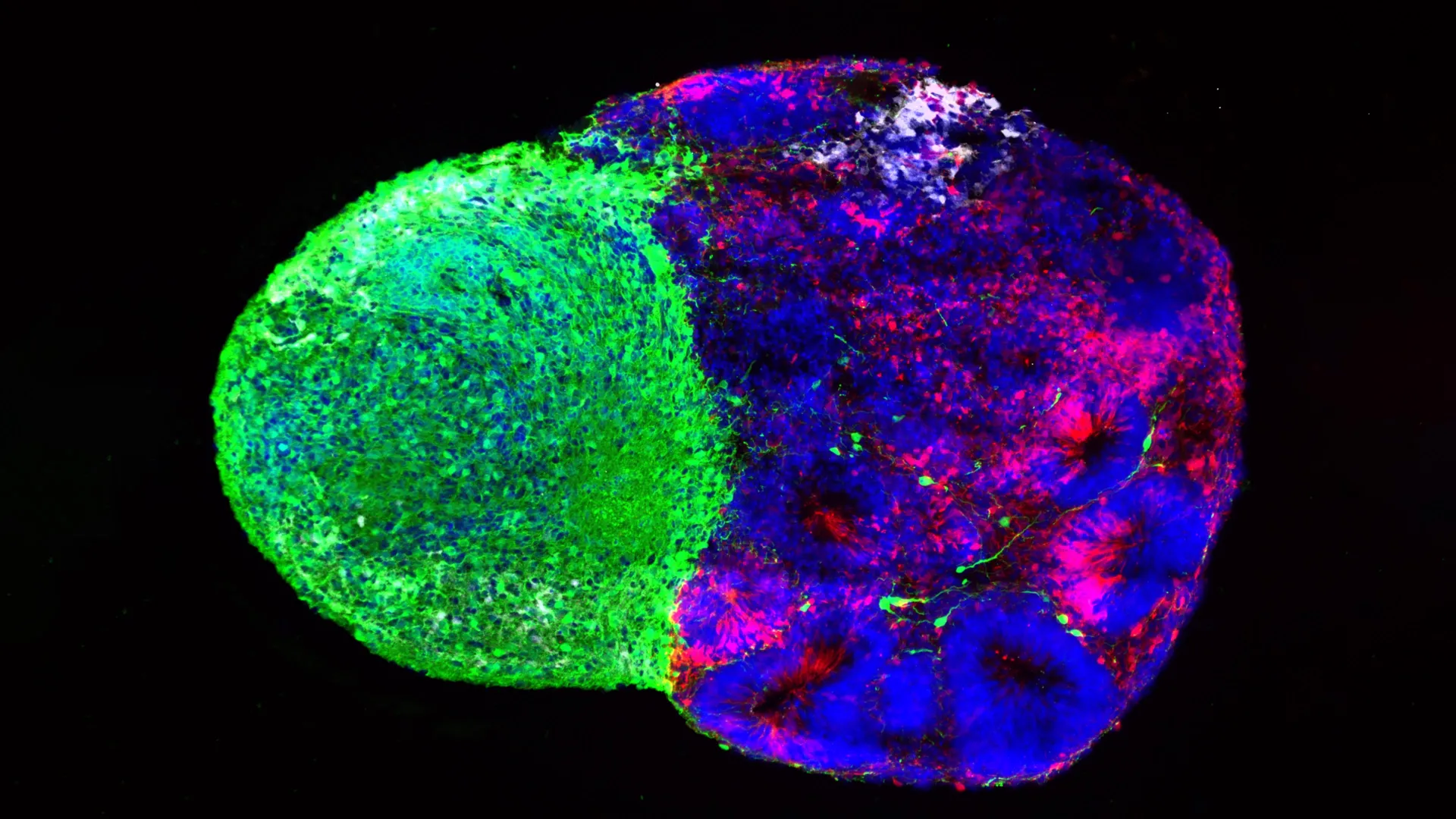
The team, based in Cambridge's Department of Clinical Neurosciences, built their experiments around an unusual lab model they call a "connectoid." Starting from patient-derived stem cells, they grew pea-sized brain organoids resembling the cerebral cortex and connected them to lengths of spinal cord tissue, recreating in miniature the corticospinal circuit that carries movement signals from brain to body. That setup let them study, in human cells, why those connections fail to heal after injury.
What they found was a network of genes that acts like a switch, progressively shutting down the capacity for axon growth as neurons mature. "Poor regeneration is built into human neurons as they mature in the central nervous system," said George Gibbons, the study's first author. In other words, the failure to regenerate is not simply damage — it is an active program the cells run as they grow up. When the researchers blocked key regulators within that network, damaged neurons regained their lost ability to send out new axons.
The team also identified an unexpected and practical lever. Lynestrenol, a hormone drug already approved and widely used to treat menstrual disorders, significantly improved axon regrowth when applied to damaged neurons. Because the drug is already in clinical use, with a known safety profile, it could in principle reach human testing far faster than a brand-new compound — a rare shortcut in the slow world of neurological therapies.
The implications stretch across some of medicine's most intractable conditions. Spinal cord injuries and the paralysis they cause, along with diseases such as motor neurone disease and multiple sclerosis, all involve nerve connections that the body cannot repair on its own. A treatment that reawakens neurons' dormant capacity to regenerate could, in theory, restore function that is currently lost for good.
The work, published in the journal Cell Reports, comes with the usual caution: results in lab-grown tissue do not guarantee success in living patients, and years of testing lie ahead. But by pinpointing a specific genetic switch and a drug that may flip it, the Cambridge team has turned a vague hope — that nerve damage might someday be reversible — into a concrete target for the next phase of research, led by senior author Dr András Lakatos.