Atom Computing Demonstrates First Sustained Error Correction on a Neutral-Atom Quantum Machine
Using a toric code run over dozens of cycles, the company showed its logical error rate fell as it added qubits — a milestone on the long road to fault-tolerant quantum computing.
Atom Computing said it has achieved the first sustained, multi-round quantum error correction on a neutral-atom quantum computer, a milestone that puts the company alongside Google as one of only a handful of teams to demonstrate that errors can be tamed as a quantum machine grows.
The result, announced June 3, used a so-called toric code — a two-dimensional error-correcting scheme in which information is stored across a grid of physical qubits and protected by repeatedly checking for errors. Crucially, the company reported "sub-threshold scaling," meaning the logical error rate fell as more physical qubits were devoted to encoding the information. That behavior is the holy grail of quantum error correction: it implies that adding hardware makes the machine more reliable rather than simply multiplying its mistakes.
Quantum bits, or qubits, are notoriously fragile. Stray heat, electromagnetic noise and the mere act of measurement can scramble their delicate quantum states, introducing errors that pile up faster than useful computation can proceed. The central challenge of the field is to combine many imperfect physical qubits into a smaller number of robust "logical" qubits whose errors are continuously detected and corrected — the foundation of any future fault-tolerant machine.
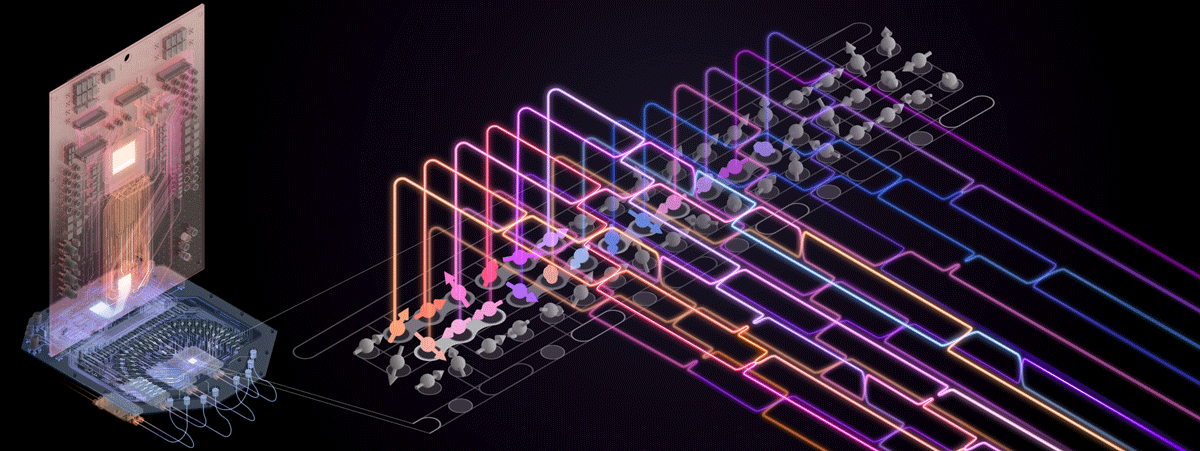
Atom Computing's demonstration ran many cycles of syndrome extraction, the process of probing a code for errors without destroying the data it holds. The team used mid-circuit measurement and, critically, replaced atoms that were lost during the computation — a persistent weakness of neutral-atom systems, where individual atoms can drift away from the optical traps that hold them. The researchers characterized the logical error rate out to as many as 90 cycles, showing that quantum information could be preserved through repeated rounds of reloading qubits.
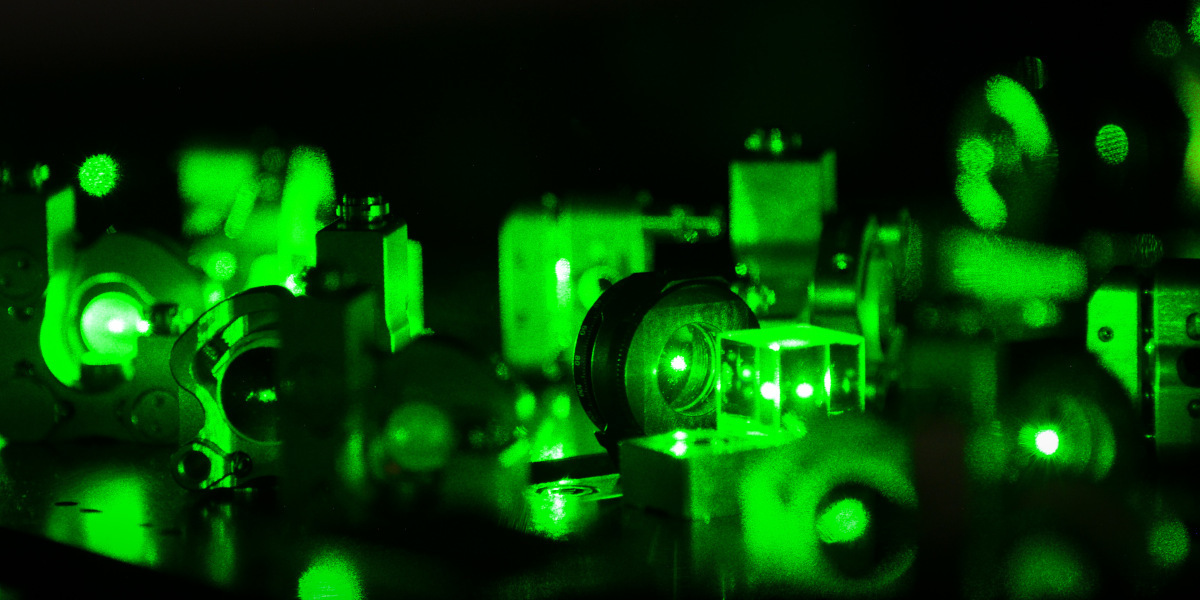
Neutral-atom platforms, which use lasers to trap and manipulate individual atoms, have surged in prominence because they can scale to large numbers of qubits and rearrange them flexibly during a calculation. Until now, however, sustained error correction on such systems had remained out of reach, with continuous logical memory demonstrated mainly on superconducting hardware like Google's. By joining that club, Atom Computing strengthens the case that more than one technology could ultimately reach the scale needed for practical quantum computing.
The work, posted to the arXiv preprint server, stops well short of a fully fault-tolerant computer, which experts believe will require error rates and qubit counts far beyond today's machines. But demonstrating that a neutral-atom system can preserve logical information across dozens of correction cycles — and improve as it scales — clears a conceptual hurdle that has long shadowed the approach, and adds momentum to a field racing toward machines that can correct their own mistakes in real time.