Aalto Physicists Couple a Time Crystal to a Mechanical Oscillator, Ending Quantum Phase's Isolation
In a Nature Communications paper, Jere Mäkinen's team shows a continuous time crystal in superfluid helium-3 can be read out by an everyday classical instrument — opening a path to quantum-memory hardware.
ESPOO, Finland — Physicists at Aalto University have, for the first time, coupled a continuous time crystal to a mechanical oscillator, demonstrating that one of the most exotic phases of matter ever observed in a laboratory can be harnessed and read out by an everyday classical instrument. The result, reported this week in Nature Communications, is being described as the moment time crystals graduate from theoretical curiosity to working component — a step that could underwrite a new generation of quantum memory and ultra-precise frequency standards.
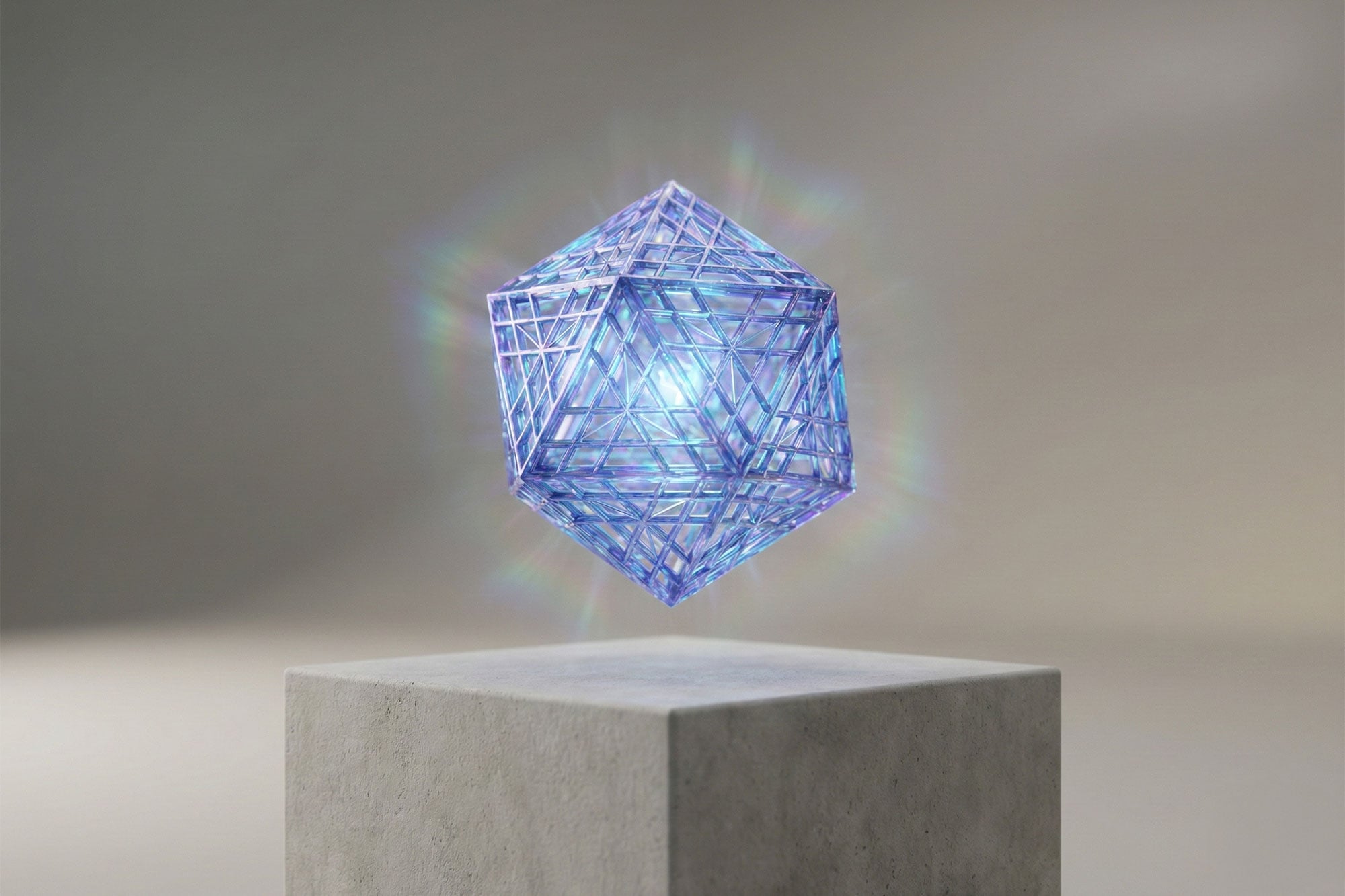
A time crystal is a quantum system whose lowest-energy state breaks the symmetry of time itself: instead of sitting still, it oscillates indefinitely, in lockstep, without any external energy input. The concept was proposed in 2012 by Nobel laureate Frank Wilczek, dismissed by some at the time as physically impossible, and first realized in 2016. Until now, however, every demonstrated time crystal has lived in isolation, observable only by destructive measurement and unable to communicate its state to the outside world. "What was missing," said Academy Research Fellow Jere Mäkinen, who led the experiment, "was a way to plug a wire into one."
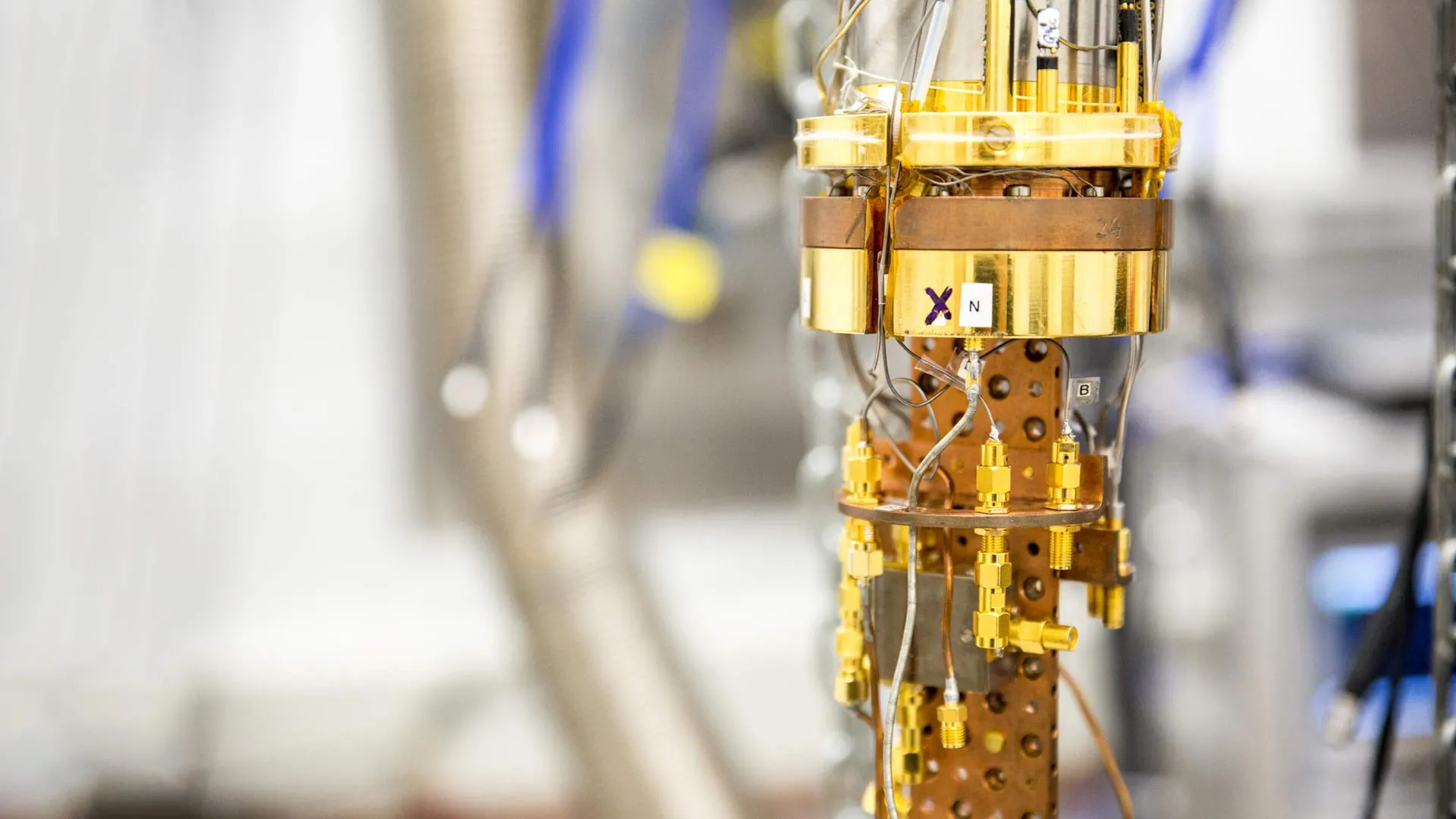
Mäkinen and colleagues — P. J. Heikkinen, S. Autti, V. V. Zavjalov and V. B. Eltsov — built their time crystal inside a sample of superfluid helium-3 cooled to within a thousandth of a degree of absolute zero. Radio-frequency pulses injected magnons — quantized waves of spin — into the superfluid. When the radio drive was switched off, the magnons spontaneously organized themselves into a coherent state that continued ticking on its own, completing more than 100 million cycles before fading. Crucially, the team then tuned the crystal's oscillation frequency until it matched a tiny mechanical resonator — a thin sheet of metal vibrating at kilohertz frequencies inside the cryostat. The two systems locked together in what physicists call cavity-optomechanical coupling, and the mechanical motion now traces, in real time, the state of the quantum system above it.
The practical implication, the authors argue, is that time crystals can be used as the heart of quantum-memory architectures that hold information for much longer than the qubits at the core of today's superconducting and trapped-ion quantum computers. Where a state-of-the-art transmon qubit decoheres in microseconds, the Aalto crystal preserved its coherent oscillation for several minutes — "orders of magnitude longer than the quantum systems currently used in quantum computing," Mäkinen said in a statement released by Aalto. The same coupling could enable extraordinarily sensitive force, mass and acceleration sensors, by using the time crystal as a built-in frequency reference whose ticking does not drift with temperature or voltage.
Independent experts called the work a milestone. "This bridges the gap between an abstract phase of matter and a real instrument," said Norman Yao, a theoretical physicist at Harvard University not involved in the study, in remarks to Nature's news team. The remaining hurdle is room-temperature operation: the helium-3 platform requires a dilution refrigerator and millikelvin temperatures, restricting the technology to specialized laboratories.
The Aalto group is already collaborating with two startups — one in Finland, one in the U.K. — on a prototype frequency standard built around a smaller, on-chip implementation of the same effect. If the device works, Mäkinen said, the next step would be a chip-scale time crystal coupled to a microwave readout line, the same architecture used in contemporary quantum processors. "The dream," he added, "is a clock that will run for the lifetime of the universe and never lose a tick."