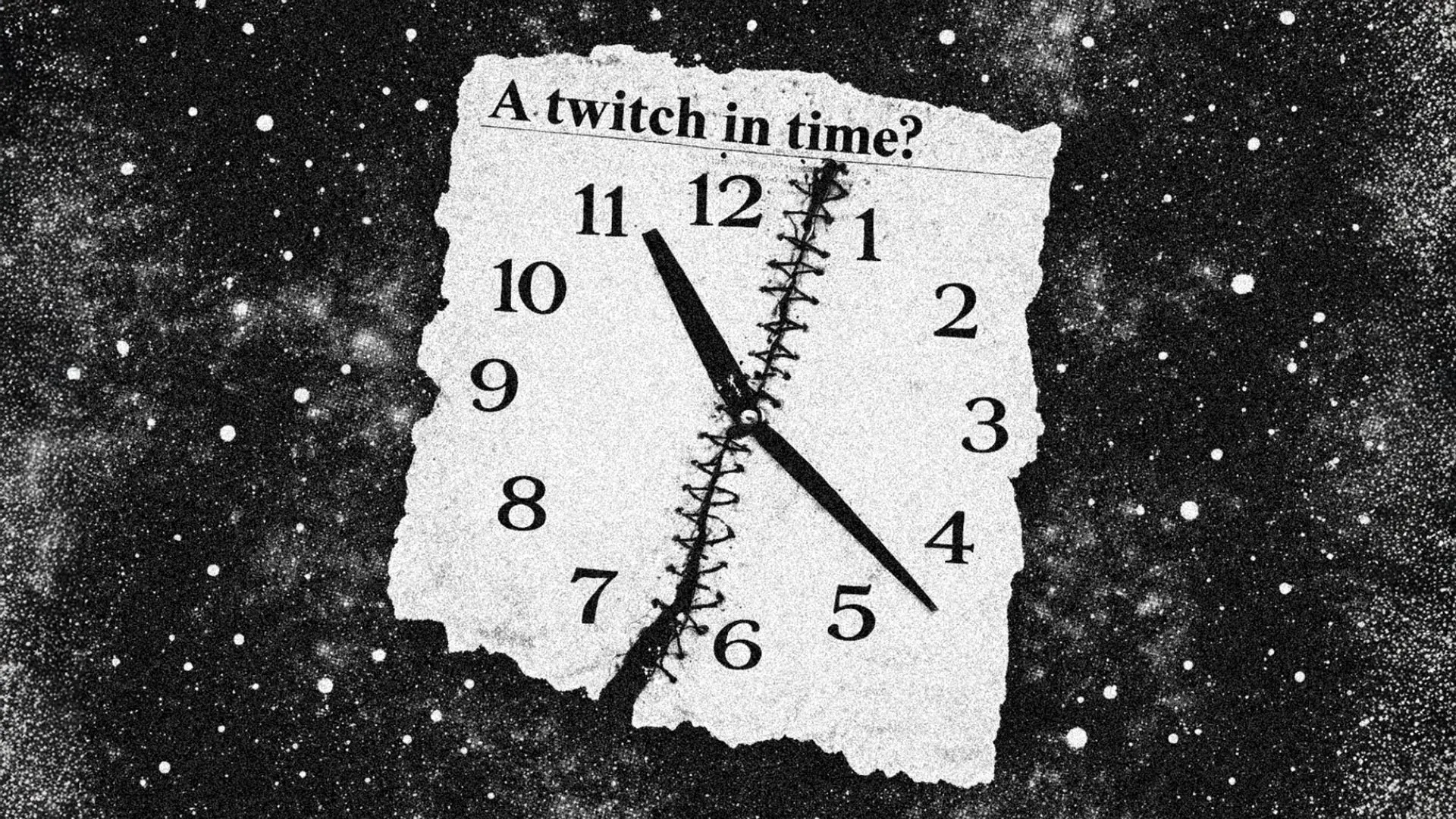
A Radical New Reading of Einstein's Wormholes Suggests Time Runs Backward on the Other Side
Physicists at the University of Portsmouth argue that the 'bridges' in Einstein's equations are not tunnels through space but mirrors of time — a framework they say could resolve the black hole information paradox and hint that our universe predates the Big Bang.
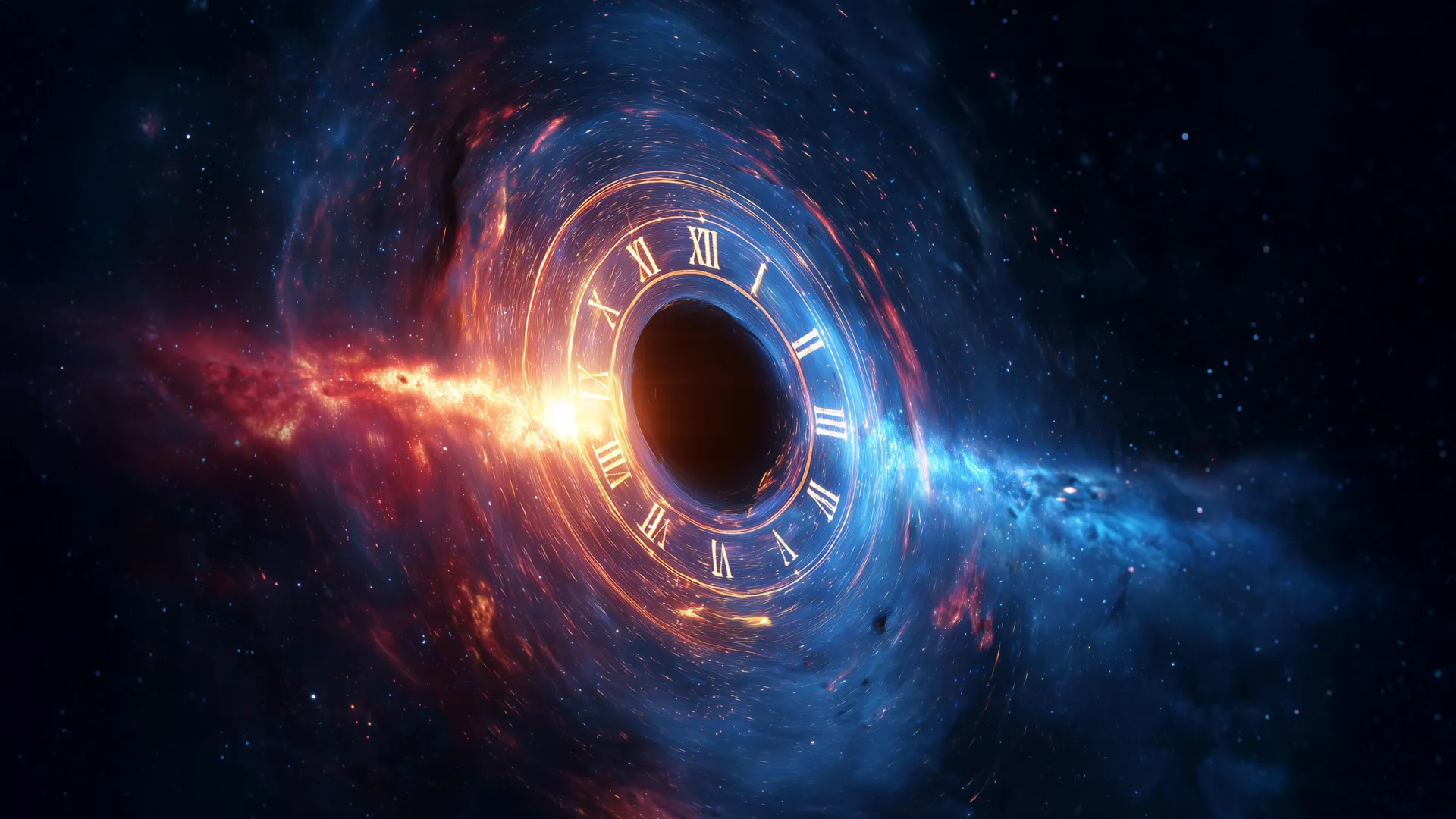
For nearly a century, the strange structures that fall out of Einstein's equations known as Einstein-Rosen bridges, or wormholes, have been imagined as shortcuts threading through space, tunnels that might connect one corner of the cosmos to another. A new theoretical study turns that picture on its head, proposing that these bridges are not passages through space at all but mirrors in time.
The work, published in the journal Classical and Quantum Gravity, was led by Enrique Gaztanaga, a professor of astrophysics at the University of Portsmouth's Institute of Cosmology and Gravitation, with colleagues K. Sravan Kumar and João Marto. In their reinterpretation, a wormhole links a universe in which time flows forward to a mirror counterpart in which time runs backward, two phases joined at a quantum seam.
The proposal takes direct aim at one of the deepest puzzles in modern physics: the black hole information paradox. Stephen Hawking showed that black holes slowly radiate away their mass, which seemed to imply that whatever falls in is erased forever, in violation of quantum mechanics' insistence that information is never destroyed. In the Portsmouth team's framework, information crossing a black hole's event horizon is not annihilated but continues to evolve in the opposite temporal direction, preserved on the far side of the time mirror.
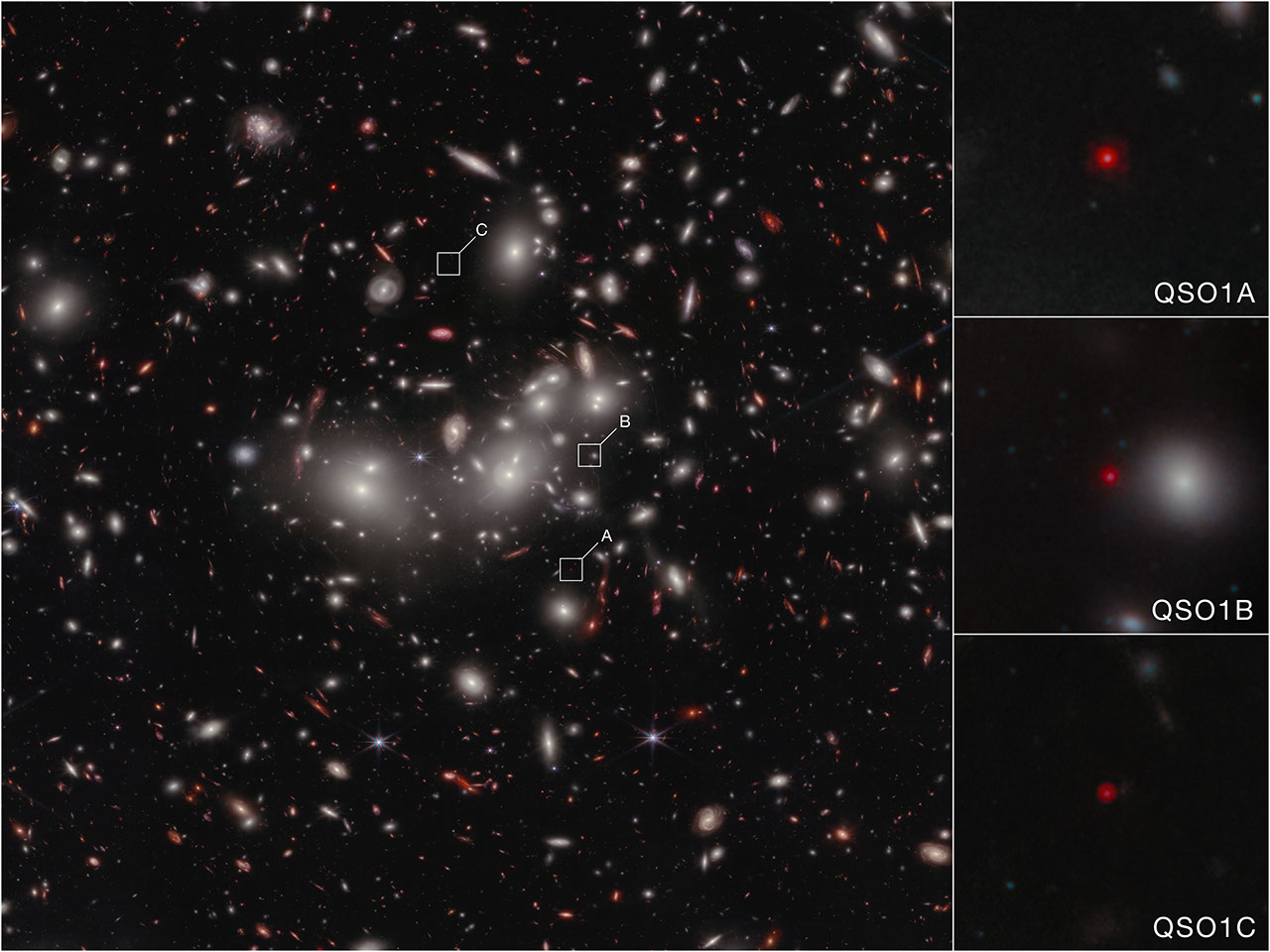
The implications stretch all the way back to the beginning. Rather than a singular birth from nothing, the researchers suggest the Big Bang could have been a quantum "bounce," a transition between two time-reversed cosmic phases, meaning our universe may in some sense predate it. The authors point to subtle asymmetries already measured in the cosmic microwave background — the faint afterglow of the early universe — as a place where evidence of this hidden structure might eventually be found.
The idea remains firmly theoretical, and extraordinary claims about the nature of time will demand extraordinary scrutiny before they reshape mainstream cosmology. But the authors are careful to frame their work not as a demolition of established physics but as an extension of it. The framework, they write, "does not overthrow Einstein's relativity or quantum physics — it completes them," offering a mathematically consistent way to stitch together two pillars of science that have long refused to fully agree.
The new study extends a line of inquiry Gaztanaga and his collaborators have pursued for several years, in which the birth of the cosmos is treated not as an unexplained singularity but as a physical event governed by known laws. By recasting the wormhole as a junction in time rather than space, the team argues that several of cosmology's most stubborn loose ends — the fate of information swallowed by black holes, the apparent fine-tuning of the early universe, and the question of what, if anything, came "before" — can be approached within a single mathematical picture. Whether nature actually obeys that picture is a question only future observations can settle, and the researchers acknowledge that their proposal will live or die on whether telescopes can find the faint imprints it predicts in the sky's oldest light.