Zambian Scientist's African Drug Discovery Lab Achieves 'Extraordinary' Breakthrough Research
Kelly Chibale's Holistic Drug Discovery Centre in South Africa represents a rare facility on the continent with full capabilities to develop treatments for diseases like malaria and tuberculosis.
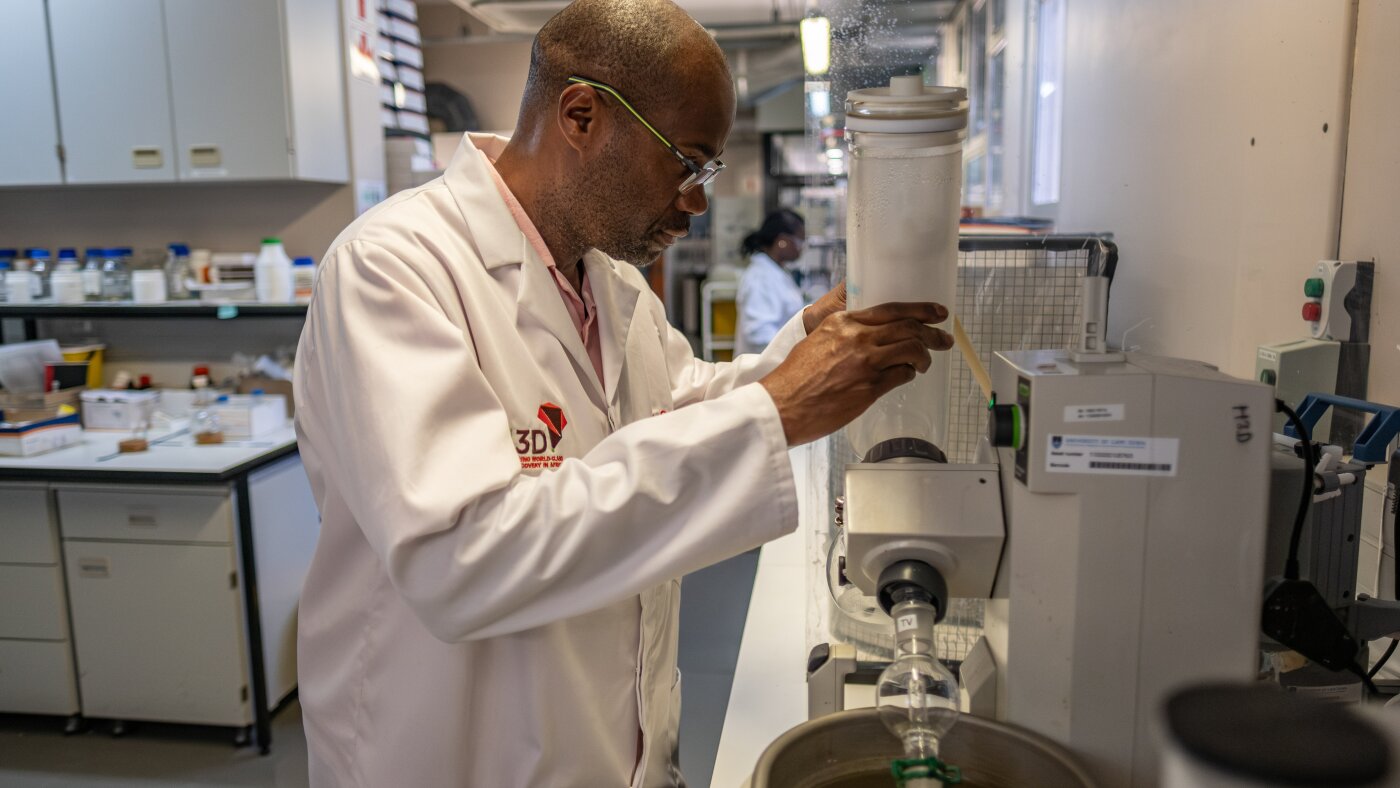
A drug discovery laboratory in South Africa led by Zambian-born scientist Kelly Chibale has achieved what researchers are calling extraordinary breakthroughs in the development of treatments for diseases that disproportionately affect the African continent. The Holistic Drug Discovery and Development Centre at the University of Cape Town represents one of the few facilities in Africa with the full range of capabilities needed to take a potential drug from initial discovery through preclinical development, a pipeline that has historically been controlled almost exclusively by institutions in Europe, North America, and Asia.
Chibale, a professor of organic chemistry who founded the center in 2011, has built a research operation that now employs more than 80 scientists and has multiple drug candidates in various stages of development. The center's work focuses primarily on malaria, tuberculosis, and other infectious diseases that kill millions of people in sub-Saharan Africa each year but have historically attracted limited investment from the global pharmaceutical industry because the affected populations lack the purchasing power to generate profitable returns.
The center's most advanced project is a novel antimalarial compound that has shown promising results in early clinical trials. Unlike existing malaria drugs, which typically require multiple doses over several days, the new compound is being developed as a single-dose cure, a characteristic that would be transformative for treatment in rural areas where patients often cannot complete multi-day drug regimens. The compound works through a mechanism of action that is distinct from existing therapies, reducing the risk that malaria parasites will develop resistance.
Chibale's work on tuberculosis has also produced significant results. The center has identified several compounds that show activity against drug-resistant strains of TB, a growing public health crisis in southern Africa where the convergence of TB and HIV has created conditions in which the bacterium can evolve resistance to standard treatments. Drug-resistant TB currently kills an estimated 250,000 people per year globally, with the heaviest burden falling on African nations.
The center's success has attracted attention and funding from international organizations including the Bill and Melinda Gates Foundation, the Medicines for Malaria Venture, and the South African government's Technology Innovation Agency. Chibale has also established partnerships with major pharmaceutical companies that provide access to proprietary chemical libraries and technical expertise that would otherwise be unavailable to an African research institution.
What distinguishes Chibale's operation from other drug discovery efforts focused on tropical diseases is its insistence on building capacity within Africa rather than simply conducting research about Africa from laboratories elsewhere. The center trains African scientists at every level, from undergraduate students to postdoctoral researchers, creating a pipeline of expertise that Chibale hopes will sustain and expand drug discovery on the continent for generations.
The model has drawn praise from global health officials who have long argued that Africa's disease burden cannot be adequately addressed without building research infrastructure on the continent itself. The World Health Organization has cited the center as an example of the kind of institution that is needed to close the gap between the diseases that affect Africa most severely and the research investment directed at treating them.
Chibale has spoken publicly about the challenges of conducting world-class drug discovery research in an African setting, including difficulties in securing consistent funding, retaining trained scientists who receive lucrative offers from institutions abroad, and navigating the regulatory landscape for clinical trials on the continent. Despite these obstacles, the center's achievements have demonstrated that cutting-edge pharmaceutical research can be conducted in Africa by African scientists working on African diseases.