Your Nose Could Detect Alzheimer's Years Before Symptoms Begin
Scientists discover brain immune cells destroy smell-related nerve fibers after detecting abnormal signals, offering potential for earlier diagnosis.

Scientists have discovered a crucial mechanism explaining why loss of smell may be one of the earliest warning signs of Alzheimer's disease, potentially appearing years before noticeable memory problems develop. Research from DZNE and Ludwig-Maximilians-Universität München shows that the brain's immune system mistakenly attacks nerve fibers essential for detecting odors, suggesting that smell tests could become valuable tools for early Alzheimer's detection and treatment timing.
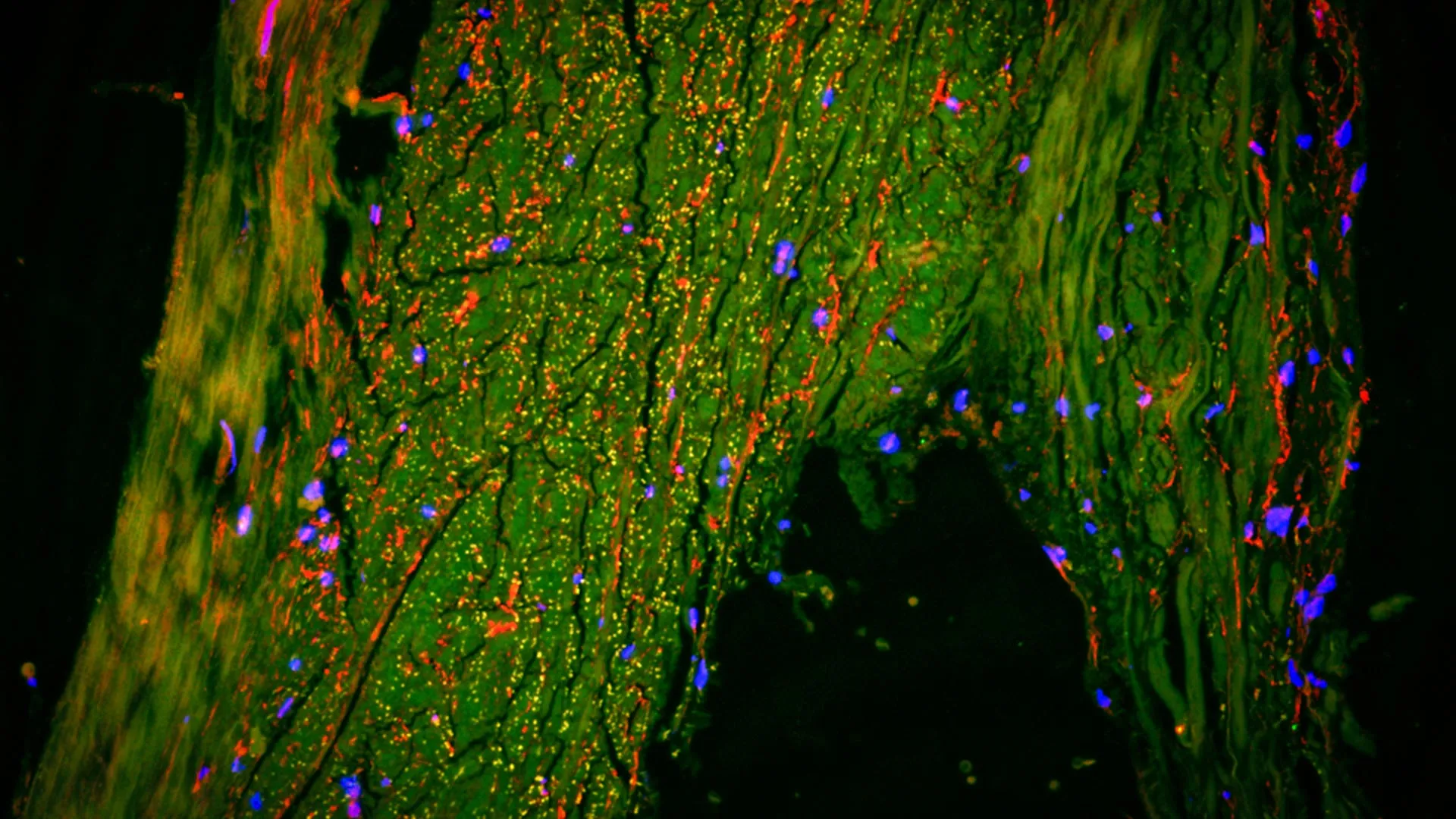
The breakthrough study, published in Nature Communications, reveals that immune cells in the brain called microglia begin removing connections between the olfactory bulb and the locus coeruleus—two critical brain regions involved in smell processing. The olfactory bulb processes signals from scent receptors in the nose, while the locus coeruleus helps regulate this process through long nerve fibers. "The locus coeruleus regulates a variety physiological mechanisms. These include, for example, cerebral blood flow, sleep-wake cycles, and sensory processing," explains Dr. Lars Paeger, a scientist at DZNE and LMU.
Researchers identified specific changes in the membranes of nerve fibers that trigger this destructive process. They found that phosphatidylserine, a fatty molecule normally located inside a neuron's membrane, had shifted to the outer surface where it acts as an "eat-me" signal for microglia. "Presence of phosphatidylserine at the outer site of the cell membrane is known to be an 'eat-me' signal for microglia," Paeger notes. The team believes this membrane shift results from hyperactivity in affected neurons caused by Alzheimer's disease, leading to abnormal firing patterns.
The research combined evidence from multiple sources, including mice with Alzheimer's-like features, brain tissue from deceased patients, and positron emission tomography scans from individuals with Alzheimer's or mild cognitive impairment. This multi-pronged approach strengthens the findings and suggests the mechanism operates consistently across different contexts. The evidence points to smell problems arising much earlier in the disease process than previously understood, potentially offering a window for intervention before significant cognitive decline occurs.
The implications for early diagnosis and treatment are substantial. If smell tests can reliably identify individuals at risk for Alzheimer's before symptoms appear, it could revolutionize approaches to the disease. Early detection might enable preventive treatments or lifestyle interventions that could slow disease progression. The research also opens new avenues for therapeutic development, potentially targeting the immune system mechanisms that destroy smell-related neural connections. This could lead to treatments that preserve sensory function while protecting against broader neurodegeneration associated with Alzheimer's disease.