World's First Quantum Battery Prototype Charges Faster as It Grows Larger, Australian Scientists Report
Researchers at CSIRO, RMIT University, and the University of Melbourne demonstrated a complete charge-store-discharge cycle at room temperature, exploiting quantum superextensive charging to achieve a counterintuitive property: the bigger it gets, the faster it charges.

Australian scientists have demonstrated the world's first working prototype of a quantum battery — a device that stores and releases energy using the counterintuitive principles of quantum mechanics rather than chemistry — and discovered something that defies every rule of conventional battery design: it charges faster the bigger it gets.
The prototype, developed by researchers at the Commonwealth Scientific and Industrial Research Organisation (CSIRO), RMIT University, and the University of Melbourne, was described in a paper published March 13, 2026 in the journal Light: Science & Applications. The findings mark the first time a quantum battery has been successfully demonstrated as a complete charge-store-discharge cycle under room-temperature conditions, overcoming one of the field's most stubborn practical obstacles.
"Our proof-of-concept device showcases rapid, scalable charging and energy storage at room temperature," said Dr. James Quach, the CSIRO Science Leader who led the project. "My ultimate ambition is a future where we can charge electric cars much faster than fuel petrol cars."
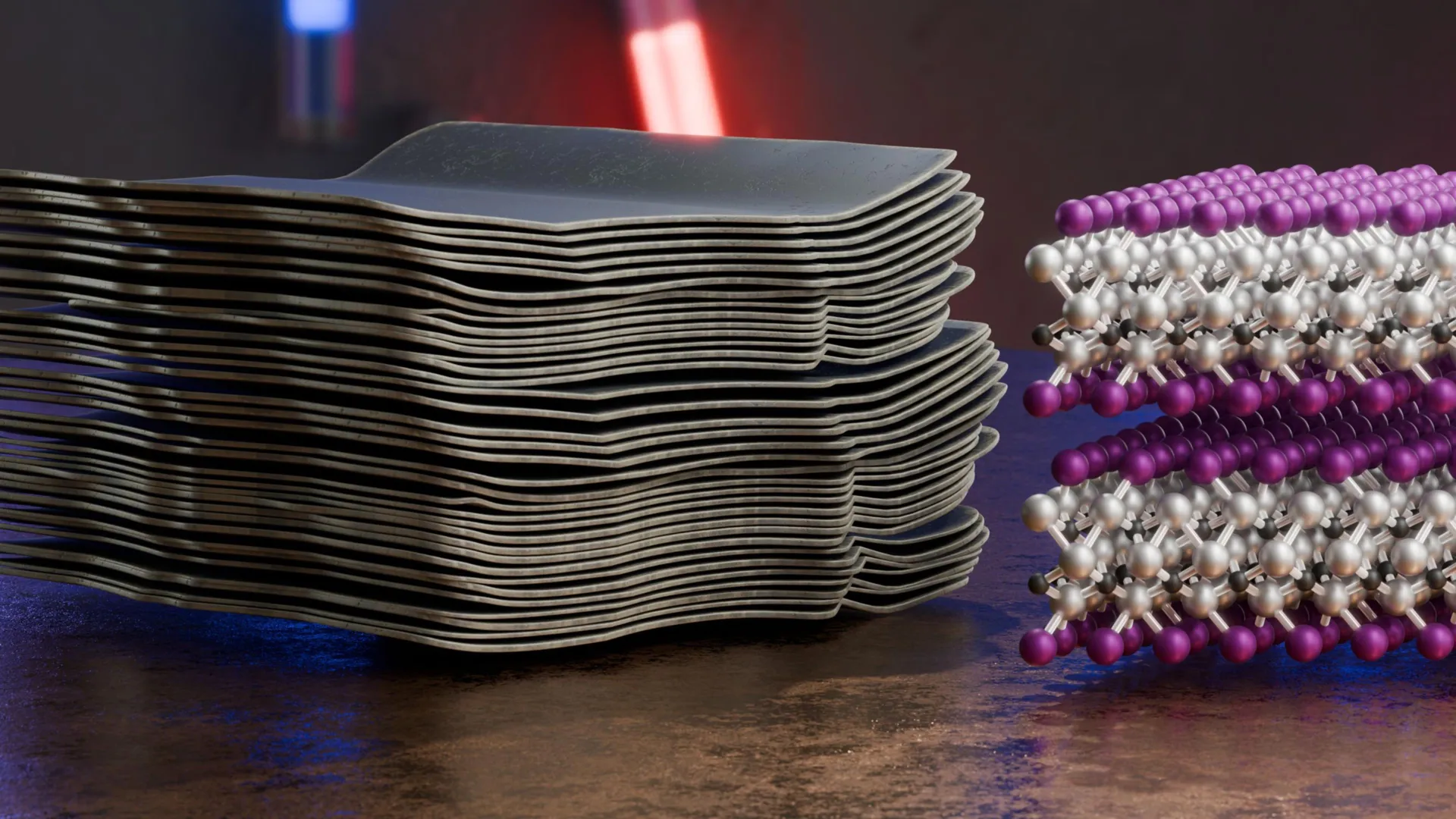
The quantum battery exploits a phenomenon known as "superextensive charging," in which all the molecules in the device absorb energy collectively — behaving more like a synchronized army than a collection of independent soldiers. This collective quantum behavior means that as the number of molecules in the battery doubles, the charging time decreases by a factor of roughly the square root of two. In conventional lithium-ion batteries, adding more material means proportionally longer charge times.
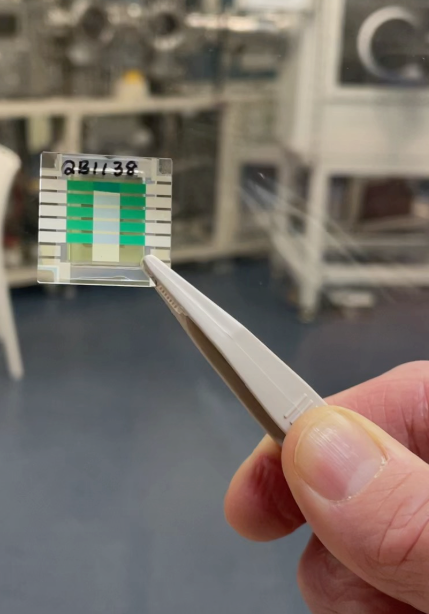
"Our study found quantum batteries charge faster as they get larger, which is not how today's batteries work," said Daniel Tibben, a PhD candidate at RMIT who co-authored the study. The device itself is a tiny, layered organic structure about the size of a fingernail, charged wirelessly using a laser. Its counterintuitive scaling behavior could eventually make quantum batteries the preferred solution for applications where speed and size are critical.
The current prototype has significant limitations: it holds only a few billion electron-volts of energy — a tiny fraction of what a smartphone battery stores — and the time it maintains its charge is measured in nanoseconds. But the researchers argue these are engineering obstacles, not fundamental physical barriers. The team is now focused on extending the discharge time, which they say is the single most critical step toward making quantum batteries commercially viable for real-world applications.
"We demonstrated a device that can be charged, store that energy and then discharge it," said Professor Daniel Gómez of RMIT. "This is an exciting development in a rapidly growing interdisciplinary field." He noted that quantum batteries may find their first real-world applications in powering quantum computers, which already operate at extremely small scales and could benefit from rapid charging before the technology scales up to consumer devices.
The research represents a decade of theoretical work finally bearing experimental fruit. Quantum batteries were first proposed in a 2013 paper by theoretical physicists, but experimentalists struggled for years to build devices that could actually be charged and then release that energy on demand. The Australian team's achievement in completing the full cycle at room temperature — rather than near-absolute-zero temperatures used in most quantum experiments — is considered a critical practical milestone by researchers in the field.
The study was funded by the Australian Research Council and the CSIRO's Julius Career Award. CSIRO says it is now exploring partnerships with battery manufacturers and electric vehicle companies to accelerate the development of next-generation prototypes with greater energy density and longer charge retention times.