WMO Report: 2025 Was Second or Third Hottest Year Ever, as 2015-2025 Decade Confirmed as Warmest in Human History
The World Meteorological Organization's annual State of the Global Climate report found 2025 averaged 1.44°C above pre-industrial levels — and that ocean heat content, sea level rise, and ice loss all hit new records for the fourth consecutive year.
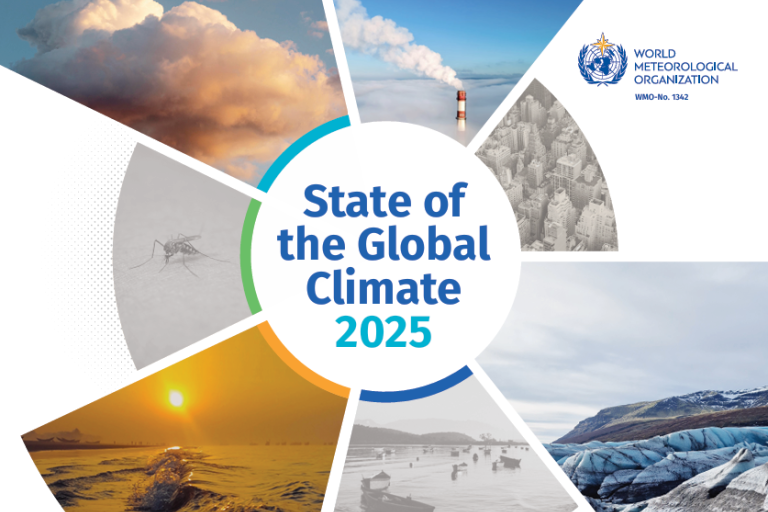
The year 2025 was the second or third warmest in the 176-year instrumental temperature record — depending on the dataset — and the decade from 2015 to 2025 was definitively the hottest 11-year period humanity has ever measured, according to the World Meteorological Organization's annual State of the Global Climate report released March 23, 2026. The report, which synthesizes data from eight independent global temperature datasets, found that 2025's average surface temperature was 1.44 degrees Celsius above the 1850-1900 pre-industrial baseline, with a margin of uncertainty of plus or minus 0.13 degrees Celsius.
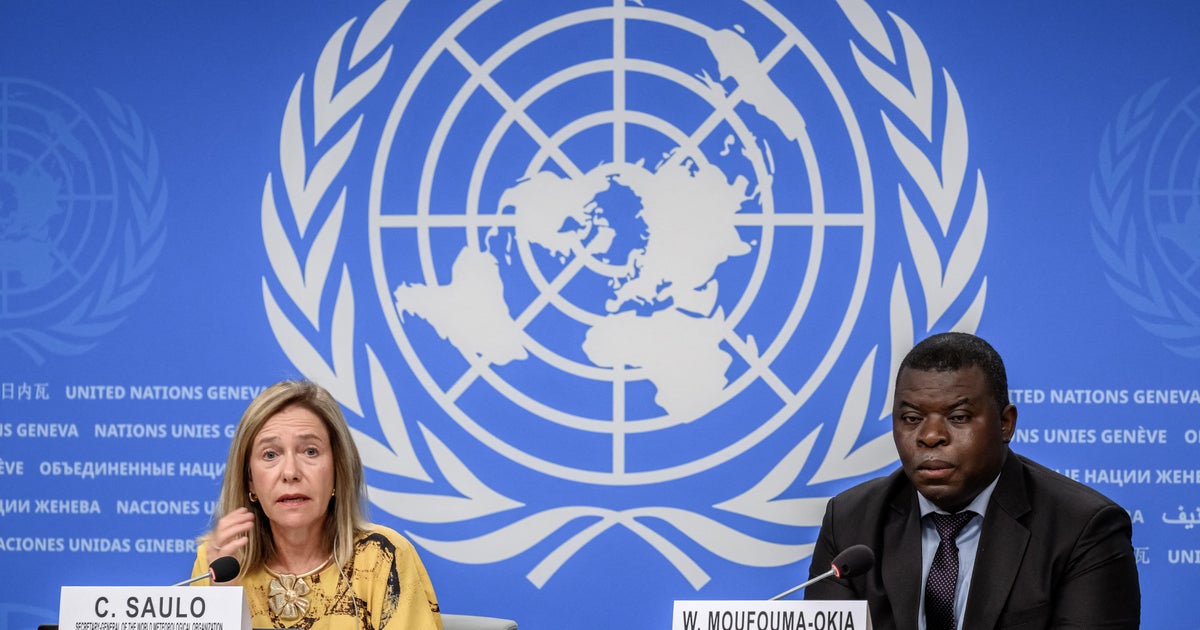
The finding means that the Paris Agreement's headline warming threshold of 1.5 degrees Celsius — the level scientists consider a critical boundary for limiting the most damaging climate impacts — has now been either reached or approached for three consecutive years, and has been exceeded on a monthly basis in every month since June 2023. WMO Secretary-General Celeste Saulo said in a statement accompanying the report that while a single year crossing 1.5 degrees does not constitute a permanent breach of the Paris threshold — which refers to long-term averages — "the trajectory is unmistakable and deeply concerning."
The period from 2023 to 2025 now occupies the top three warmest years across all eight datasets, in every possible ordering — meaning that no combination of dataset adjustments changes the conclusion that the past three years have been the three hottest in human history. The report documents concurrent record-breaking conditions across multiple Earth systems in 2025: ocean heat content reached an all-time high for the fourth consecutive year; sea ice extent in the Arctic and Antarctic both recorded their second-lowest annual averages on record; and global mean sea level rose approximately 4.5 millimeters during the year, continuing an accelerating long-term trend driven by both thermal expansion and glacial melt.
The report was released under embargo at 4:00 a.m. GMT on March 23 to coincide with World Meteorological Day, an annual United Nations observance day. The WMO notes that 2025's ranking as second or third rather than first is primarily a consequence of 2024's exceptional warmth — a year strongly amplified by one of the most powerful El Niño events in recorded history. The 2025 year began under the cooling influence of a developing La Niña, which slightly suppressed temperatures from what they might otherwise have been, yet the year still ranks near the absolute top of the record.
The report comes as negotiations over implementation of the Paris Agreement's loss and damage fund — established at COP27 and capitalized at COP28 — have stalled amid competing claims about which nations should contribute and how much. Climate scientists noted that the new data underscores the urgency of those negotiations: at current emissions trajectories, the WMO projects that the permanent 1.5-degree threshold will be reached in global long-term averages between 2030 and 2034. The report details specific regional impacts in 2025 that include record flooding in Central Europe, the hottest summer on record for the Mediterranean basin, a severe multi-year drought across the Sahel, and the bleaching of more than 90 percent of the Great Barrier Reef for the fifth time since 2016.