Virginia Joins National Popular Vote Compact, Bringing Movement to 222 Electoral Votes — 48 Short of Activation
Gov. Abigail Spanberger signed the legislation Monday, making Virginia the 19th jurisdiction in the interstate agreement to award presidential electoral votes to the nationwide popular vote winner, regardless of how Virginians vote.
Virginia became the 18th state — and the 19th jurisdiction including Washington, D.C. — to join the National Popular Vote Compact on Monday, when Governor Abigail Spanberger signed legislation committing the Commonwealth's 13 presidential electoral votes to the nationwide popular vote winner regardless of how Virginians themselves vote.
The signing brought the compact's total to 222 electoral votes, within 48 votes of the 270 threshold required to trigger it. Under the compact, once states totaling 270 or more electoral votes have signed on, each member state would certify its presidential electors for whichever candidate wins the national popular vote — effectively bypassing the Electoral College system without requiring a constitutional amendment. Democratic control of both Virginia's governorship and legislature enabled the bill's passage; Republicans in the state legislature universally opposed it, calling it an unconstitutional attempt to nullify Virginia voters.
"It took at least a decade," said one Democratic state legislator who worked on the bill, framing the effort in terms of protecting democratic institutions. A Pew Research Center survey cited in the debate found that a majority of Americans favor replacing the Electoral College with a popular vote system, though the partisan divide is stark: roughly 80 percent of Democrats support the change versus about 46 percent of Republicans. Virginia's addition carries particular symbolic weight given the state's history as the capital of the Confederacy and its decades of Republican dominance in presidential elections before trending blue in the 2010s and 2020s.
The compact remains untested in court, and constitutional scholars disagree sharply about its validity. Supporters cite the broad authority granted to states under Article 2, Section 1 of the Constitution to determine how their presidential electors are appointed — an arrangement that historically allowed states to award all their electoral votes to the statewide popular vote winner, a winner-take-all practice that is itself a modern innovation and not constitutionally mandated. Opponents argue that the compact amounts to an interstate agreement requiring congressional approval under the Compacts Clause, and that it unconstitutionally pressures states to override the expressed will of their own voters. Several conservative legal organizations have signaled they will challenge the compact in federal court if it reaches the 270-vote threshold.
For the compact to activate, an additional 48 electoral votes must be committed. States with Democratic-controlled legislatures or strong reform movements include Minnesota (10), Nevada (6), and potentially others, though each carries its own political dynamics. Supporters have invested heavily in organizing at the state legislative level for years, recognizing that passing a constitutional amendment requiring two-thirds of Congress and three-fourths of states is a near-impossibility given current partisan polarization.
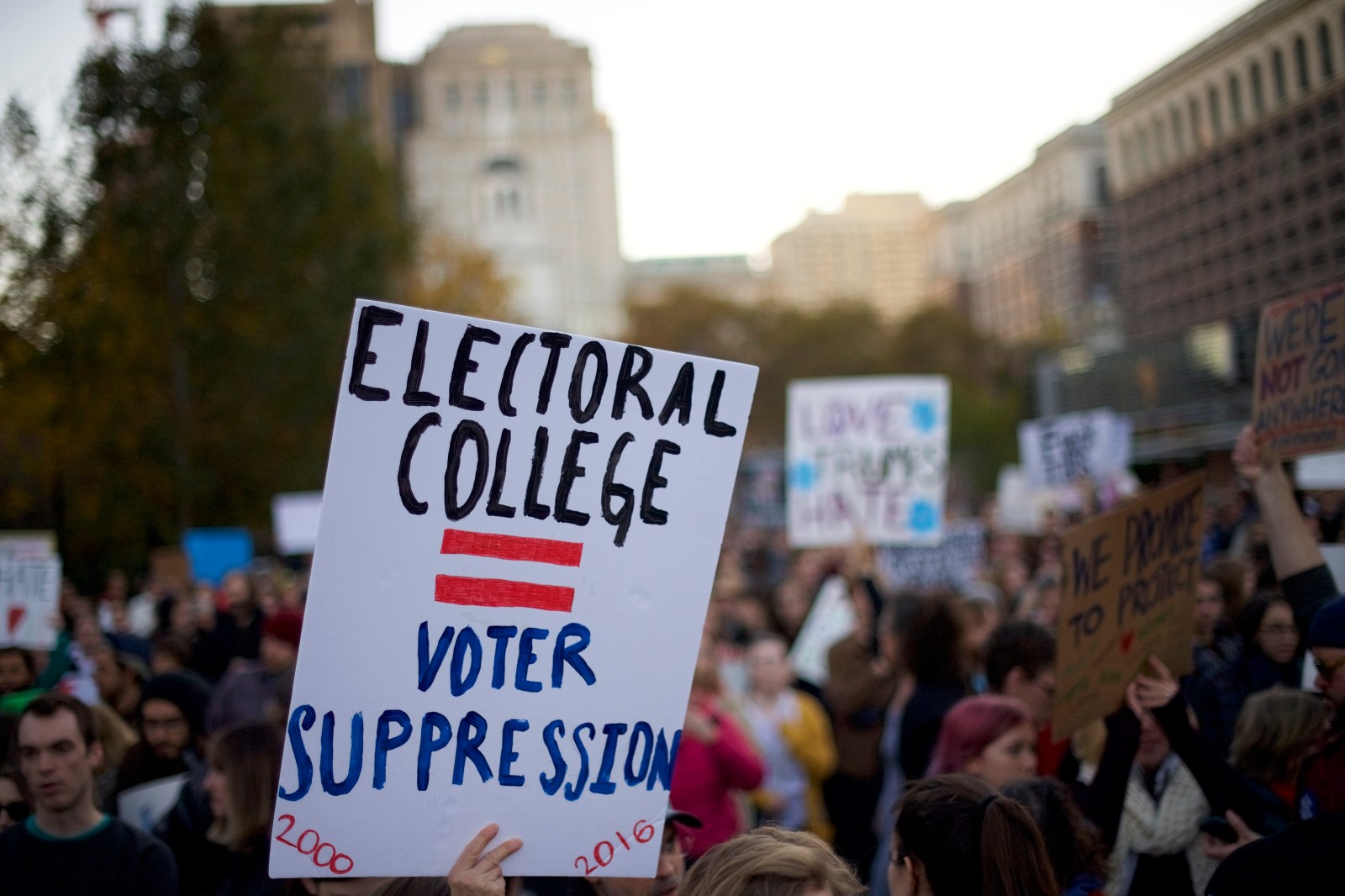
The National Popular Vote Interstate Compact has been in development since 2006, growing out of frustration after the 2000 presidential election in which George W. Bush won the presidency despite losing the popular vote to Al Gore. The 2016 election, in which Donald Trump won the Electoral College while losing the popular vote to Hillary Clinton by nearly three million votes, renewed momentum for the effort. In 2026, with the United States embroiled in a war that began without a congressional declaration and political trust at historic lows, the question of how presidents are chosen has taken on new urgency for the compact's advocates.
Critics argue that a national popular vote compact would shift campaign attention away from all but the largest population centers, effectively making presidential campaigns contests for a handful of mega-cities and suburbs. Supporters counter that the current system already concentrates campaign resources in a handful of swing states, ignoring the vast majority of Americans who live in states considered safely red or blue. The legal and political argument over the compact's legitimacy is unlikely to be resolved before it reaches the 270-vote threshold — if it ever does.