U.S. Tariff Regime in Disarray After Supreme Court Strikes Down IEEPA Authority
American households are losing up to $780 a year as courts battle over who controls trade policy, leaving businesses unable to plan supply chains.

After months of legal battles, the United States tariff landscape has become, in the words of one leading fiscal research institution, "a patchwork of active tariffs, invalidated measures, and potential replacements" — with American families absorbing hundreds of dollars in new costs annually, while courts and Congress wrestle over who ultimately controls trade policy.
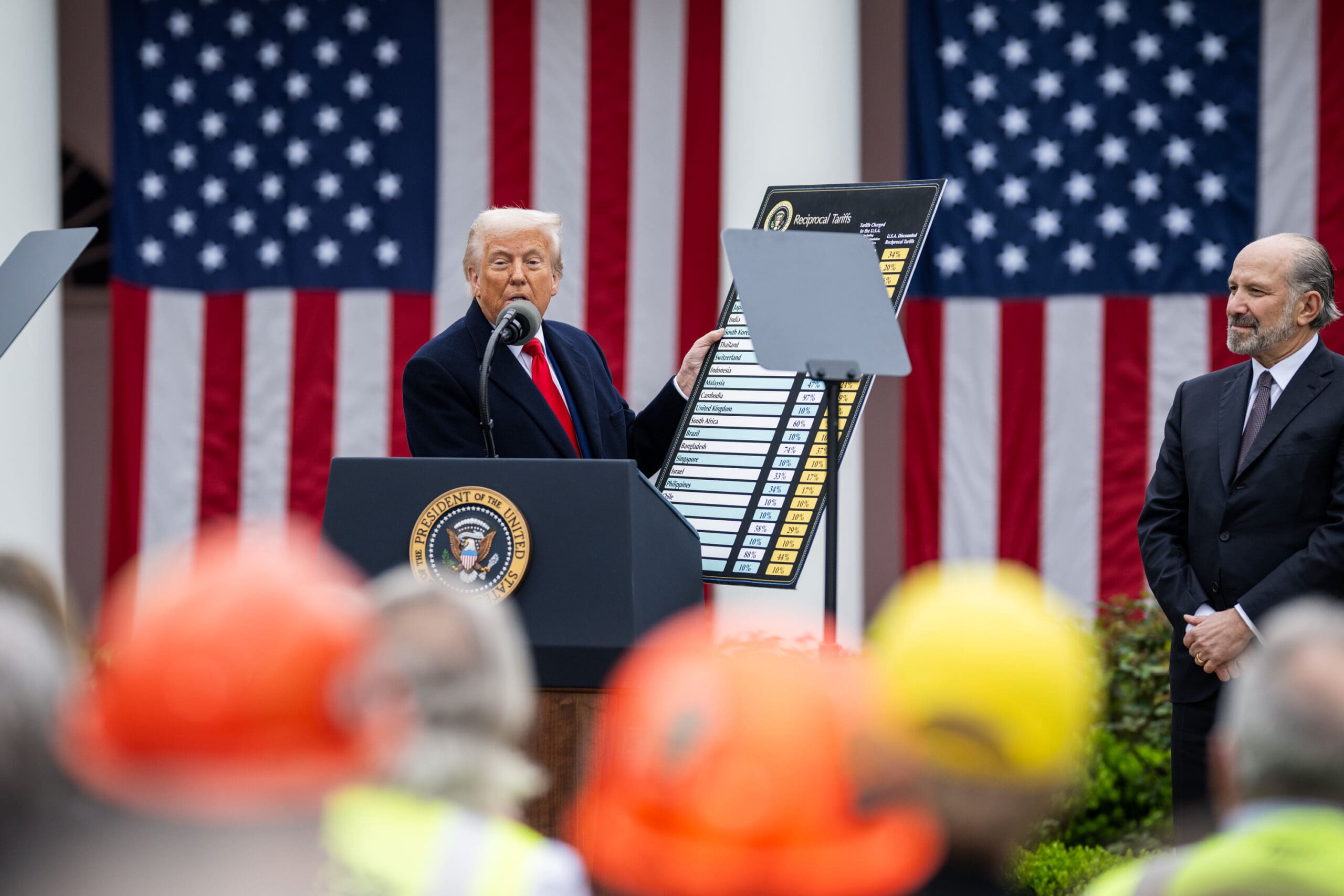
The average effective U.S. tariff rate now stands at 11.0 percent — the highest level since 1943, excluding 2025. The figure represents the residue of a sweeping tariff regime President Trump imposed in early 2025 using emergency authority under the International Emergency Economic Powers Act. On February 20, 2026, the Supreme Court ruled that the administration had exceeded its statutory authority by using the IEEPA to impose broad, across-the-board tariffs rather than the targeted, crisis-specific measures the law was designed to authorize. The ruling invalidated the most expansive pieces of the tariff package but left narrower sector-specific duties from other legal authorities intact.
The Yale Budget Lab, a nonpartisan fiscal research center, estimates that under the current tariff regime, the average American household loses between $650 and $780 per year in real purchasing power. If current Section 122 tariffs expire as scheduled and are not replaced, the effective rate falls to 8.2 percent — still the highest since 1946 — and household losses narrow somewhat. Lower-income households bear a disproportionate share of the burden: families in the bottom income decile absorb a tariff cost equal to roughly 1.1 percent of their after-tax income, compared to just 0.4 percent for households in the top decile.
The most heavily affected consumer categories are motor vehicles, clothing, and household furnishings — sectors that rely heavily on imported components or finished goods from China, Mexico, and Southeast Asia. The Yale Budget Lab projects that tariffs will reduce long-run GDP by approximately 0.1 percent, or about $27 billion annually in 2025 dollars. Manufacturing output is expected to expand by 0.7 percent as some production shifts domestically, but the construction sector is projected to contract by 2.0 percent as imported materials become more expensive.
Despite the economic drag from tariffs, equity markets have proven remarkably resilient. The S&P 500 is up 4.23 percent year-to-date through April 20 and has risen more than 25 percent since the November 2024 election, as corporations have largely passed higher input costs to consumers. S&P 500 companies increased fourth-quarter 2025 revenue by 9.2 percent and earnings by 13.4 percent year-over-year, reflecting the pricing power of large multinationals even in a high-tariff environment.
The administration is now drafting replacement measures under alternative statutory authorities to restore portions of the invalidated tariff regime. Trade lawyers expect a new round of litigation within weeks of any replacement order, meaning the patchwork is unlikely to become a coherent system in the near term. Projected 10-year tariff revenue ranges from $1.0 trillion to $1.7 trillion depending on what survives further legal challenges — a range of uncertainty that complicates long-term budget projections for both parties and leaves American businesses struggling to plan imports and supply chains under conditions of persistent legal ambiguity.