Trump Signs Executive Order Directing $50 Million to Ibogaine Research, Easing Federal Barriers on Psychedelics
The order eases restrictions on studying psilocybin, MDMA, LSD, and ibogaine and positions Texas to immediately launch a state-administered addiction treatment research program.
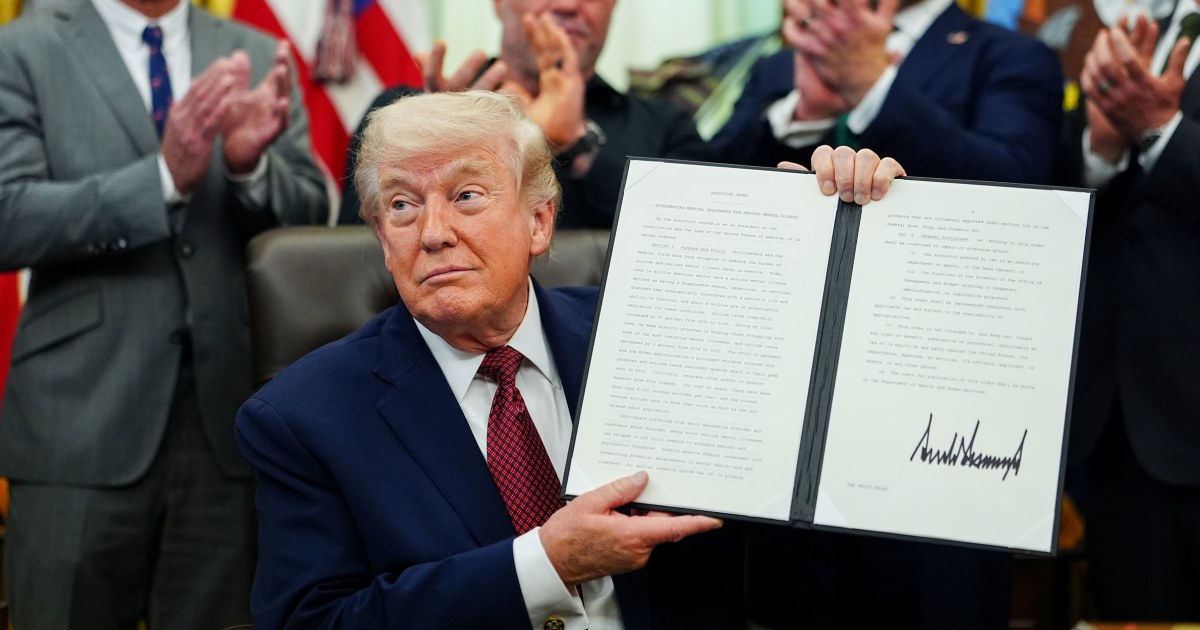
President Trump signed an executive order Friday directing federal agencies to ease restrictions on research into psychedelic substances including psilocybin, MDMA, LSD, and ibogaine, and allocated $50 million in federal funding for state-level ibogaine studies — the most significant federal endorsement of psychedelic research in the United States since the Nixon administration classified most of these compounds as Schedule I substances in the early 1970s.
The order instructs the Department of Health and Human Services, the Drug Enforcement Administration, and the National Institutes of Health to streamline the approval process for researchers seeking to study Schedule I psychedelic compounds. Under current regulations, obtaining DEA authorization to research a Schedule I drug requires a separate license from manufacturing licenses and involves a process that can take two years or longer. The executive order directs the DEA to cut that timeline to 90 days for researchers with existing institutional review board approval and a defined clinical protocol. The move is expected to significantly accelerate clinical trials already underway at institutions including Johns Hopkins University, NYU Langone, and the University of California, Berkeley.
Ibogaine received the most specific attention in the order. The compound, derived from the root bark of the African shrub Tabernanthe iboga, has attracted growing interest in the United States as a treatment for opioid use disorder, based on clinical reports from veterans who traveled to clinics in Mexico and Canada — where it is legal — and reported dramatic reductions in cravings and withdrawal symptoms after a single treatment session. Trump directed $50 million to be made available for state-administered ibogaine research programs, with Texas positioned to immediately benefit. Texas had already committed $50 million of its own funds toward studying ibogaine's addiction treatment potential, and Governor Greg Abbott signed enabling legislation earlier this year authorizing the state program. The federal funding in the executive order provides the matching resource the Texas program needed to fully launch.
The scientific community responded cautiously. Researchers at Johns Hopkins said the streamlined approval process could meaningfully accelerate their timeline. "We have been forced to work around regulatory barriers that have added years and millions of dollars to our research timelines," said Dr. Matthew Johnson of the Johns Hopkins Center for Psychedelic and Consciousness Research. "Removing those barriers without removing the scientific rigor of the trials is exactly the right approach." More skeptical voices warned that loosening oversight without expanding safety monitoring infrastructure could lead to poorly designed studies and premature conclusions about efficacy.
The executive order was coordinated with Health and Human Services Secretary Robert F. Kennedy Jr., who was present at the signing and has been an outspoken advocate for psychedelic-assisted therapy. The ceremony was paired with the White House announcement that Trump would nominate Dr. Erica Schwartz — a former deputy surgeon general and retired Coast Guard rear admiral — as the new director of the Centers for Disease Control and Prevention. Schwartz, who served as Trump's deputy surgeon general during his first term, would need Senate confirmation. Her nomination was recommended by Kennedy's team at HHS and was received by public health professionals as reflecting the administration's continuing pivot toward alternative and preventive medicine under the broader "Make America Healthy Again" agenda.