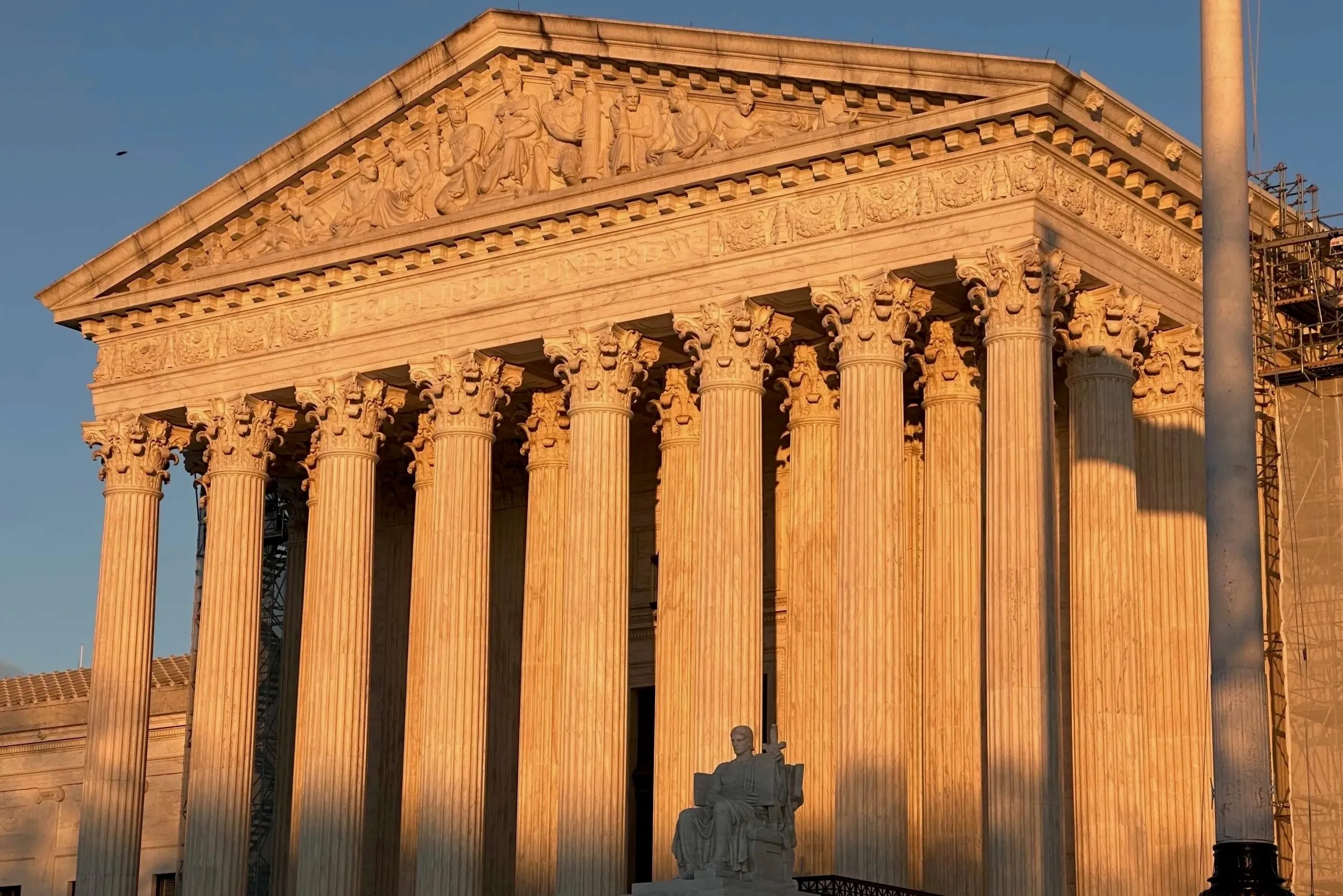
Trump Administration Launches $166 Billion Tariff Refund Program After Supreme Court Defeat
The government debuts a new system to repay importers two months after the Supreme Court struck down key trade policy tariffs.

The Trump administration launched a new online portal on Monday allowing American businesses and importers to begin claiming refunds on tariffs collected since the Supreme Court's landmark ruling last week that struck down the president's use of the International Emergency Economic Powers Act as the legal foundation for the sweeping tariff regime imposed in early 2025.
U.S. Customs and Border Protection opened the Customs Automated Payment and Entry portal — known as CAPE — at 6 a.m. Eastern time on Monday, April 20. The portal allows importers to file claims for refunds on tariffs paid under IEEPA authority between February 2025 and April 11, 2026, the date the Supreme Court issued its 6-3 ruling in Chamber of Commerce v. United States finding the tariff program exceeded the president's statutory authority under the Act.
CBP estimated that approximately 330,000 importers may be eligible for refunds, with total refund exposure estimated at $166 billion — a figure that CBP said could increase as claims are processed and verified. The agency said it expected to take between 90 and 180 days to process the initial wave of claims, with refunds disbursed via electronic fund transfer. Importers have 12 months from Monday's portal opening to file claims.
The administration made clear it was complying with the Supreme Court ruling under protest. President Trump posted on Truth Social on Monday morning that the court's decision was "completely wrong" and that the tariffs had been "working beautifully to bring jobs back to America." White House press secretary Karoline Leavitt said the administration was exploring "every available legal and legislative avenue" to reinstate the tariffs and had already sent Congress a proposed Tariff Authorization Act that would provide explicit statutory authority for the program.
The Supreme Court's majority opinion, written by Chief Justice John Roberts and joined by the court's three liberal justices plus Justices Amy Coney Barrett and Brett Kavanaugh, held that IEEPA was intended to address acute national security emergencies and did not provide blanket authority to impose indefinite trade barriers for economic policy purposes. The majority specifically found that the administration had failed to demonstrate a genuine emergency as required by the statute's triggering conditions.
The ruling immediately complicated the administration's trade negotiations with China, Japan, South Korea, and the European Union. All four trading partners had been negotiating against the backdrop of the tariffs as leverage; with that leverage legally invalidated, trade negotiators said several counterpart governments had indicated they saw no urgency in reaching deals. U.S. Trade Representative Jamieson Greer said Monday the administration would seek to use the proposed Tariff Authorization Act, if passed, to retroactively restore the negotiating leverage.
Business groups, including the U.S. Chamber of Commerce and the National Retail Federation, welcomed Monday's portal launch but said the 90-to-180-day processing timeline would leave many small importers in financial distress. "Businesses paid these tariffs in real time — some of them took on significant debt to do it — and waiting six months for a refund isn't neutral," said the Chamber's chief legal officer.
The refund portal launch comes amid separate litigation over tariffs imposed under Section 232 national security authority and Section 301 China-specific authority, neither of which was covered by last week's IEEPA ruling. CBP said those programs remained fully in effect.