Supreme Court to Hear Election-Altering Case Monday: Must Mail Ballots Arrive by Election Day?
Oral arguments in Watson v. Republican National Committee on March 23 could eliminate mail-in ballot grace periods in at least 15 states before the November 2026 midterms, affecting millions of voters including military personnel serving overseas.
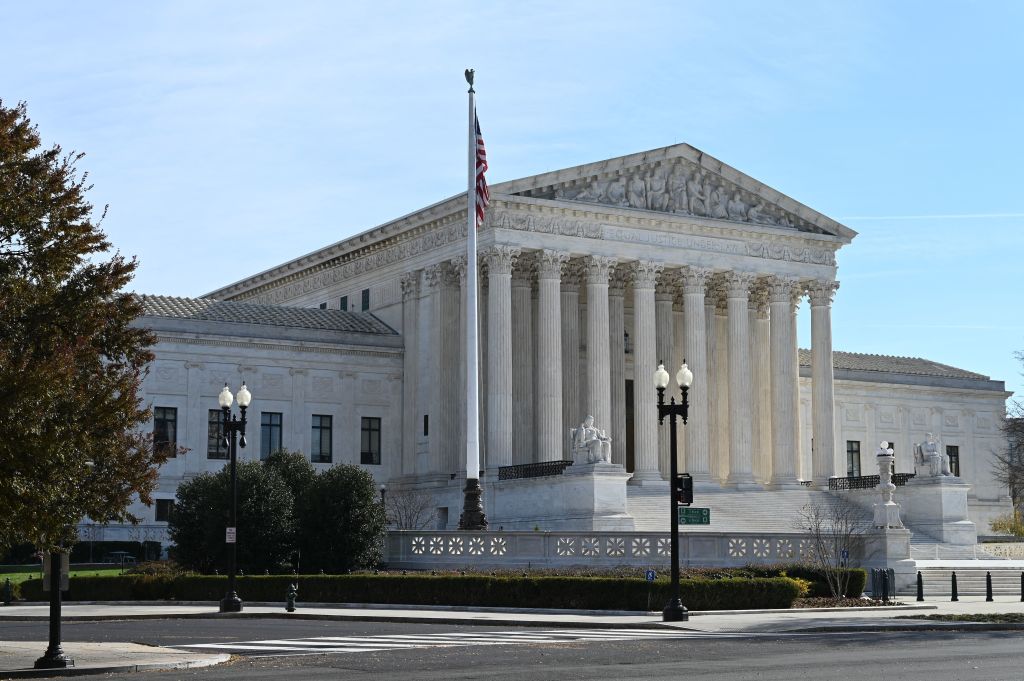
The Supreme Court on Monday will hear oral arguments in Watson v. Republican National Committee, a case that could upend voting procedures in more than a dozen states and reshape how tens of millions of Americans cast mail-in ballots in the November 2026 midterm elections — the highest-stakes electoral test since the 2024 presidential race.
The case centers on a deceptively simple question: does federal law require that absentee ballots be received by election officials on Election Day, or merely cast by that day? Mississippi allows mail-in ballots postmarked on or before Election Day to be counted if they arrive within five business days afterward, a grace period the state legislature created in 2020 to account for postal delays during the COVID-19 pandemic. The Republican National Committee sued, arguing that practice violates federal statutes establishing a uniform national Election Day.
The Fifth Circuit Court of Appeals agreed with the RNC last year, ruling that ballots must arrive by Election Day to be counted. Mississippi appealed, and the Supreme Court agreed to take the case in November 2025, setting Monday's arguments as one of the final hearings before the court's customary April recess.
The implications extend far beyond Mississippi. According to an analysis by the nonpartisan Brennan Center for Justice, a ruling in favor of the RNC would effectively eliminate mail ballot grace periods in at least 15 states, including Pennsylvania, Nevada, North Carolina, and Arizona — all of them battleground states that have seen competitive elections in recent cycles. In the 2024 presidential election, more than 11 million ballots were cast in those states and arrived after Election Day but before their respective state deadlines.
Military voters and overseas citizens would face the most severe practical disruption. Federal law governing ballots for military personnel and overseas voters was specifically designed to accommodate the postal delays inherent in APO addresses and international mail. Voting rights advocates say a strict receipt-by-Election-Day rule would effectively disenfranchise service members deployed abroad.
Mississippi argues that the word "election" in federal statutes encompasses only the act of casting a ballot, not the administrative process of counting it. "The election occurs when voters cast their ballots," the state wrote in its brief. "The counting of ballots is ministerial, not electoral."
The RNC counters that the purpose of a uniform Election Day is to ensure that all votes are recorded simultaneously, preventing any party from knowing how many more votes they need to secure victory and then manufacturing them. "States cannot allow votes to trickle in for days after the polls close," the RNC's brief argues. "That is not an election. That is an extended period of ballot harvesting."
The case arrives at a court that has grown increasingly skeptical of expansive ballot-access rules under Chief Justice John Roberts. The court's three Democratic-appointed justices — Sonia Sotomayor, Elena Kagan, and Ketanji Brown Jackson — are expected to defend Mississippi's law vigorously. Whether any of the six Republican-appointed justices will join them in protecting grace periods is the central uncertainty.
A poll conducted by the Associated Press-NORC Center for Public Affairs Research last week found that 81 percent of Americans believe ballots postmarked by Election Day should be counted, regardless of when they are received. The number held relatively constant across party lines, suggesting the issue does not break as cleanly along partisan boundaries as the litigation might imply.
If the court rules for the RNC, states would likely face an immediate scramble to amend their election codes before the November midterms, scheduled for November 3. Election administrators in key battleground states said in interviews that they were developing contingency plans but that rapid implementation would be logistically challenging given the complexity of voter notification requirements, ballot design changes, and postal coordination agreements that would need to be unwound on a compressed timeline.