Supreme Court Hears Case That Could Ban Late-Arriving Mail Ballots, Rewriting Voting Rules Before Midterms
Watson v. Republican National Committee asks whether federal law requires mail-in ballots to be received — not just postmarked — by Election Day, a ruling that could invalidate voting laws in more than a dozen states months before November.

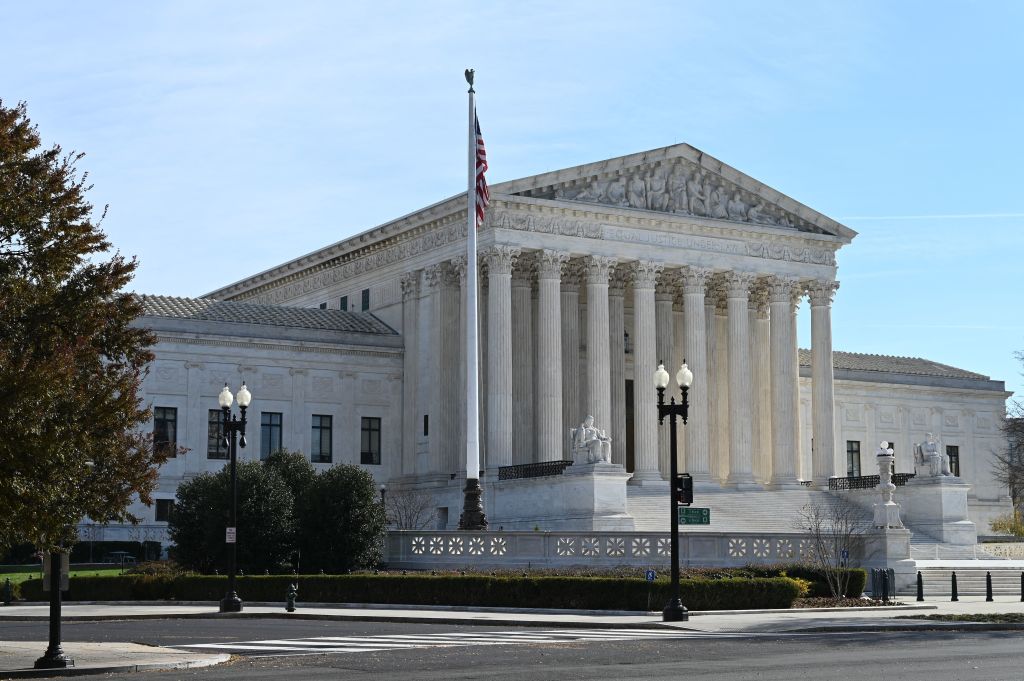
The Supreme Court heard oral arguments Thursday in Watson v. Republican National Committee, a case that could upend voting rules in more than a dozen states just months before the 2026 midterm elections. At the heart of the dispute is a deceptively simple question: does an election end when a voter casts a mail-in ballot, or when election officials receive it? The Court's answer will determine whether states can count absentee ballots that are postmarked by Election Day but arrive afterward — a grace period that millions of voters, military personnel, and overseas citizens have relied on for years.
The case arose from a Mississippi law enacted in 2020 that allows mail-in ballots postmarked on or before Election Day to be counted if they arrive within five business days after the election closes. The Republican National Committee and Mississippi's state Republican Party sued Secretary of State Michael Watson, arguing the grace period violates a federal statute establishing a single, uniform Election Day. The U.S. Court of Appeals for the Fifth Circuit sided with the challengers, ruling that federal law requires ballots to be received — not merely postmarked — by Election Day. Mississippi appealed, and the Supreme Court agreed to hear the case.
During argument, the Court's conservative majority appeared skeptical of Mississippi's position but not uniformly so. Several justices pressed the state's lawyers on how Mississippi's rule could be squared with the text of the federal statute. Justice Samuel Alito questioned whether Congress, in establishing a uniform Election Day in the 19th century, could have intended to permit states to count ballots arriving days afterward. Justice Amy Coney Barrett, however, asked whether the tradition of accepting late-arriving military ballots — a practice that dates back to the Civil War — complicated the challengers' interpretation. The liberal justices were notably aggressive in highlighting the practical consequences, noting that a ruling against Mississippi could disenfranchise tens of thousands of domestic mail voters and create chaos for election officials preparing for November.
The stakes are substantial. Sixteen states and the District of Columbia allow mail ballots postmarked by Election Day to be counted within a specified grace period. Twenty-nine states offer similar flexibility specifically for military and overseas voters under the Uniformed and Overseas Citizens Absentee Voting Act. A ruling requiring all ballots to be received by Election Day could invalidate those laws immediately before the midterms, leaving election officials scrambling to change procedures and potentially leaving voters whose ballots are already in the mail without their votes counted. Voting rights groups warned the decision could have an outsized impact on rural voters, Native American communities in states with poor mail service, and active-duty military members stationed overseas.
The Court's ruling is expected before the end of its current term in late June or early July, giving states and election officials roughly three to four months to prepare for November. The case is the third major election law matter before the Court this term, following earlier decisions on redistricting in New York and the standing of candidates to challenge state voting laws. Legal observers noted the timing is particularly fraught: the Court would be reshaping the rules of the 2026 election even as campaigns are underway, voter registration drives are in progress, and states have already printed absentee ballot applications. SCOTUSblog legal analyst Amy Howe called Watson v. Republican National Committee "perhaps the most consequential federal election case the Court has taken since Bush v. Gore."