Supreme Court's Conservative Majority Signals It Will Strike Down Late-Mail Ballot Grace Periods Ahead of 2026 Midterms
The justices heard more than two hours of oral arguments in Watson v. RNC, with Justices Alito, Kavanaugh, and Roberts all casting doubt on state laws that allow ballots postmarked by Election Day but received afterward to be counted.

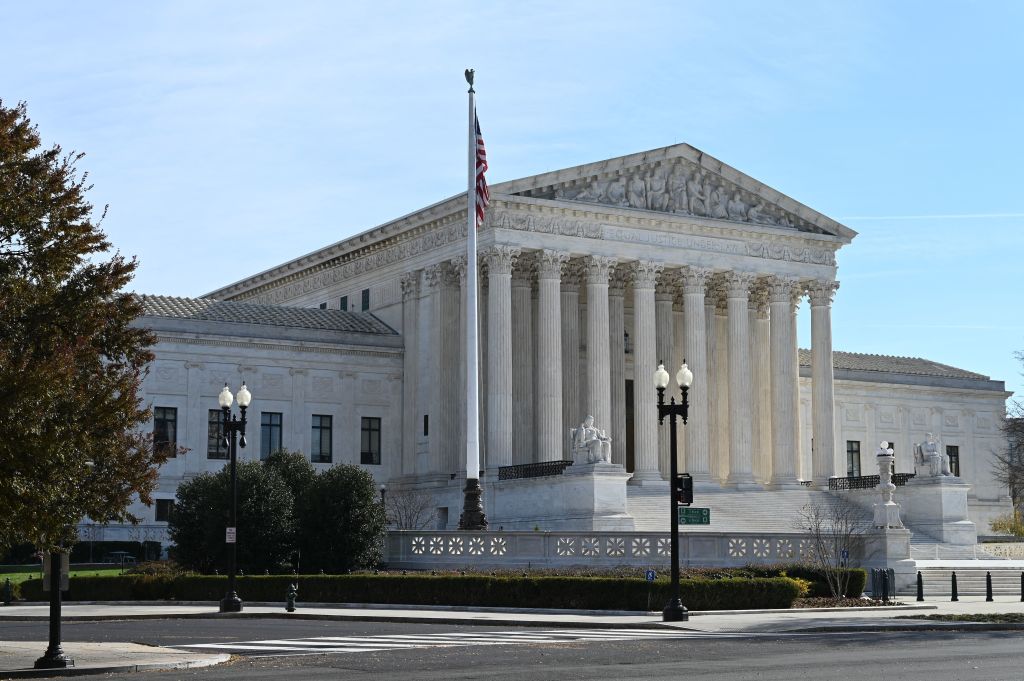
The Supreme Court's conservative majority on Monday appeared ready to strike down state laws allowing late-arriving mail-in ballots to be counted, in a case that could reshape voting rules for the 2026 midterm elections just months before polls open. During more than two hours of oral arguments in Watson v. Republican National Committee, conservative justices raised a battery of skeptical questions about Mississippi's law permitting mail ballots received up to five days after Election Day to be tallied — as long as they were postmarked by Election Day. The challenge was brought by the Republican National Committee in 2024 and could, if the court sides with Republicans, eliminate similar grace period laws in 14 states and the District of Columbia, affecting how hundreds of thousands of mail ballots are processed in November.
Justice Samuel Alito set the tone early, suggesting the court viewed the issue as clear-cut. "We don't have Election Day anymore. We have election month, or we have election months," Alito said, echoing longstanding Republican arguments that extended ballot receipt windows undermine the integrity of elections. Chief Justice John Roberts appeared equally skeptical, asking: "If Election Day is the voting and taking, then it has to be that day." The framing drew on how other federal observances like Labor Day or Memorial Day are treated as fixed, singular calendar events — suggesting Roberts may view 19th-century federal statutes as demanding finality on a specific date.
Justice Brett Kavanaugh raised a concern that resonated deeply among the bench's conservatives: "If the apparent winner the morning after the election ends up losing due to late-arriving ballots, charges of a rigged election could explode." The comment pointed to how profoundly political mistrust of mail voting has reshaped legal arguments around election administration. Justice Neil Gorsuch also questioned where the logic of allowing post-Election Day receipt would end, warning: "As soon as anything is allowed, it will happen." By contrast, the court's three liberal justices — Sotomayor, Kagan, and Jackson — pushed back forcefully, arguing that states have historically had broad constitutional authority over their own election procedures and that Congress had not clearly preempted that authority when it set Election Day in federal law.
The case centers on a Mississippi law enacted during the COVID-19 pandemic that allows mail ballots arriving up to five days after Election Day to be counted, provided they were postmarked by or before that date. The Republican National Committee filed the lawsuit in 2024, arguing the state law conflicts with a 19th-century federal statute establishing Election Day as the first Tuesday after the first Monday in November. Approximately 750,000 mail ballots that arrived after Election Day were counted under such grace period provisions in 2024 alone. States including California, Washington, Maryland, New York, and 11 others have similar rules that would face legal jeopardy if the court rules against Mississippi. Nearly 30 states have some form of extended receipt deadline for military and overseas voters, creating additional complexity in any ruling.
Paul Clement, representing the RNC, argued that federal election rules apply only to general elections, a framing that could leave grace periods intact for primaries and other contests. But the practical import of a ruling against Mississippi would still be enormous for federal elections. Voting rights advocates and election administrators have warned that a decision overturning grace periods — issued as late as July — would give states little time to update voter guidance, retrain poll workers, and revise absentee ballot instructions before November. Military families and U.S. citizens living abroad, who often rely on international postal services that can take weeks to deliver a ballot, represent a particularly vulnerable population; their votes could be systematically excluded even when mailed on time.
A final decision is expected by late June or early July 2026, early enough to govern the November midterm elections in which control of both chambers of Congress is at stake. The political implications are significant: Republicans have generally outperformed their polling averages in mail ballot counts under the current rules, but some analysts argue that restricting late ballots could affect rural voters in states with slow postal service as much as urban Democratic-leaning precincts. For now, the six conservative justices' tone during oral argument has left election law scholars and voting rights groups deeply concerned that the court is poised to rewrite the rules of American elections months before the country goes to the polls.