Supreme Court Takes Up Trump Order to End Birthright Citizenship — Oral Arguments Set for April 1
The justices will hear Trump v. Barbara on Tuesday in one of the most consequential constitutional cases in decades, with the citizenship status of 255,000 children born annually in the US at stake.

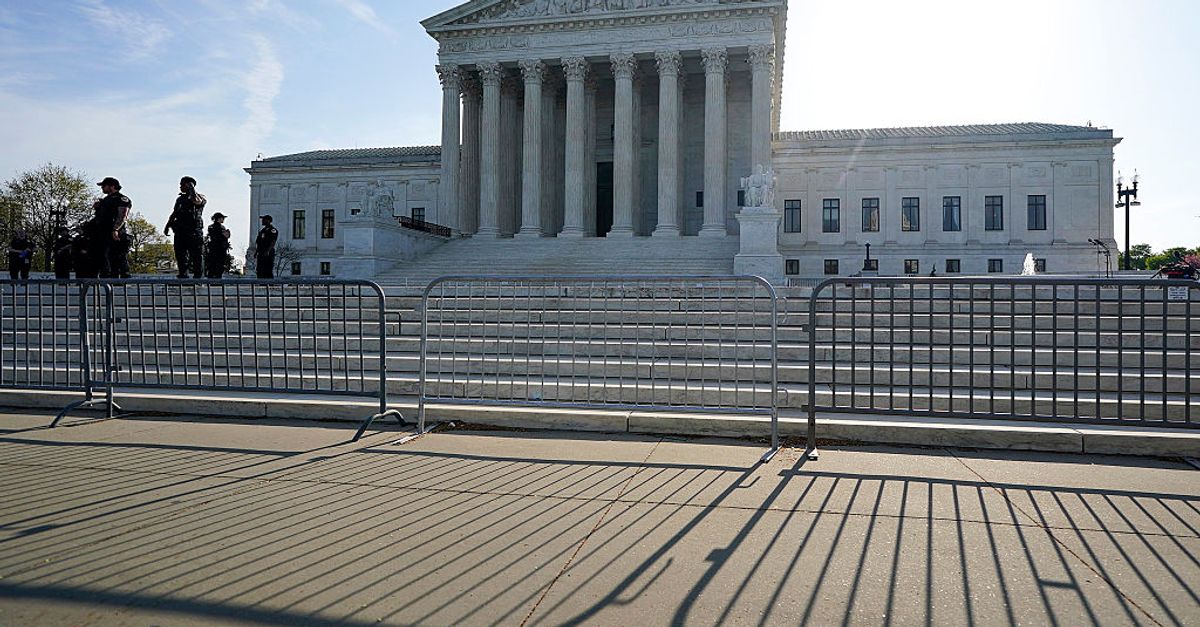
The Supreme Court of the United States will hear oral arguments on Tuesday, April 1, 2026, in Trump v. Barbara — a case that will determine whether the president has the authority to redefine the 14th Amendment's guarantee of birthright citizenship by executive order, potentially stripping citizenship from hundreds of thousands of children born on American soil each year to undocumented immigrant parents. The case has drawn more than 40 amicus briefs and is expected to be one of the most consequential constitutional rulings in decades.
Trump signed an executive order in January 2025 declaring that children born in the United States to parents who are in the country illegally or on temporary visas would no longer automatically receive US citizenship. Multiple federal courts issued immediate injunctions blocking the order, ruling it plainly unconstitutional under the 14th Amendment's text, which grants citizenship to "all persons born or naturalized in the United States, and subject to the jurisdiction thereof." The Supreme Court agreed to take up the case on an expedited basis after the Trump administration appealed.
The administration's legal argument centers on the phrase "subject to the jurisdiction thereof," contending that the children of undocumented immigrants are not fully subject to US jurisdiction in the constitutional sense, as their parents have entered the country in violation of law. Legal historians and constitutional scholars overwhelmingly reject this interpretation, noting that the phrase has been understood to exclude only foreign diplomats and enemy combatants — not anyone present on US soil in a civil capacity. A 1898 Supreme Court precedent, United States v. Wong Kim Ark, explicitly held that children born in the US to foreign national parents are citizens under the 14th Amendment.
A ruling in favor of the administration would have sweeping practical consequences. Children born to undocumented parents would lose access to public school enrollment that requires proof of citizenship, Medicaid, federal financial aid for college, and eventually the right to work legally. The NPR analysis published March 29 found that such a ruling could affect the citizenship status of an estimated 255,000 children born annually in the United States to undocumented parents. Immigration attorneys have warned that even a temporary disruption in birthright citizenship protections would create a generation of stateless individuals.
Constitutional law scholars have noted that the Supreme Court's current conservative supermajority represents an ideological alignment that makes the case's outcome unusually difficult to predict. Justice Amy Coney Barrett, who joined the 6-3 majority that struck down the administration's IEEPA tariff regime in February, has also written extensively on originalist approaches to constitutional interpretation — which legal experts say strongly favors maintaining birthright citizenship given the 14th Amendment's post-Civil War origins and historical record. A decision is expected by late June 2026, at the end of the current term.