Phoenix Hits 110°F in March — Scientists Say the Heat Dome Was 'Virtually Impossible' Without Climate Change
An extreme high-pressure system locked over the Southwest shattered all-time March temperature records and killed at least four people; a rapid attribution study found climate change added up to 7.2°F to the event.
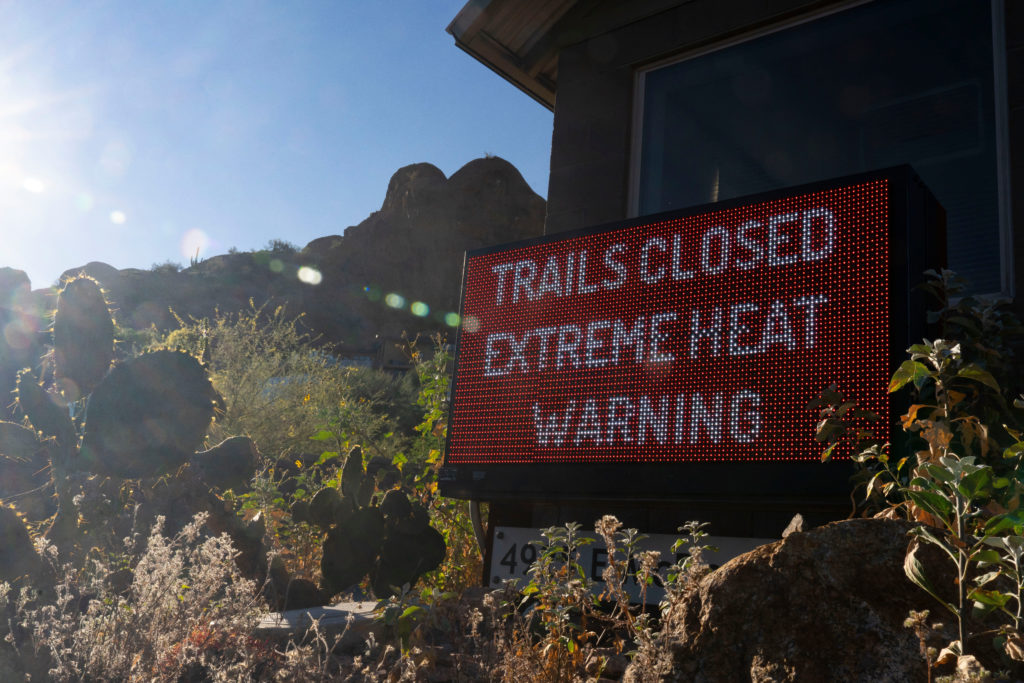
An extraordinary heat dome settled over the American Southwest this week, shattering all-time March temperature records across the region and triggering an immediate scientific attribution study that found the event would have been "virtually impossible" without decades of human-induced climate change. Phoenix, Arizona, recorded 110 degrees Fahrenheit on Thursday — a full 10 degrees above its previous all-time March record of 100°F, which had stood since 1988. Temperatures across the broader Southwest ran 25 to 30 degrees above normal for the season, with summer-level heat arriving months before it historically would. At least four heat-related deaths were reported in Arizona and southern Nevada as of Friday.
World Weather Attribution, a consortium of climate scientists at universities and research institutions in Europe and North America, completed a rapid attribution analysis and published its findings Friday. The group compared observed temperatures to historical records going back to 1900 and ran the data through climate models simulating a world without fossil fuel emissions. Their conclusion: climate change added between 4.7 and 7.2 degrees Fahrenheit (2.6 to 4 degrees Celsius) to the temperatures observed during the event. Without that accumulated warming, the researchers wrote, "events as warm as in March 2026 would have been virtually impossible without human-induced climate change."
Andrew Weaver, a climate scientist at the University of Victoria, noted that what were once understood as "unprecedented" events are now "recurring features of a warming world." Bernadette Woods Placky, chief meteorologist at Climate Central, said, "It's really hard to keep up with how extreme our extremes are becoming." The National Oceanic and Atmospheric Administration's Climate Extremes Index shows the portion of the United States experiencing extreme weather conditions has doubled in the past five years compared with the preceding two decades, and billion-dollar weather disasters have nearly quadrupled in 30 years.
The heat dome formed when a high-pressure system locked in place over the Southwest and refused to move for nearly five days — a pattern climate scientists call a "blocking event." Research has increasingly linked more frequent and persistent blocking events to accelerating warming in the Arctic, which is heating at roughly four times the global average rate and is thought to be disrupting the polar jet stream that normally keeps weather systems moving. Water managers across Arizona, Nevada, and Southern California scrambled to manage surging demand for electricity and water. Arizona Public Service, the state's largest electric utility, recorded an all-time March electricity demand peak on Thursday, straining infrastructure designed for summer loads. Several school districts closed early or canceled outdoor activities.
The U.S. is now breaking 77 percent more hot weather records compared with the 1970s, according to Climate Central analysis. Scientists from Stanford's Program on Food Security noted that the timing of this event was particularly damaging for winter wheat across the southern Great Plains, where temperatures this week may have been warm enough to trigger premature flowering — a frost-sensitive stage that could devastate yields if cold weather returns in the coming weeks, as seasonal forecasts suggest it will. The Trump administration has rolled back most Biden-era climate policies, moved to resume offshore drilling and coal leasing, and has questioned scientific consensus on climate attribution. That posture puts the administration at direct odds with a growing body of research that can now quantify, with increasing precision, exactly how much fossil fuel emissions added to any given extreme weather event.