Scientists Find a Hidden 'Gatekeeper' Inside Brain Cells That May Help Fight Alzheimer's
Penn State researchers discovered that a lattice-like skeleton just beneath a neuron's surface controls what the cell absorbs — and when it weakens, harmful Alzheimer's proteins flood in.

A microscopic structure long thought to do little more than hold nerve cells together may in fact act as a gatekeeper for the brain, controlling what neurons absorb and when — and its failure could open the door to Alzheimer's disease, according to new research from Penn State.
The structure is called the membrane-associated periodic skeleton, or MPS, a delicate, lattice-like scaffold of proteins that lines the inside of a neuron's outer membrane. Discovered only a little over a decade ago, it was initially viewed mainly as a support framework. The new study, published in the journal Science Advances, suggests it plays a far more active and consequential role in brain health than anyone realized.
The Penn State team found that the MPS regulates endocytosis — the process by which cells engulf and take in material from their surroundings, including nutrients, signaling molecules and proteins. Rather than acting as a passive barrier, the skeleton appears to govern the major forms of this uptake through a signaling-driven positive feedback loop, effectively deciding what gets into the neuron and how quickly.
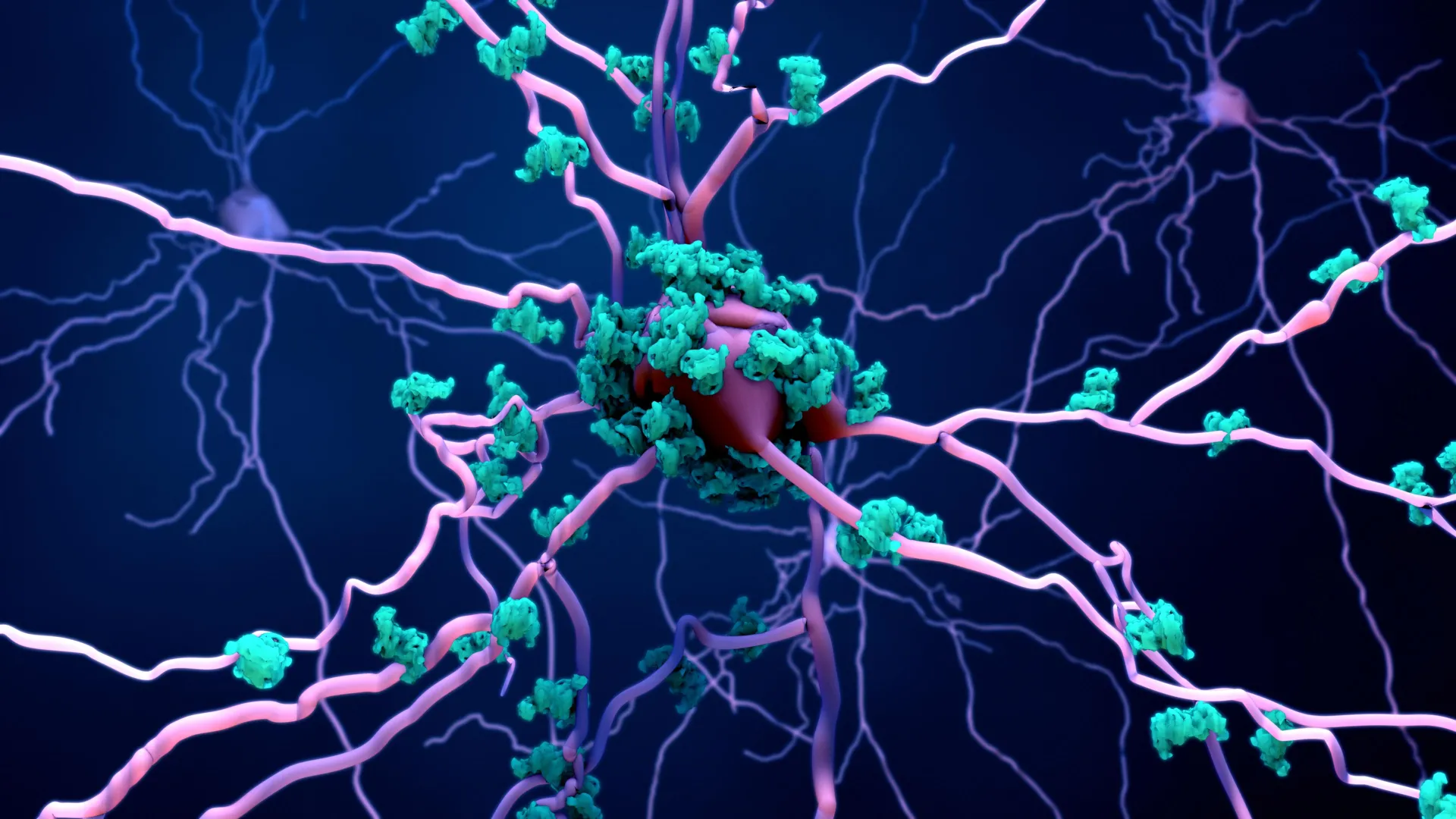
The implications for Alzheimer's are direct. When the lattice weakens or breaks down, the researchers observed, neurons begin rapidly absorbing harmful amyloid proteins — the sticky fragments that clump into the plaques long associated with the disease. In other words, a healthy skeleton may help keep dangerous proteins out, while a compromised one allows them to flood in and accumulate, potentially accelerating the damage that leads to memory loss and cognitive decline.
That insight points toward a new therapeutic strategy. If scientists can find ways to stabilize or reinforce the membrane-associated periodic skeleton, they might be able to slow or prevent the toxic buildup that drives neurodegeneration, rather than simply trying to clear plaques after they form. Such an approach would target the disease at an earlier and more fundamental stage.
The findings are still early, and the researchers stress that turning a basic discovery about neuronal architecture into a treatment will require extensive further study in animal models and, eventually, clinical trials. But by revealing a previously overlooked control point inside brain cells, the work adds a promising new suspect — and a possible new target — to the decades-long effort to understand and defeat Alzheimer's disease.