Scientists Detect Massive New Lunar Crater with Striking Bright Rays
22-meter-wide impact discovered by comparing orbital images reveals Moon is still actively changing from ongoing asteroid and comet strikes.
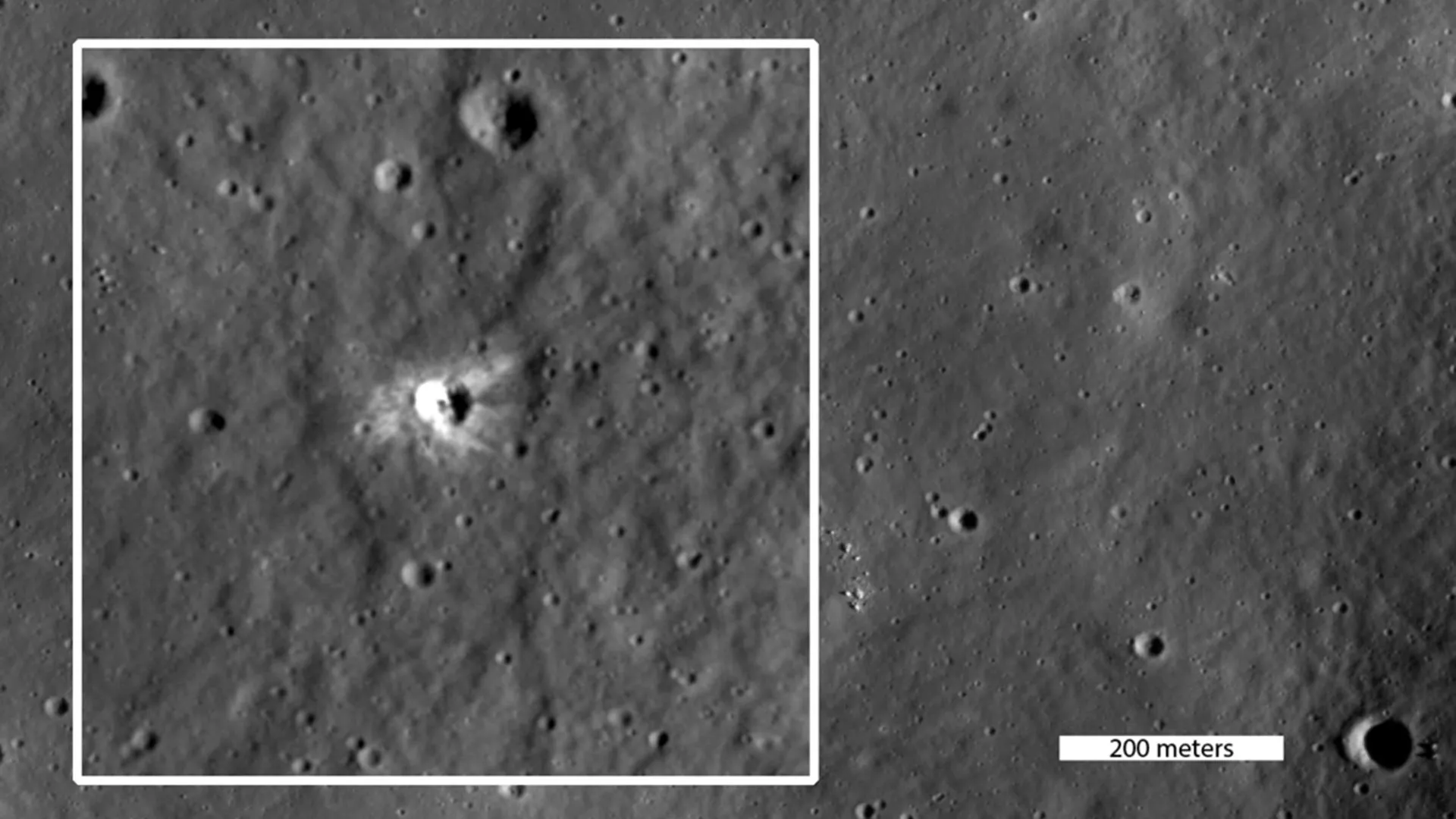
Scientists have discovered a fresh 22-meter-wide crater on the Moon's surface by carefully comparing orbital images taken years apart, revealing dramatic evidence that our nearest celestial neighbor continues to be actively reshaped by ongoing impacts from asteroids and comets. The Lunar Reconnaissance Orbiter Camera team identified the new crater by analyzing changes between photographs captured before December 2009 and after December 2012, allowing them to narrow down when the impact occurred even though no one actually witnessed the collision happen in real time.
What makes this newly discovered crater particularly remarkable is not its size, which is roughly equivalent to a large house, but the striking brightness of its appearance against the surrounding lunar surface. The impact blasted fresh material outward for tens of meters, creating distinctive rays that spread out in a dramatic sunburst pattern. This newly exposed material appears much brighter than the darker regolith that has been weathered by millions of years of exposure to solar wind particles, micrometeorite impacts, and cosmic radiation.
The bright rays surrounding the crater will not maintain their prominent appearance indefinitely. Space weathering processes gradually darken exposed lunar material over thousands to millions of years, which explains why ancient craters lack the prominent bright streaks while younger formations like Tycho crater, formed approximately 108 million years ago, still display visible rays that can be observed from Earth. This natural aging process provides scientists with valuable tools for estimating the relative ages of different lunar surface features.
Discovering new craters serves purposes beyond simple scientific curiosity. These findings help researchers better estimate impact frequencies, which is crucial information for assessing risks to future spacecraft missions and human lunar exploration programs. Additionally, the study of fresh craters allows scientists to refine methods used to determine surface ages by analyzing how quickly craters and their distinctive features change over time under the harsh conditions of the lunar environment.
For observers who enjoy studying the Moon through telescopes, this discovery serves as a compelling reminder that the lunar surface we have observed for generations is not a static, unchanging landscape. The Moon continues to evolve as it travels through space, occasionally gaining new features from the ongoing bombardment of asteroids and comets that characterizes our dynamic Solar System. These fresh craters represent tangible evidence that space remains an active and occasionally violent environment, with impacts occurring regularly enough that careful monitoring can detect the changes they create on familiar celestial bodies.