Rubio and Miller Warn 67 Nations of a 'Mortal Threat' From 'Far-Left Terrorism' at State Department Summit
Secretary of State Marco Rubio and White House adviser Stephen Miller urged diplomats to help build a global counterterrorism push against the left, and Rubio announced new visa restrictions — as some allies quietly recoiled.
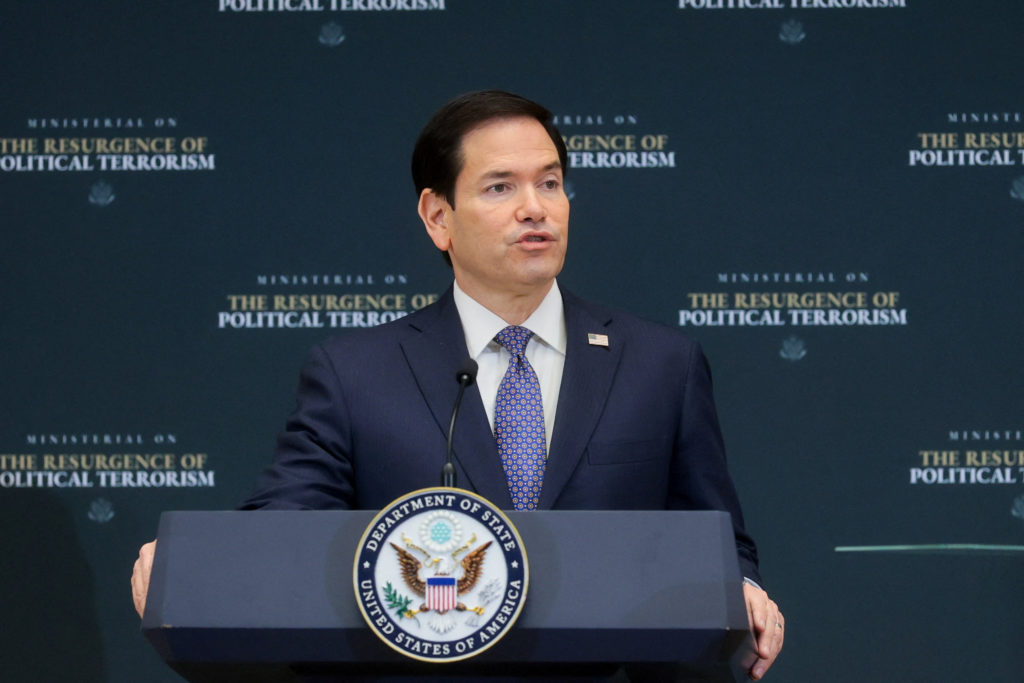
WASHINGTON — Secretary of State Marco Rubio and top White House adviser Stephen Miller convened diplomats from dozens of countries on Thursday to sound an alarm over what they called the “mortal threat” of “far-left terror,” urging allies to join a new international campaign against left-wing political violence.
A State Department spokesperson said 67 countries attended the ministerial, though the delegations were mostly drawn from Europe, with some from Asia and the Western Hemisphere. Many governments sent ambassadors or working-level officials rather than their foreign ministers, a sign of the caution with which some allies approached the gathering.
Rubio framed the effort as an attempt to rally partners around a shared strategy. He called on the assembled nations to work with the United States to “identify and map this threat and rebuild our counterterrorism architecture to defeat it,” casting the fight in the sweeping language once reserved for the post-9/11 struggle against jihadist networks. Miller amplified the theme, describing the danger to Western societies in stark, civilizational terms.
Later Thursday, Rubio announced a new visa-restriction policy aimed at what the department described as “members of Far-Left Terrorist and other aligned groups,” expanding the administration's push to translate the rhetoric into concrete immigration and law-enforcement measures. The move follows months of effort by the administration to elevate “antifa” and allied movements as a defined national-security priority.
The initiative has drawn unease abroad. In earlier reporting, some allied governments were said to have recoiled at the request to enlist in what they viewed as a politically charged campaign, wary of endorsing a U.S. framework that critics argue conflates protest and dissent with organized terrorism. Civil-liberties advocates have warned that broad, ideologically defined designations risk sweeping in lawful political activity.
Supporters counter that a wave of political violence justifies a coordinated response and that democracies have a duty to confront extremism regardless of its ideological coloring. The summit marked the most ambitious attempt yet to internationalize that argument — and set up a test of how many governments are willing to sign on to a definition of terrorism drawn, for once, from the left rather than the right.
The summit is the culmination of a monthslong campaign by the administration to elevate left-wing movements, and “antifa” in particular, into a defined national-security threat on par with the jihadist networks that dominated U.S. counterterrorism for two decades. Reporting ahead of the event described allied diplomats bristling at being asked to endorse an American framework they saw as politically loaded, even as some governments — including Israel, whose foreign minister Gideon Sa'ar attended — signaled support. The gathering leaves open the central question of whether Washington can convert a domestic political priority into durable international cooperation, or whether wary partners will offer little more than polite attendance.