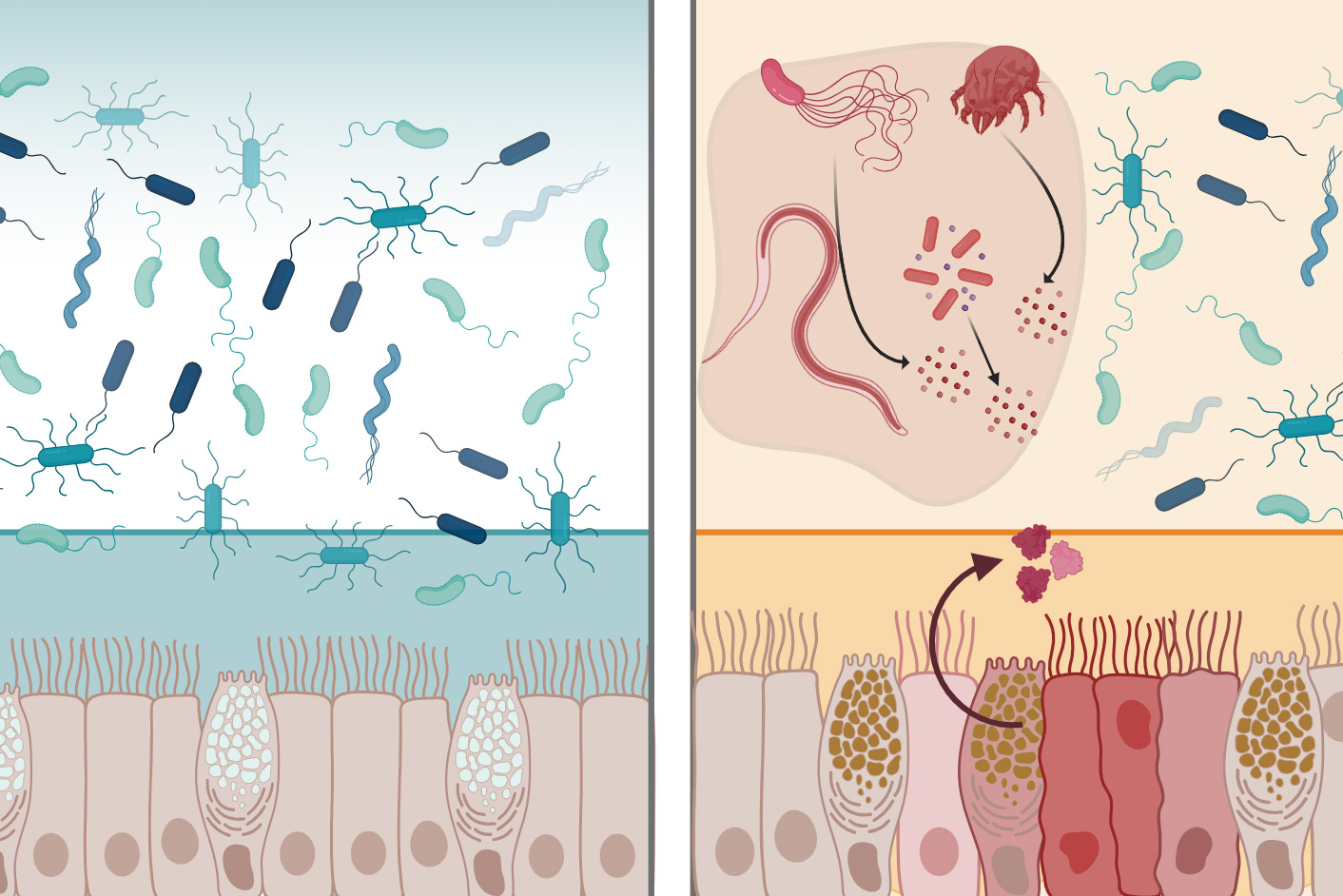
Scientists Engineer Gut Bacteria to Infiltrate Tumors and Manufacture Cancer Drugs From the Inside
A team at Shandong University modified the probiotic bacterium E. coli Nissle 1917 to seek out breast cancer tumors in mice, colonize them, and produce the FDA-approved drug Romidepsin directly at the tumor site — opening a potential new path for targeted chemotherapy with fewer systemic side effects.
Scientists have engineered a common probiotic bacterium to seek out solid tumors inside a living body and manufacture a cancer-fighting drug directly at the site of the disease — a strategy that could one day allow oncologists to deliver chemotherapy at maximum concentration inside a tumor while dramatically reducing the toxic side effects that conventional systemic treatment inflicts on healthy tissue throughout the body. The study, published March 21, 2026 in the open-access journal PLOS Biology by Tianyu Jiang of Shandong University in Qingdao, China and colleagues, demonstrated the approach in mouse models of breast cancer and found that the engineered bacteria could selectively accumulate inside tumors and produce detectable quantities of an FDA-approved anticancer drug precisely where it was needed.
The bacterial strain at the center of the research is Escherichia coli Nissle 1917, known as EcN — a non-pathogenic gut bacterium that has been safely used as a commercial probiotic in Europe for more than a century. Scientists have known for decades that certain bacteria, when introduced into a mammal's bloodstream, have a peculiar natural tendency to accumulate inside solid tumors. Tumors are characterized by regions of low oxygen, high acidity, and suppressed immune surveillance — conditions that many bacteria actually prefer and that the mammal's healthy tissues actively exclude. This tumor-homing property has intrigued cancer researchers since the early 20th century, but previous efforts to exploit it were stymied by the challenge of loading bacteria with drugs that they could reliably manufacture and release on command inside the tumor environment.
Jiang's team solved this by genetically inserting the biosynthetic pathway for Romidepsin — also known as FK228, a bicyclic depsipeptide compound approved by the FDA in 2009 for treating cutaneous T-cell lymphoma — directly into EcN's chromosome. Romidepsin is a histone deacetylase inhibitor that works by reactivating tumor-suppressing genes that cancer cells have epigenetically silenced. Once the team confirmed that the modified bacteria could produce Romidepsin in standard laboratory culture, they created mouse models by implanting breast cancer tumor cells and then injected the engineered EcN directly into the mice's tail veins.
Tracking experiments confirmed that the modified bacteria accumulated preferentially inside the tumor tissue rather than in healthy organs. Within 48 to 72 hours of injection, the bacteria had colonized the tumor interior and were producing measurable concentrations of Romidepsin locally. Mice treated with the engineered bacteria showed statistically significant reductions in tumor growth compared to untreated control mice or mice treated with a non-drug-producing control strain of EcN. The researchers also observed that the bacteria appeared to provoke an additional immune response against the tumor — a secondary anti-cancer effect they attribute to the bacteria themselves being recognized as foreign invaders by the immune system.
The researchers are careful to describe the findings as a proof of concept. "More research is needed before this approach can be tested in people," the team wrote in the paper, emphasizing that key safety questions remain unanswered, including how to reliably remove the bacteria from the body after treatment, what happens if the bacteria escape the tumor and colonize healthy tissue, and whether the immune response triggered by the bacteria could cause damaging inflammation. The approach will require extensive preclinical toxicology studies before any human trials could begin.
Nevertheless, the research represents the latest step in a rapidly advancing field that has begun to reimagine bacteria not as pathogens to be eradicated, but as programmable biological machines with unique capabilities that no synthetic drug can replicate. Other research groups are pursuing parallel strategies using Salmonella, Listeria, and Clostridium species engineered to deliver different classes of therapeutic payloads. Jiang's team chose EcN specifically because its century-long safety record in humans provides a clear regulatory pathway if the approach proves safe and effective in animal studies.