Orlando Surgeons Perform 'Born Twice' Fetal Airway Surgery, Saving Baby From Lethal CHAOS Diagnosis
A team partially delivered Cassian Jouvert at 25 weeks, placed a fetal tracheostomy, and returned him to the womb to keep developing — a roadmap for one of the rarest fatal fetal conditions.
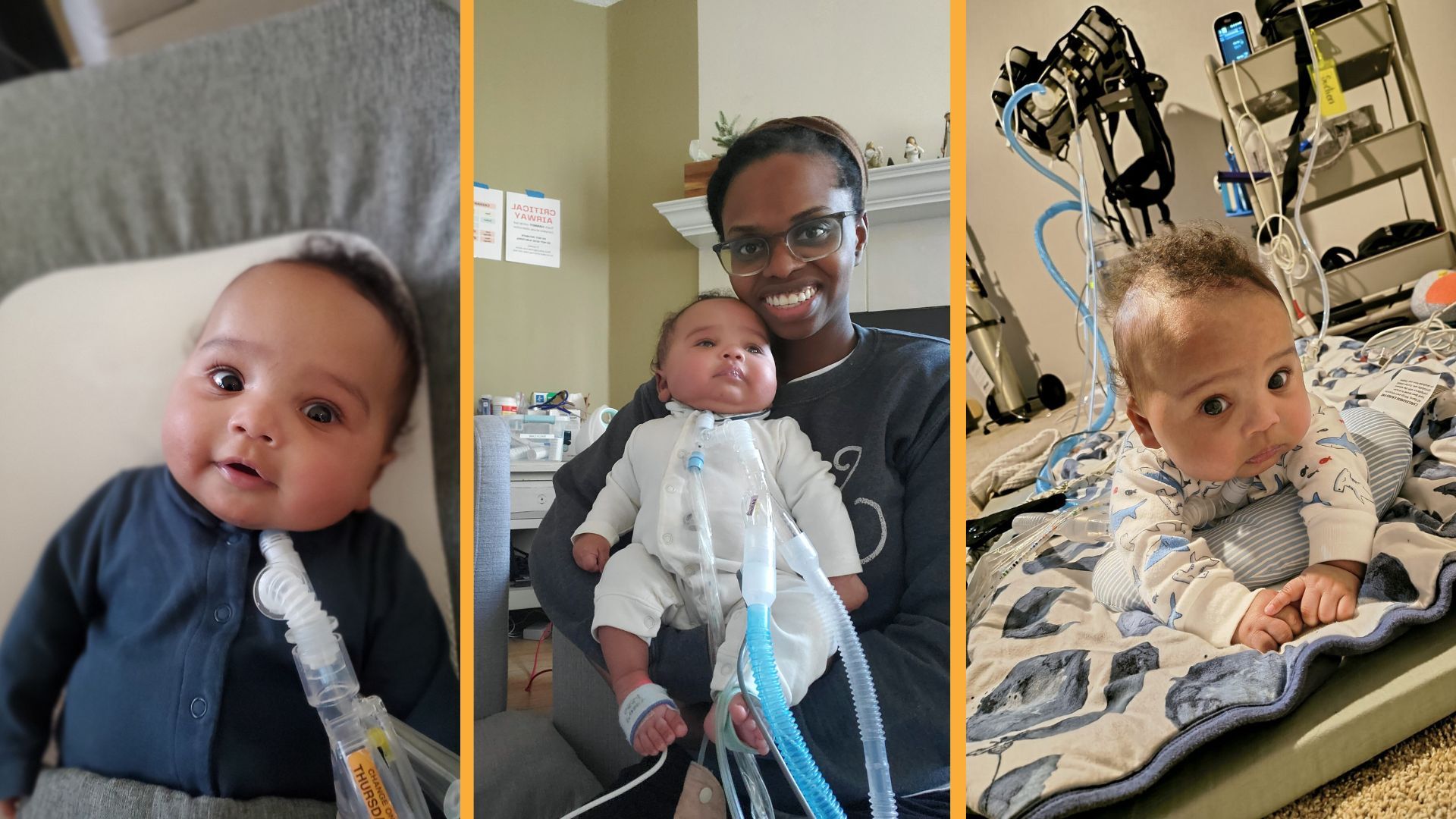
A team of fetal surgeons at Orlando Health performed a first-of-its-kind operation that partially delivered a 25-week-old fetus from his mother's womb to create a life-saving airway, then carefully returned the baby to the uterus to keep developing — a delicate "born twice" procedure that has now been described in detail in a peer-reviewed paper and that physicians say could become a new standard of care for one of the rarest and deadliest fetal conditions in medicine.
The baby, identified by his parents as Cassian Jouvert, was diagnosed in utero with congenital high airway obstruction syndrome, or CHAOS, a near-uniformly fatal condition in which a thick membrane blocks the developing windpipe and prevents amniotic fluid from circulating in and out of the lungs. Without intervention, fetuses with CHAOS develop massively distended lungs that compress the heart, leading to cardiac failure and stillbirth in nearly every recorded case. Cassian's parents, Keishera and Greg Jouvert, were initially told their son had "little to no chance of survival" after a midpregnancy ultrasound revealed the obstruction.
The Orlando Health team — led by maternal-fetal medicine specialist Dr. Rajiv Chandawarkar, in coordination with pediatric otolaryngologists, anesthesiologists and neonatologists — performed a variation of the established ex utero intrapartum treatment, or EXIT, procedure. During a carefully staged C-section, the surgeons exposed only Cassian's head, neck and shoulders through the uterine incision and used a fetal laryngoscope to navigate the obstruction and place a temporary tracheostomy. Once the airway was secured, they returned the fetus to the uterus, closed the incision, and allowed the pregnancy to continue with Cassian still attached to the placenta — a critical six-week extension that gave his lungs time to mature.
When Mrs. Jouvert went into labor about six weeks later, the same team returned to the operating room and completed a conventional delivery, exchanging the temporary tracheostomy for an endotracheal intubation tube and finally separating Cassian from the placenta. He was admitted to the neonatal intensive care unit and survived the first weeks of life, the most dangerous period for a CHAOS infant. He is now home with his family and is expected to undergo at least three additional reconstructive surgeries before his second birthday, with the long-term goal of thinning the airway membrane enough to wean him off mechanical ventilation entirely.
The procedure, while not the first attempt at in-utero airway intervention, is among only a handful of documented cases in which a fetus was partially delivered, surgically treated and successfully returned to the womb to continue developing. Fetal-medicine researchers say the case raises both technical and ethical considerations: the operation requires a coordinated team of more than two dozen specialists, the surgical risks to the mother are significant, and the long-term outcomes for surviving CHAOS infants remain difficult to predict. But the success offers a measure of hope to the small number of families who receive a CHAOS diagnosis each year. "This wasn't just about saving one life," Dr. Chandawarkar said in a statement released by Orlando Health. "It was about creating a roadmap for the next family that gets this devastating news."
Originally reported by Live Science.