8 to 9 Million Americans March in 'No Kings' Protests — The Largest Single-Day Demonstration in US History
Demonstrators flooded 3,300 cities on Saturday, from Manhattan to rural Wyoming, in opposition to the Iran war, ICE shootings, and what organizers described as authoritarian drift — shattering every previous record for a one-day US protest.

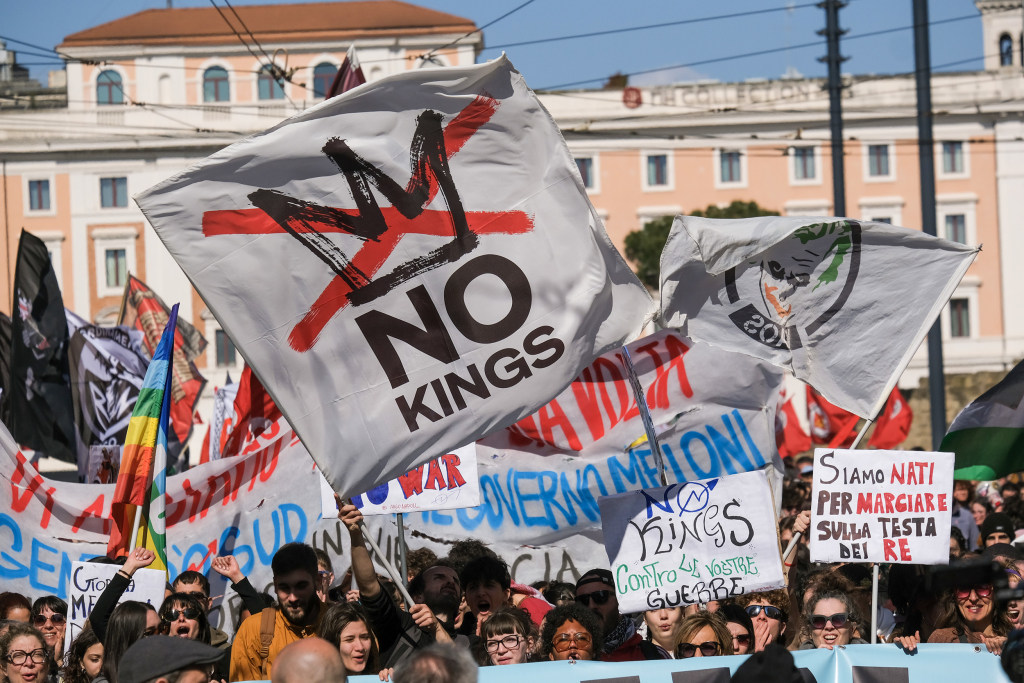
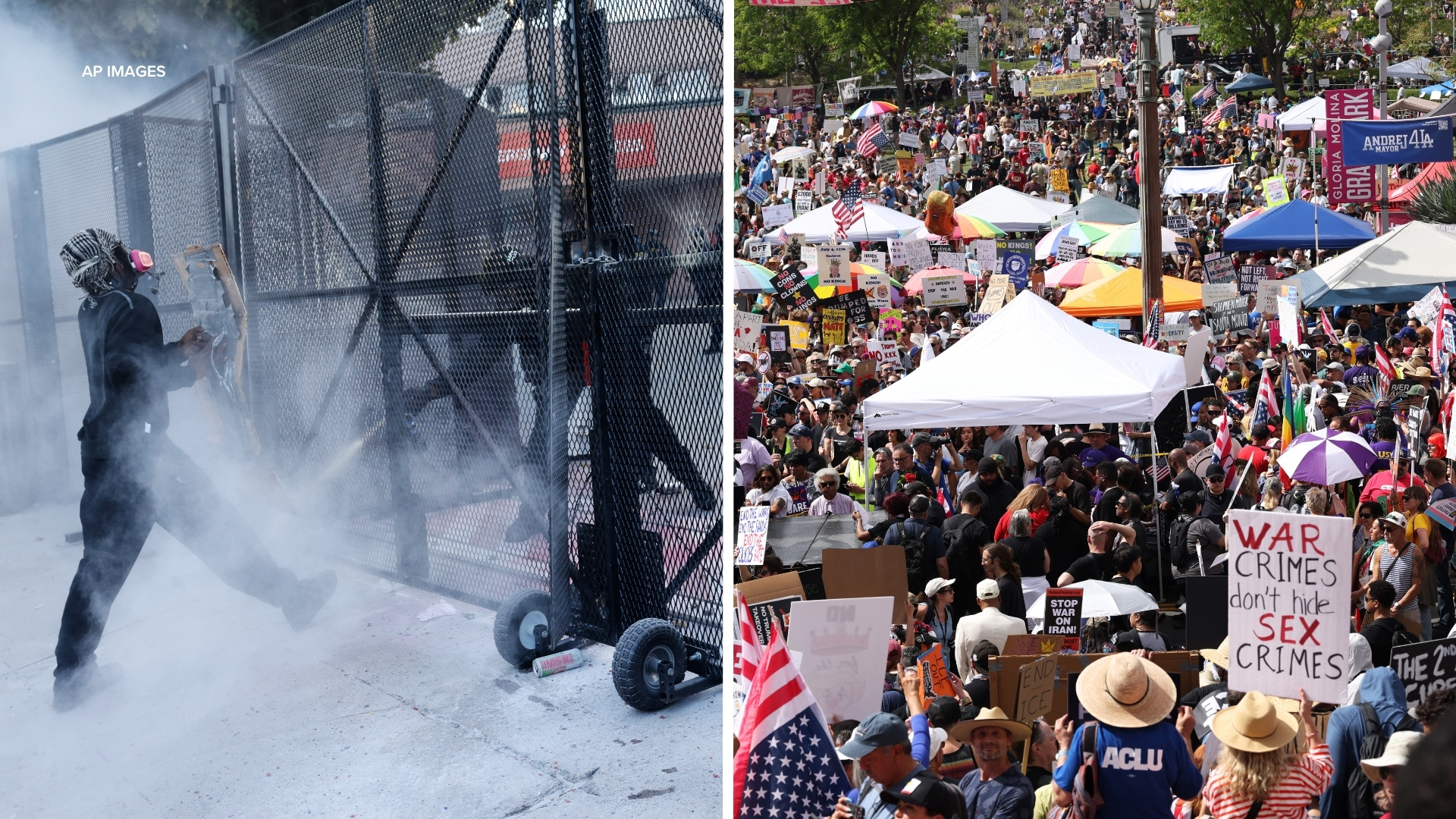
An estimated 8 to 9 million Americans took to the streets on Saturday, March 28, 2026, in what organizers and historians are calling the largest single-day protest in United States history. Demonstrations under the banner "No Kings" swept through more than 3,300 cities and towns — from Portland and Pittsburgh to rural Wyoming and Louisiana — as participants voiced opposition to the ongoing US-Israel war on Iran, the Trump administration's domestic agenda, and what many described as an erosion of democratic norms.
New York City alone saw more than 350,000 marchers converge on Central Park and the streets of Manhattan. Boston drew 180,000 protesters. In Saint Paul, Minnesota, a crowd estimated at 100,000 gathered to hear performances by Bruce Springsteen and Joan Baez alongside speeches by Democratic Socialists and labor organizers. Seattle's turnout reached between 90,000 and 100,000. Even smaller cities in traditionally conservative states produced significant crowds: Boise, Idaho, Cheyenne, Wyoming, and Baton Rouge, Louisiana each reported hundreds of demonstrators.
The protests were organized by a coalition of groups including Indivisible, the 50501 Movement, the Third Act Movement, the AFL-CIO, the Democratic Socialists of America, the Human Rights Campaign, and Democrats Abroad. Speakers at events nationwide included Senator Bernie Sanders, Senator Elizabeth Warren, Massachusetts Governor Maura Healey, Representative Rashida Tlaib, author and science communicator Bill Nye, actor Robert De Niro, and activist Jane Fonda. Media personality Mehdi Hasan addressed crowds in multiple cities via video link.
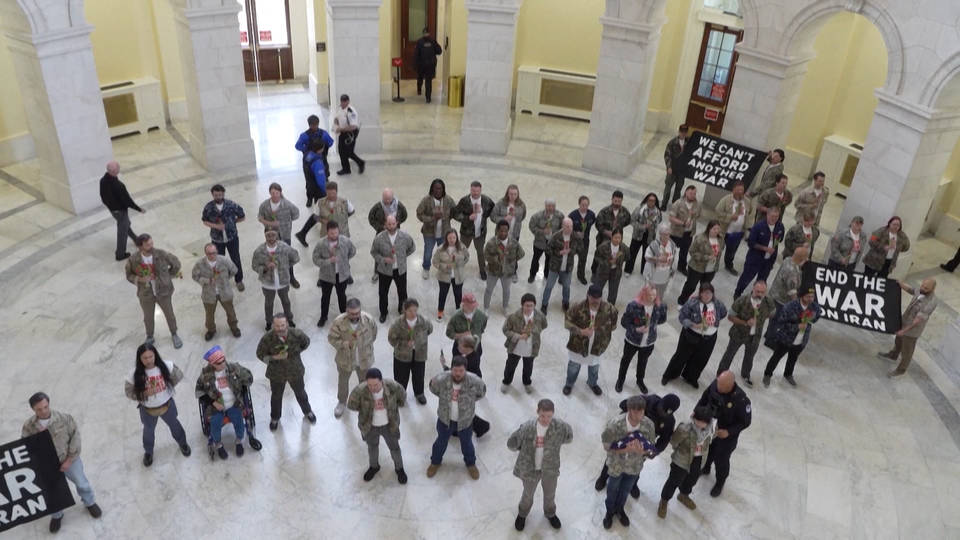
The demonstrators cited a range of grievances that have mounted since the start of Trump's second term. The US-Israel military campaign against Iran, now in its fifth week and having claimed more than 1,750 Iranian lives, galvanized many who have opposed the war. Others marched in response to ICE shootings — specifically the deaths of Renée Good, Keith Porter Jr., and Alex Pretti — and the Trump administration's continued suppression of the so-called Epstein Files. A common theme across signs and chants was anti-authoritarian sentiment, encapsulated in the slogan: "No kings."
Organizers noted that approximately two-thirds of protest RSVPs came from outside major urban centers, underscoring a geographic breadth unusual even for large demonstrations. International solidarity events were held in at least 16 countries, including Australia, Canada, France, Germany, Ireland, Mexico, Spain, the United Kingdom, and Sweden. Hawaiian protesters branded their march "No Dictators" out of respect for Hawaiian Kingdom sovereignty. A virtual protest option was offered for participants with disabilities.
Notably, zero protest-related arrests were reported in New York City. The Trump administration's response was terse. When asked about the marches, White House press secretary Karoline Leavitt stated: "We do not think about the protest at all."
Historians of social movements have been quick to contextualize Saturday's turnout. Previous records for single-day US protests were set by the Women's March in January 2017 (estimated at 3.5 to 4.6 million participants) and various March for Our Lives events. The 8-to-9-million figure, if sustained by independent analysts, would represent more than double the previous record — a staggering number in a country of 335 million.
The coalition organizing the No Kings movement has not announced the next planned national day of action, though local organizers in dozens of cities have signaled plans for ongoing weekly demonstrations. Democratic Party leaders who spoke at the events stopped short of calling for impeachment, focusing instead on midterm elections in November 2026 as the primary vehicle for political change. Independent observers noted that the scale and ideological breadth of Saturday's turnout — spanning union members, suburban parents, veterans, faith communities, and college students — represents something qualitatively different from protest movements of recent years.