German Lab's New MXene Synthesis Method Boosts Conductivity 160-Fold, Unlocking Electronics Revolution
Researchers at HZDR replaced toxic acid etching with molten salt chemistry to produce MXenes with near-perfect atomic order, setting a new benchmark for the ultra-thin material's electrical performance.

Researchers in Germany have developed a cleaner, more precise method to synthesize MXenes — a class of ultra-thin, electrically conductive nanomaterials that have attracted enormous interest for applications in electronics, energy storage, and electromagnetic shielding — that eliminates the impurities plaguing conventionally produced versions and boosts electrical conductivity by up to 160 times. The breakthrough, published in the journal Nature Synthesis in April 2026 by scientists at the Helmholtz-Zentrum Dresden-Rossendorf (HZDR) and TU Dresden, could accelerate MXenes from laboratory curiosity to commercial technology across multiple industries.
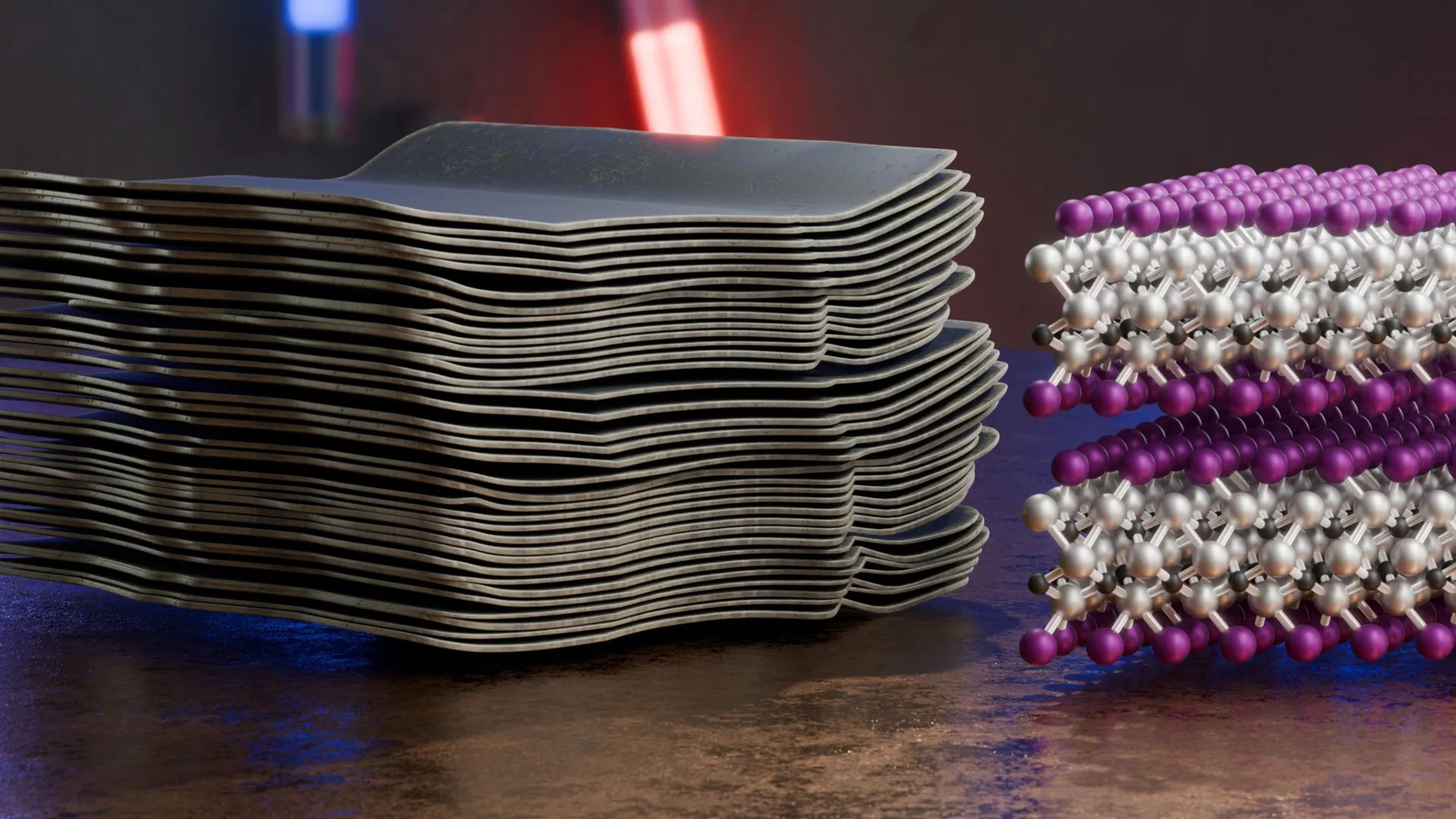
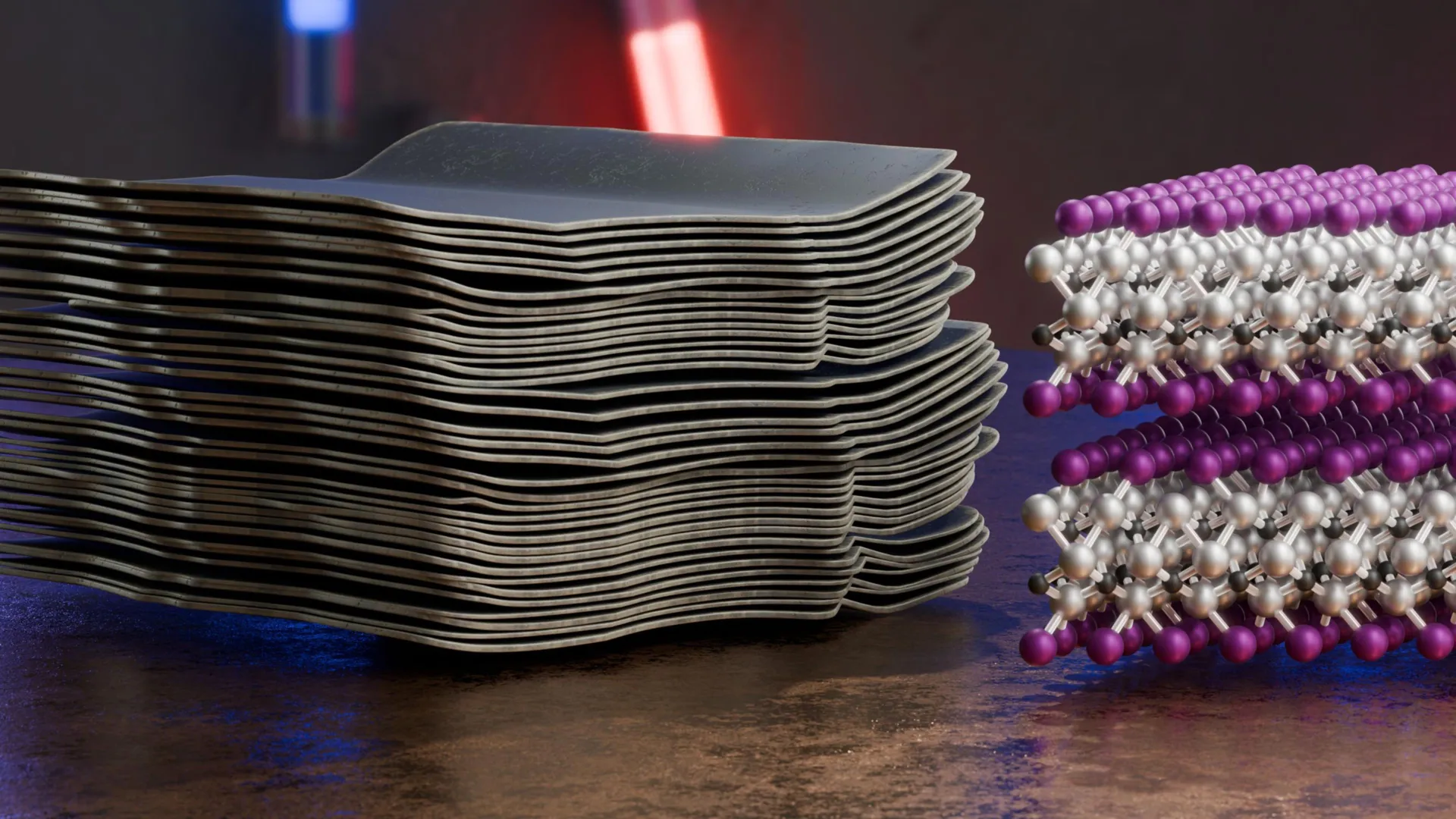
MXenes, first discovered in 2011, are two-dimensional inorganic materials typically composed of transition metal carbides or nitrides — essentially sheets of metal atoms just a few atoms thick, similar in structure to graphene but with very different properties. Their surfaces are covered with atoms from other elements, and these surface terminations critically determine how well MXenes conduct electricity, how stable they are, and how they interact with light, heat, and other materials. Conventional methods of producing MXenes use harsh chemical etching with hydrofluoric acid, which removes material from the parent MAX phase crystals effectively but leaves the resulting MXene surfaces covered with a chaotic mixture of different atoms in disordered arrangements — a structure that sharply limits conductivity.
The HZDR team, led by Dr. Mahdi Ghorbani-Asl and Dr. Dongqi Li, developed what they call the GLS method, which replaces corrosive acid etching with a gentler process using molten salts and iodine vapor applied to MAX phase materials at elevated temperatures. This approach allows precise control over exactly which halogen atoms — chlorine, bromine, or iodine — attach to the MXene surface and in what arrangement. The result is a chlorine-terminated titanium carbide MXene, designated Ti3C2Cl2, with essentially perfect atomic order and minimal impurities. Measurements showed this material achieved a 160-fold increase in macroscopic electrical conductivity compared to conventionally produced MXenes, a 13-fold enhancement in terahertz conductivity, and a nearly four-fold improvement in charge carrier mobility — the ease with which electrons move through the material.
The implications extend far beyond better lab samples. Higher conductivity MXenes could dramatically improve the performance of energy storage devices including supercapacitors and next-generation batteries, where electron transport efficiency directly determines charge and discharge rates. In electromagnetic shielding — an application where MXenes have already shown commercial promise, particularly for protecting sensitive electronics from interference — better-conducting MXenes could provide superior shielding at much thinner material thicknesses, enabling lighter and more flexible protective coatings. In the rapidly growing field of high-frequency wireless communications, including 5G and emerging 6G networks, highly conductive MXene films could serve as efficient radar-absorbing coatings for both consumer devices and defense applications.
The GLS synthesis method also addresses a practical manufacturing concern that has hampered MXene commercialization: the toxicity and handling difficulties associated with hydrofluoric acid. By substituting molten salt chemistry, the HZDR process is significantly safer for laboratory workers and more readily scalable to industrial production volumes. Material scientists not involved with the research noted that the combination of dramatically improved performance and a safer production route could represent the kind of dual breakthrough that moves a material from academic publishing to real-world products within a few years. Several electronics and materials companies have already expressed interest in licensing the GLS synthesis technique for evaluation in their own product development pipelines.