Netanyahu Government Vows to Defy Israel's Supreme Court, Igniting a Constitutional Crisis
For the first time, Prime Minister Benjamin Netanyahu's coalition says it will not comply with a court ruling, prompting all of Israel's living former chief justices to warn of the end of the rule of law.
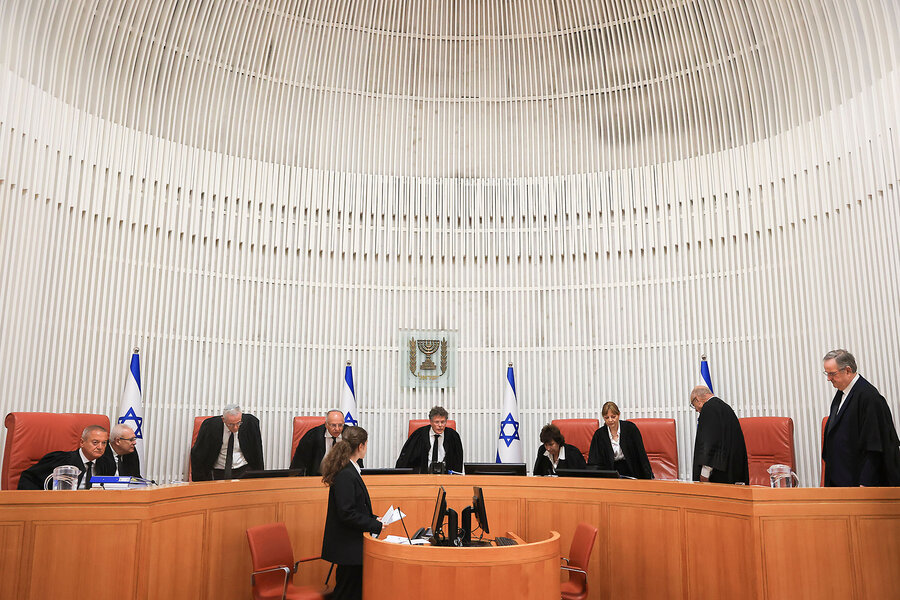
Prime Minister Benjamin Netanyahu's far-right government has said it will defy a ruling by Israel's Supreme Court for the first time, an unprecedented move that legal experts warn pushes the country toward a full-blown constitutional crisis. The declaration has drawn condemnation across Israel's political and legal spectrum and revived fears that the executive no longer considers itself bound by the courts.
At the center of the standoff is a Cabinet resolution rejecting a Supreme Court decision on the makeup of Israel's commercial broadcast regulator. The government's position would allow the regulator to keep operating with fewer members than the court said were required. Critics say the dispute, while technical on its surface, establishes a dangerous precedent: that the government can simply decline to obey a judicial order it dislikes.
The reaction from Israel's legal establishment was swift and stark. All of the country's living former chief Supreme Court justices issued a joint warning that "disobedience to court orders is the final nail in the coffin of democracy," cautioning that it "completely disrupts the order of government and justice in the country, leading to anarchy and the concentration of all state power in the hands of a single body." The message amounted to an extraordinary intervention by the people who once led the very institution now being challenged.
The confrontation carries implications well beyond the broadcast regulator. Opposition leaders fear the government's willingness to ignore the court signals a broader intent to reject unfavorable outcomes, including the results of a general election that must be held by October. With polls suggesting Netanyahu's coalition could lose that vote, the prospect that the government might not respect an adverse result has alarmed commentators and civil-society groups alike.
The regulator dispute also has commercial stakes. The decision could affect approval for the sale of Reshet 13, one of Israel's major commercial television networks, to a group of technology entrepreneurs. Media-freedom advocates worry that a weakened, politically pliable regulator could be used to reshape the country's broadcast landscape.
The episode is the latest flashpoint in a years-long battle over the balance of power between Netanyahu's governing coalition and the judiciary, a fight that has repeatedly filled Israel's streets with protesters. By moving from rhetoric to an explicit vow of defiance, the government has escalated that conflict to a new and, in the eyes of its critics, deeply perilous stage for Israeli democracy.
Government allies pushed back on the alarm, casting the judiciary as an unelected body that has overstepped its authority and arguing that elected officials, not judges, should have the final word. But the breadth of the backlash — spanning opposition politicians, legal scholars, retired justices and protest organizers — pointed to how far the dispute has moved beyond ordinary partisan wrangling into a fundamental argument about who ultimately holds power in the Israeli state.