China Lands a Rocket at Sea During an Orbital Launch for the First Time, Breaking SpaceX's Monopoly
The first stage of a Long March 10B booster touched down on a floating platform after lofting a satellite, a milestone that until now only SpaceX had achieved.
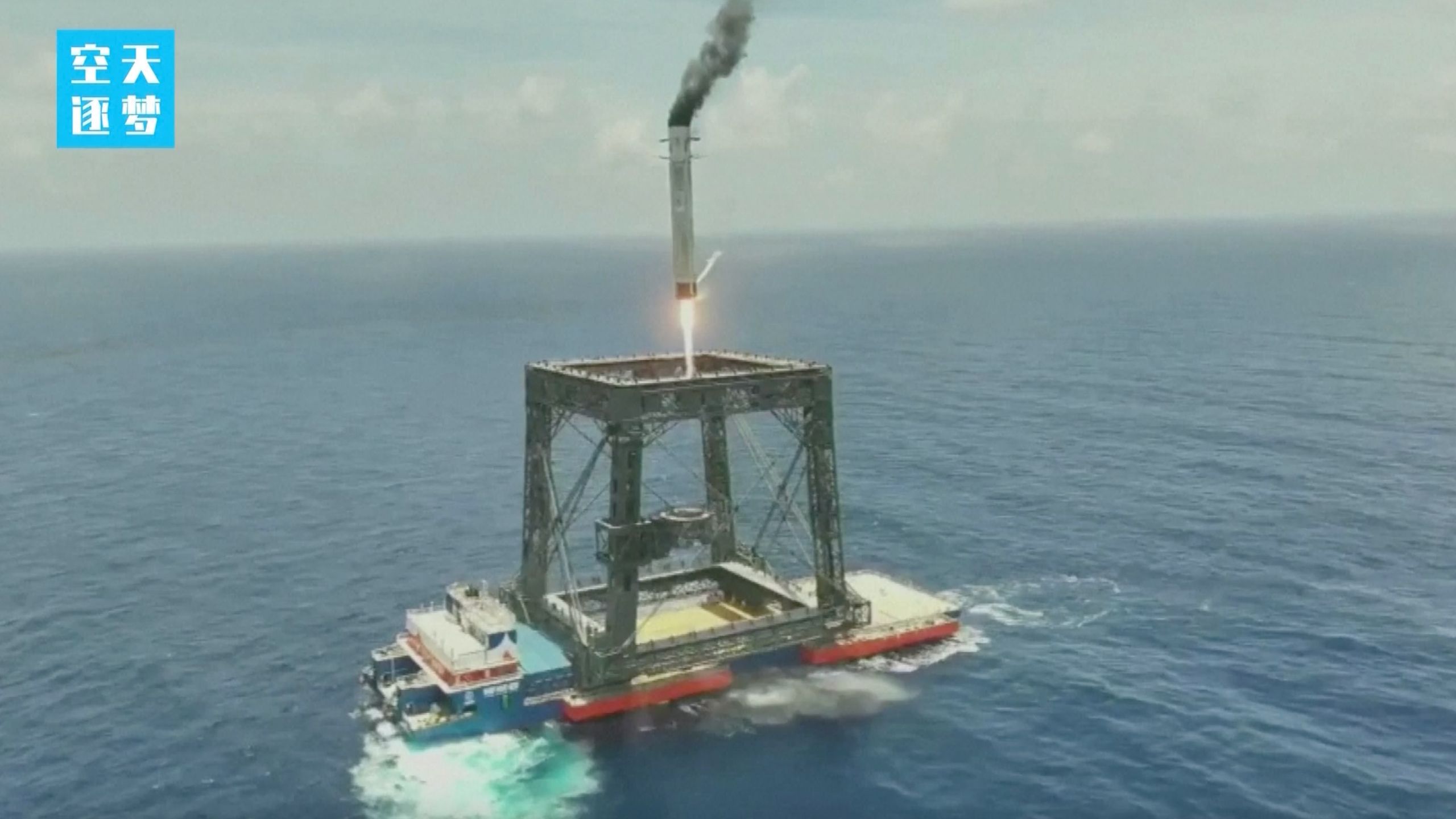
China has landed the first stage of an orbital-class rocket for the first time, a feat that until now had been pulled off only by Elon Musk's SpaceX. On July 10, a Long March 10B rocket sent a satellite into orbit and then brought its booster back for a controlled touchdown on a floating platform at sea, a milestone that marks a significant step in Beijing's push to develop reusable launch vehicles.
The Long March 10B is a two-stage rocket that stands about 207 feet, or 63 meters, tall. Its first stage burns kerosene and liquid oxygen, while the upper stage runs on liquid oxygen and liquid methane. About six minutes after the first and second stages separated, the booster descended and landed on the sea-based platform, according to reports on the flight. The mission delivered its satellite payload to orbit before the recovery attempt.
Reusable rockets are widely seen as the key to driving down the cost of reaching space. SpaceX pioneered the routine recovery and reflight of orbital boosters with its Falcon 9, landing them on drone ships and land pads dozens of times a year and reshaping the economics of the launch industry. Vertical landings of orbital-class rockets had remained the exclusive province of SpaceX until this flight, making China's success a notable breakthrough.
The achievement puts China closer to matching the reusable capabilities of American firms, a technology that analysts consider critical both for ambitious exploration goals and for rapidly building out large satellite constellations. CNN, reporting on the test, framed it as a breakthrough as China races to catch up with the United States in a domain increasingly tied to national security and commercial competition.
The Long March 10 family is central to China's crewed spaceflight ambitions, including plans to put astronauts on the moon before the end of the decade. Demonstrating that a first stage can survive reentry, control its descent and land intact is an essential building block for reusing expensive hardware and increasing launch cadence. While a single successful landing does not by itself deliver the operational, high-tempo reusability that SpaceX has established, it signals that China's engineers have cleared one of the hardest technical hurdles in modern rocketry and intend to compete aggressively for a share of the global launch market.
The next challenge will be proving the recovered hardware can be inspected, refurbished and flown again quickly and cheaply, the step that turned reusability from a stunt into an economic advantage for SpaceX. Chinese state media hailed the flight as a landmark, and a growing roster of commercial Chinese launch firms are pursuing their own reusable designs, suggesting the country's push to slash launch costs and ramp up its cadence is only accelerating.