Confirmed: A Habitable-Zone Super-Earth Orbits Our Nearest Red Dwarf Neighbor, Just 10.7 Light-Years Away
Astronomers using Chilean telescopes found at least four planets around GJ 887, with the outermost sitting in the habitable zone — only the second such world known within 10 light-years of Earth.

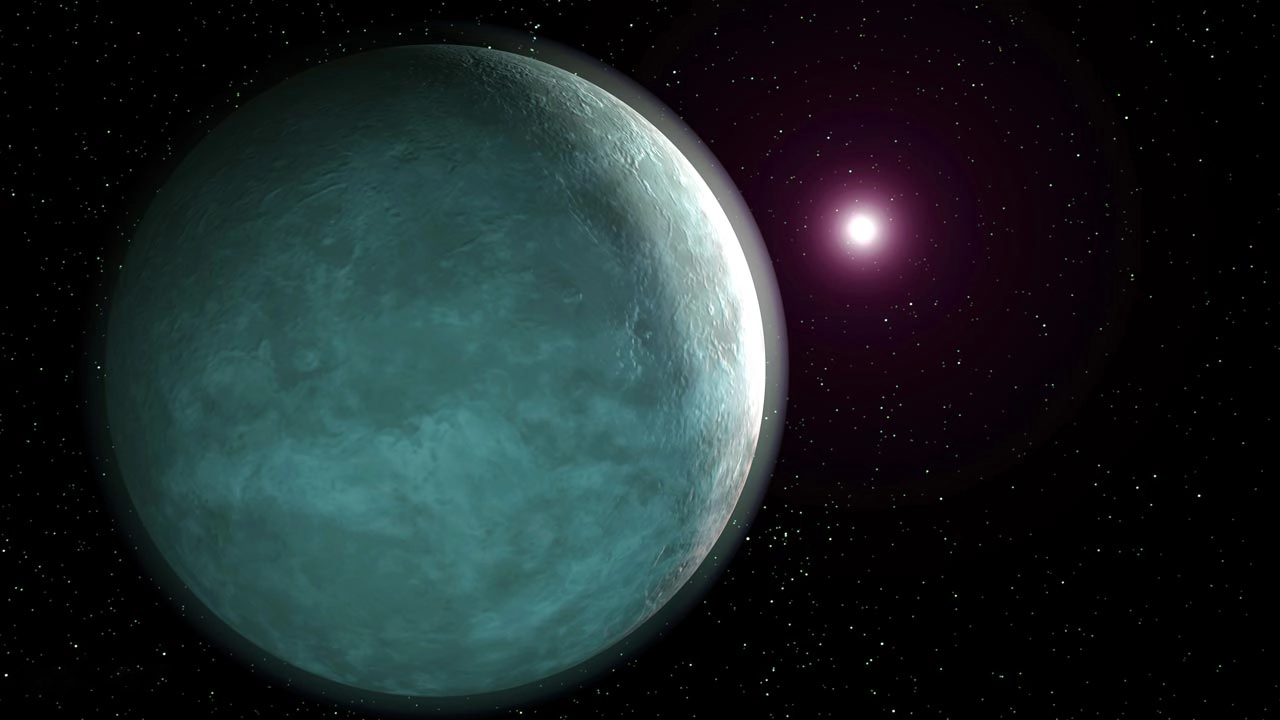
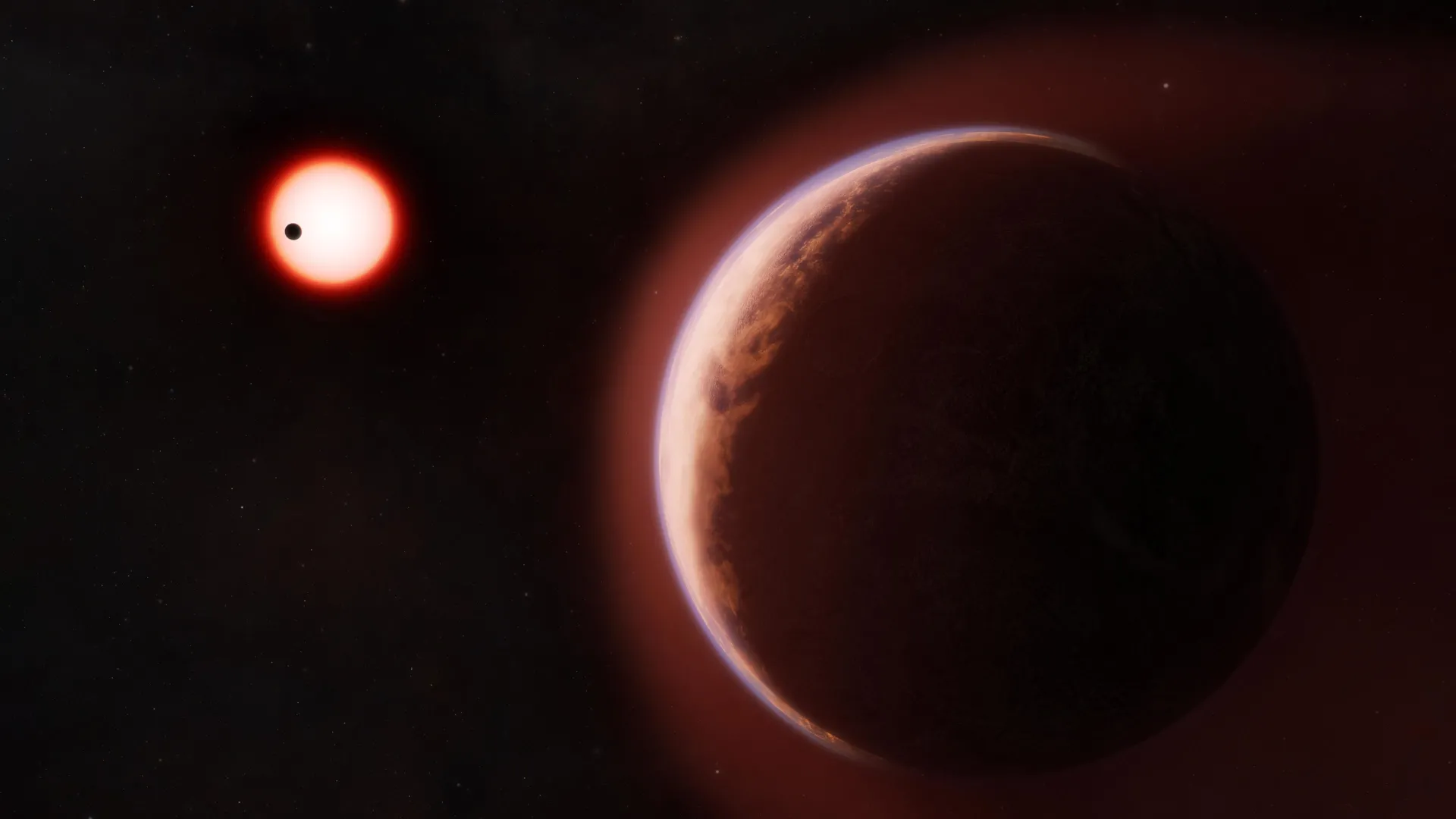
Astronomers have confirmed that GJ 887, a dim red dwarf star just 10.7 light-years from Earth, hosts at least four planets — including one that orbits within the star's habitable zone, where liquid water could theoretically exist on a rocky surface. The discovery makes GJ 887 d only the second known habitable-zone planet within 10 light-years of the Solar System, after Proxima Centauri b, and raises the possibility that a potentially life-supporting world lies in our immediate cosmic neighborhood.
The confirmation, published in Astronomy and Astrophysics this month, was based on years of radial velocity measurements taken with the Very Large Telescope at Paranal Observatory and the High Accuracy Radial velocity Planet Searcher spectrograph at La Silla Observatory, both in Chile. The four confirmed planets orbit GJ 887 with periods of 4.4, 9.2, 21.8, and 50.8 days. A fifth candidate planet with an orbital period of just 2.2 days was detected but remains unconfirmed.
The outermost confirmed planet, GJ 887 d, sits at the inner edge of the habitable zone and has a minimum mass of roughly six times that of Earth, placing it in the "super-Earth" category. Super-Earths are among the most common planet types in the galaxy and can have a wide range of compositions, from rocky worlds resembling a scaled-up version of our planet to ocean-covered water worlds or thick-atmosphere sub-Neptunes. Determining which type GJ 887 d is will require spectroscopic follow-up observations that are not yet technically feasible but may become possible with the next generation of extremely large telescopes.
What makes GJ 887 particularly promising as a target for future study is the star's unusual quietness. Most red dwarfs, which make up roughly 75 percent of all stars in the Milky Way, are magnetically active and regularly emit powerful flares that could strip away planetary atmospheres over geological timescales. GJ 887, by contrast, shows one of the lowest levels of stellar activity ever measured in a red dwarf, suggesting its planets have faced a much calmer radiation environment and may be more likely to retain their atmospheres.
"GJ 887 is one of the most photometrically stable M-dwarfs ever observed," said the lead author of the study, from the University of Göttingen. "That stability is crucial because it means the planets around it have been protected from the kind of extreme ultraviolet and X-ray bombardment that we think strips atmospheres from planets around most red dwarfs." The researchers said GJ 887 was an ideal primary target for proposed space missions such as NASA's Habitable Worlds Observatory, which is currently in the design phase with a projected launch no earlier than the late 2030s. The star is bright enough for high-resolution spectroscopy and close enough that even near-term improvements in space-based coronagraphy might eventually enable direct imaging of GJ 887 d.